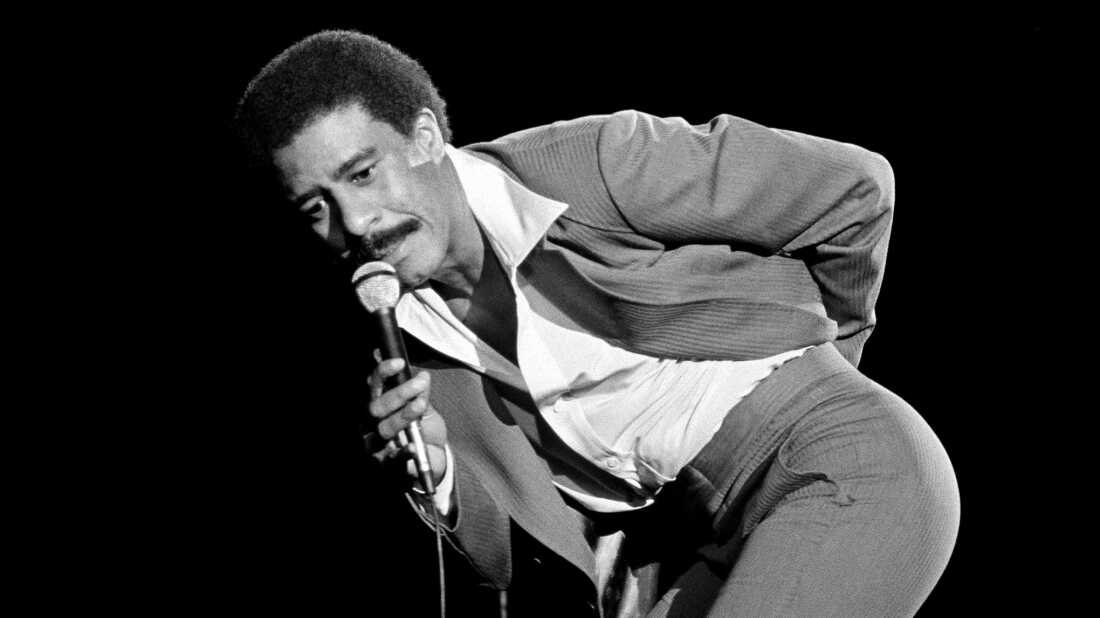
On September 19, 1977, comedian Richard Pryor took the stage at the Los Angeles Hollywood Bowl. His impact on American comedy, particularly with his use of the N-word, remains significant. Historian Elizabeth Stordeur Pryor, Richard Pryor’s daughter, explores this legacy in her life and work without initially revealing her personal connection to the comedy icon. Elizabeth focused on tracing the history of the N-word through various periods in American history, including slavery and the civil rights movement, before addressing its role in hip-hop culture.
Complex Relationship to the N-word
Elizabeth shares her personal experiences as a biracial individual navigating the complexities surrounding the N-word. She recalls a challenging moment in her college classroom when a student used the word while quoting ‘Blazing Saddles,’ a film her father co-wrote. Elizabeth had decided not to use the word in her teaching, but faced with this situation, she was worried about the impact on her Black students. She reflected on how to handle the real-life manifestations of racism discussed in academic settings.
Exploring Her Father’s Journey
Elizabeth’s new book, ‘Something We Said: Richard Pryor, A Notorious Word, and Me,’ blends memoir with the history of this divisive word. Late in his life, following a trip to Kenya, Richard Pryor chose to stop using the N-word, articulating that this decision was personal and not prescriptive for others. Elizabeth admires how her father recognized the word’s role in Black culture while also trying to regain control over its usage.
Her Father’s Use of the Word
Richard Pryor used the N-word subversively, often as a tool of protest to challenge and mock white racism. Elizabeth highlights that her father drew from a tradition within Black culture that transformed the word into a form of resistance. In the 1970s, this approach helped to bring Black people’s perception of the N-word into the comedic sphere.
Classroom Conversations
Elizabeth discusses the difficulty of teaching about the N-word. The discussions are challenging but vital for understanding social dynamics and inclusion. Her goal is for students to realize that conversations about the word extend beyond free speech to reflect on relationships and respect for the diversity of participants.
Personal Memories and Impact
“Don’t let nobody ever call you that.” – Richard Pryor
Elizabeth recalls meeting her father for the first time at a young age. Despite the setting being a hotel room in Newark, New Jersey, she immediately felt connected to him. Growing up, she sought his attention and approval through her creative pursuits, from theater to intellectual exchanges. Her father sent her resources like a documentary on Malcolm X and The Last Poets’ songs, fostering her understanding of Black history and culture.
In the latter part of his life, Richard Pryor’s inability to speak led Elizabeth to read Frederick Douglass to him, establishing a deeper bond and making her feel proud of their connection.
A Glimpse into Richard’s Past
Richard Pryor’s early life, involving his upbringing in a brothel where his mother worked as a sex worker, shaped his comedic perspectives. As a child, a moment of slipping in dog waste and the ensuing laughter marked his first experience with the power of comedy.
The production team, led by Anna Bauman and Thea Chaloner, crafted and edited Elizabeth Pryor’s interview while adaptations for the web were undertaken by Bridget Bentz, Molly Seavy-Nesper, and Meghan Sullivan.
Leave a Reply