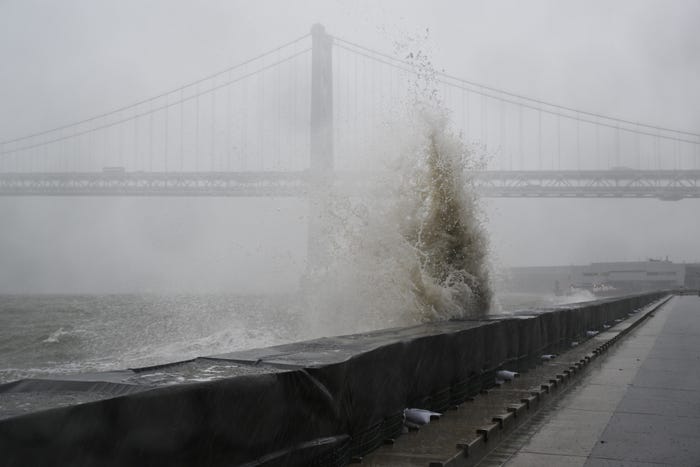
This year’s El Niño is the strongest in years, significantly affecting weather patterns in the US and beyond. The Climate Prediction Center (CPC) estimates there is a 60% chance this El Niño could be the most intense since 1950, when records began.
What is El Niño?
El Niño is a climate pattern characterized by the warming of ocean surface temperatures in the central and eastern tropical Pacific. It disrupts normal weather systems and influences marine life and weather patterns.
El Niño on the Rise
El Niño continues to intensify and is expected to peak by early 2027. The CPC predicts a strong-to-very-strong pattern persisting from January to March 2027, before likely weakening in April. According to Earle Wilson from Stanford Doerr School of Sustainability, ocean temperatures are much warmer than usual, heightening the impact.
Effects on Northern US Weather
The northern US, including the Pacific Northwest, Great Lakes, and Northeast, might experience a milder winter. The CPC anticipates less precipitation in these regions, which might affect snowfall levels.
Potential Snowfall Impact
Snowfall could be less frequent in certain northern areas. This situation might negatively impact ski resorts in the northwest and parts of Canada. Snowfall remains unpredictable, as climate change continues to influence weather patterns.
Flood Risks on the West Coast
Parts of the West Coast, notably California, face increased flooding risks. Gov. Gavin Newsom declared a state of emergency due to potential strong storms. An ‘atmospheric river’ recently caused heavy rain and flooding in the Bay Area.
Coastal Erosion Concerns
El Niño has raised sea levels along California’s coast. This, combined with larger waves, elevates the risk of coastal erosion. In Oceanside, emergency measures are underway to mitigate these impacts.
Snowfall in Western Mountains
Mountainous regions in the West, such as the Sierra Nevada, could see heavy snowfall. The National Weather Service has issued warnings, predicting significant snow accumulation, particularly at higher elevations.
Southern States and Rainfall
From December to February, southeastern states are likely to experience above-average rainfall. Florida, southern Georgia, and coastal areas of the Carolinas might see increased precipitation chances.
Washington, DC’s Varied Snow Forecast
Snow forecasts in Washington, DC, can vary greatly. Due to its location near the rain-snow line, small changes in temperature can lead to significant differences in snowfall amounts.
Drought Conditions Shifting
Drought conditions may improve in some areas but worsen in others. The National Oceanic and Atmospheric Administration predicts easing drought in the Southwest and Southeast while conditions may deteriorate in the northern Rockies and parts of the Pacific Northwest.
Leave a Reply