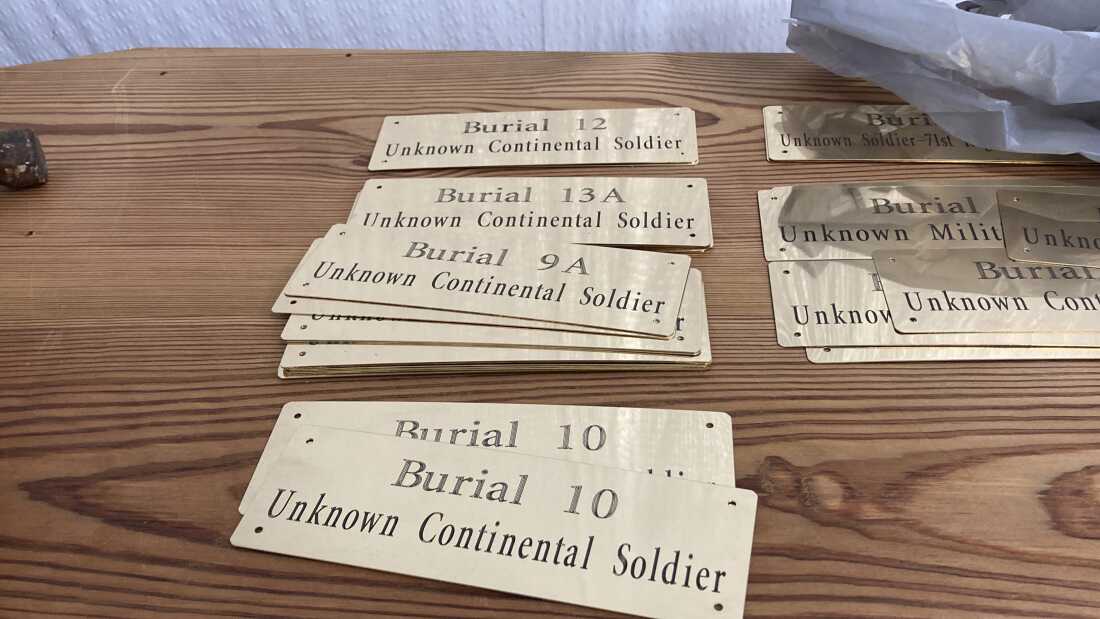
On March 30, 2023, plaques commemorated 14 previously unknown soldiers from the Battle of Camden, soon to be reburied in Columbia, South Carolina. Recent DNA analysis identified one of these soldiers, Pvt. John Pumphrey. He enlisted in the 7th Maryland Regiment of the Continental Army as a teenager in 1777.
Pumphrey marched through significant battles in American history, including Brandywine and Germantown in Pennsylvania and Monmouth in New Jersey. Exposed to harsh winters at Valley Forge and Morristown, he eventually headed to the South to confront the British again. Unfortunately, August 1780 at the Battle of Camden was his final engagement, where a British musket ball ended his life.
In 2022, the University of South Carolina archaeologists discovered his remains and submitted them for DNA analysis. Results were handed to FHD Forensics, specialists in matching DNA with historical genealogy. Nancy White, age 71, was identified as a distant relative. Surprised at the news, White expressed the discovery as miraculous, revealing Pumphrey as her fourth great uncle.
FHD President Allison Peacock detailed three DNA analyses confirming Pumphrey’s identity. With approximately 20,000 modern relatives matched, her team was impressed by the DNA quality. White, along with many others, joined efforts to confirm genealogical findings, sharing family trees and tracking historical records.
For years, White and her family had explored their genealogy, aware of their Quaker ancestry, known for pacifism. Learning about a relative’s participation in the Revolutionary War conflicted with their beliefs. As orphans, Pumphrey and his siblings may have found the army to provide belonging. Remarkably, he re-enlisted amidst manpower shortages, contrary to typical farmer-soldier practices.
Peacock noted Pumphrey as possibly the oldest John Doe identified through genetic genealogy. The vast generational gaps left uncertainty in the measurable DNA relatedness.
The excavation commenced by James Legg, a USC public archaeologist, and Steve Smith unveiled 14 sets of remains. Despite the known battlefield site, COVID-19 prompted Legg to investigate further. Discoveries emerged at shallow depths, mostly around 14 inches.
Forensic teams prepared coffins for unknown soldiers’ ceremonial reburial. Two sets of remains were barely below the surface, indicative of hastily dug graves. Rick Wise, Executive Director of the South Carolina Battleground Preservation Trust, explained prisoners of war likely used hands and rudimentary tools.
Peacock continues tracing relatives for another set of remains, linked surprisingly to herself. Wise shared insights on Pumphrey’s involvement in major Revolutionary battles, ending in Camden’s major defeat. Overwhelmed American forces led to Pumphrey’s unit’s entrapment.
Although some soldiers escaped, Pumphrey’s side was overpowered. Wise imagined soldiers united in their final defense, relying on each other amid the chaos.
Leave a Reply