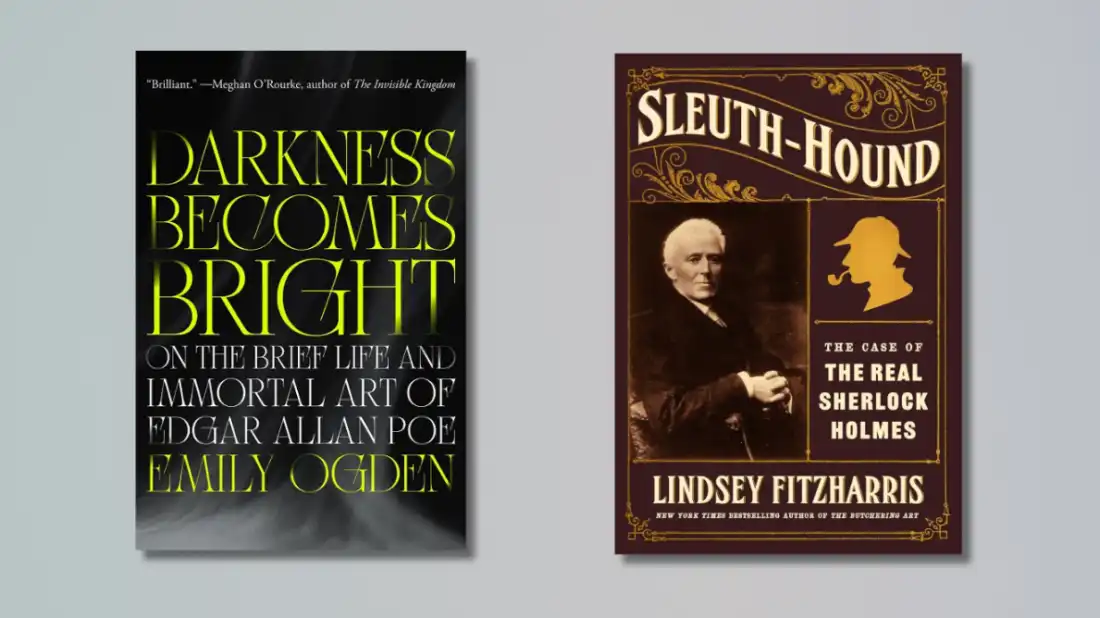
The lives and works of Edgar Allan Poe and Arthur Conan Doyle continue to captivate us. Both authors have left an indelible mark on literary history through their contributions to the detective fiction genre.
Edgar Allan Poe: The Literary Enigma
Born in Boston in 1809, Poe was orphaned at a young age. He was taken in by the Allan family in Virginia. His life was fraught with challenges. He died at 40 under unclear circumstances. Despite this, he left behind influential essays, poems, and stories. Poe is credited with inventing the modern detective story. His unique talent still captivates readers today.
Biographers and critics have long been intrigued by the mystery of his genius. Emily Ogden, a professor at the University of Virginia, explores this fascination in her book. Describing her work, she explains: “This is a book about Edgar Allan Poe. But it also delves into those who follow him, who are willing to explore the dark realms of human experience.” Her book mixes biography with her personal reflections on Poe’s influence.
Ogden recounts an incident from Poe’s life involving his friend John Sartain. In 1849, a distressed Poe appeared at Sartain’s workshop. Poe insisted on a late-night walk to the Fairmount Water Works in Philadelphia. On a platform above the Schuylkill River, Sartain prevented Poe from leaping into the waters. This episode reflects the personal demons Poe battled.
Arthur Conan Doyle: A Legacy in Detective Fiction
Conan Doyle admired Poe, calling him the “father of the detective tale.” Despite this, he ventured into mystery writing to support his medical practice. In 1887, he published “A Study in Scarlet,” introducing Sherlock Holmes and Dr. Watson to the world. Doyle continued with 59 stories, and these characters have become iconic, so much so that letters still arrive for them at 221B Baker Street.
While many scholars have studied Doyle’s work, Lindsay Fitzharris offers fresh insights in her book, “Sleuth-Hound: The Case of the Real Sherlock Holmes.” She explores the influences of two doctors on Doyle. Joseph Bell and Henry Duncan Littlejohn were real-life figures who shaped the character of Holmes. Bell, known for his diagnostic skills, worked alongside Littlejohn on significant murder cases. Fitzharris delves into their contributions to forensics and medicine.
These books shed light on well-examined figures. Yet, as Poe’s “The Purloined Letter” suggests, sometimes details remain hidden in plain sight, waiting for discovery.
Leave a Reply