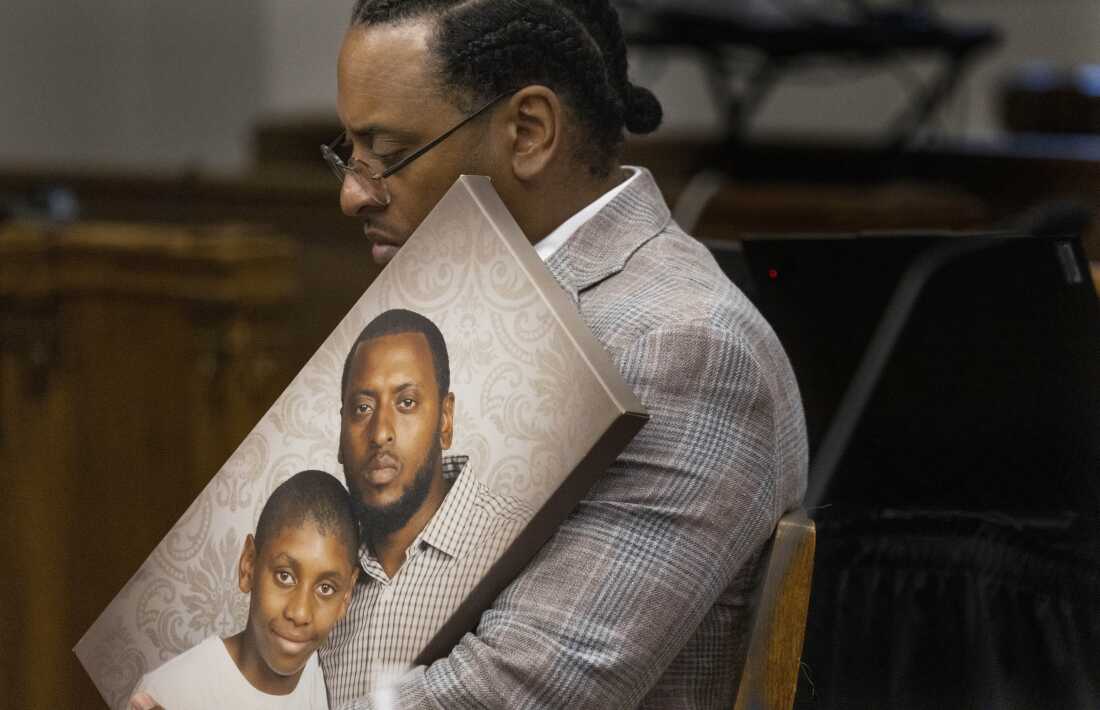
Antonio Mays Sr. holds a photograph of himself with his son, Antonio Mays Jr., in a court in Seattle. On June 29, 2020, the Capitol Hill Occupied Protest (CHOP) zone in Seattle was marked by chaos and paranoia. Demonstrators for racial justice were tracking a stolen Jeep driving unpredictably around the park at the heart of CHOP.
The area consisted of tents and protestors, and some were armed due to past violent incidents. As the Jeep circled the turf, coming dangerously close to a tent, fear spread quickly through the camp.
CHOP functioned for 23 days after Seattle police withdrew from a precinct amid mass protests sparked by George Floyd’s murder. Nightly, police had dispersed crowds with tear gas, and after they left, the atmosphere calmed. Protestors organized events and speeches, but fear soon replaced calls for justice.
An unorganized security force took the place of police. “There’s shots, shots fired, I think,” a livestreamer captured in a dark, shaky video. More shots followed, and the consensus was formed that individuals in the Jeep were shooting at the protestors. Less than ten minutes later, armed camp members retaliated.
Antonio Mays Jr., at 16, died from gunshots. Robert West, 14, was severely injured. Another teenager escaped, never reported before. Colby Williams, a protestor, stated, “When you come in shooting, you shouldn’t be surprised if you get shot back.” This belief, that the Jeep’s occupants attacked and the response was defensive, lingered on social media and within CHOP. Video evidence, however, didn’t support shots from the Jeep, yet the youth’s deaths remain unsolved years later.
A Journey to Seattle
On June 23, 2020, Antonio Jr. left his Southern California home, aspiring to join the racial justice movement in Seattle, unaware of what awaited him. He was fond of fantasy novels and hip-hop, worked in a family business, and cared for his sister. Leaving a note for his father, he expressed his desire to fight for a world where his sister wouldn’t suffer discrimination for her skin color.
How Antonio Jr. arrived at Seattle is unclear. Three days later, he stood with protest leaders, addressing a city official and the public. In a video, he expressed hope for better police training and supervision.
Antonio Jr. was shot dead three days after making that speech. He was involved in a stolen Jeep, yet it remains uncertain if he took part in the theft. Panic ensued when the vehicle appeared near CHOP’s tents.
Panic at the Barricade
A security camera recorded the Jeep’s exit and head-on approach toward another CHOP vehicle. Gunshots erupted from a silver Pathfinder toward the Jeep. Footage showed a person firing from the Pathfinder at the Jeep. At least 15 shots were fired while the Jeep fled toward downtown Seattle.
There were no gunshots identified from the Jeep by a forensic analyst. Back at CHOP, the tension escalated. Calls for readiness and order emerged among the demonstrators, preparing to defend against any threat.
The Aftermath
The white Jeep looped back toward CHOP, and after a series of gunshots, it crashed into a barricade. Witnesses described someone firing at close range into the passenger side. However, the previous notion of the Jeep’s occupants attacking fell apart. Investigations revealed no guns or bullet shells in the Jeep or with the teenagers.
Handling of the scene hindered official investigations. Livestreams recorded the aftermath where medics pulled boys from the vehicle amid a frenzied crowd. Antonio was transported to a hospital in a car that was earlier firing at him. Confusion over identifiers delayed reaching medical assistance.
At the crime scene, the Jeep was heavily damaged. Bullet holes and shattered windows marked it as people gathered around. Maps of interactions indicated tampering and advice was heard to remove evidence from the site. Officers observed from a distance but were instructed not to approach.
Four hours later, officers examined the scene, finding it tampered. No charges have emerged, and videos from nearby surveillance remain unreleased.
After extensive investigation, many involved declined to disclose details. Ashley Dorelus, a livestreamer, referenced unspoken rules preventing her from sharing key information. Witnesses’ silence continues to impede resolution.
Police urge those present to come forward for the case to progress. Leadership instability in the Seattle Police Department complicates matters further, emphasizing the ongoing challenge of seeking justice for Antonio Mays Jr.
Leave a Reply