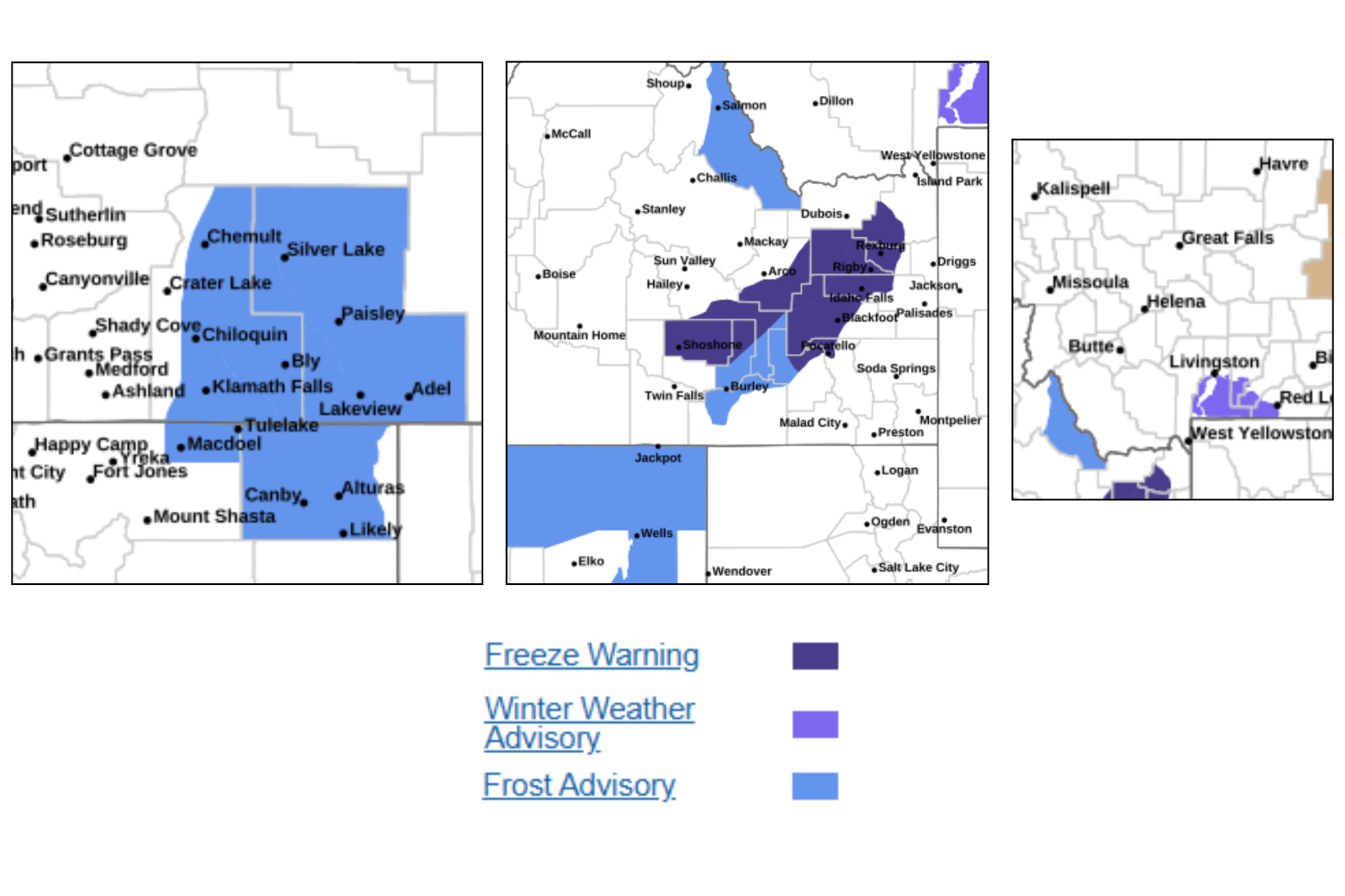
A sudden spell of cold weather is affecting the western United States, bringing snow, frost, and freezing temperatures. The National Weather Service (NWS) has issued alerts for at least five states.
Weather Alerts
The advisories, released on Wednesday, highlight a mix of winter weather and frost risks. These conditions are impacting Idaho, Montana, Oregon, California, and Nevada. Such weather is more typical of early spring or winter, not the beginning of summer.
Locations Affected
Montana: A Winter Weather Advisory is in place for the Absaroka and Beartooth Mountains through Thursday morning. Expect light snow and winds up to 35 mph on the Beartooth Highway.
- Idaho: Eastern Magic Valley, Snake River Plain, and nearby areas face frost advisories and freeze warnings with temperatures dipping to 28-32°F.
- Oregon and Northern California: Frost advisories target the Klamath Basin and Modoc County, predicting lows of 33°F and colder pockets potentially freezing.
- Nevada: Northern and south central Elko County is also warned of frost with temperatures between 33°F and 37°F.
- Western Montana (Lemhi County): Frost risk exists as temperatures could drop to 30°F.
Most advisories will expire between early and mid-morning Thursday as temperatures increase with sunrise.
Conditions and Impacts
The NWS warns that frost could form over a wide area. Some locations may experience below-freezing temperatures for several hours overnight. These conditions could:
- Damage sensitive crops and outdoor vegetation
- Harm unprotected plants during the early growing season
- Pose a risk to outdoor plumbing in colder areas
In mountainous areas, snow will add further hazards. Travel through passes like the Beartooth Highway could face challenges due to slippery conditions and reduced visibility.
Unusual Timing
This cold snap is noteworthy as June generally brings mild to warm temperatures in the interior west. Especially in lower-elevation desert and valley regions, overnight lows are above freezing. This makes June a time when plant growth is active. The Beartooth Highway, exceeding 10,000 feet in elevation, occasionally sees summer snow. However, snow events in June remain unusual, potentially disrupting travel at the height of tourist season.
Widespread frost advisories in June highlight meteorologists’ concerns about cold air outbreaks. These are instances where a cold air mass extends unusually far south.
Precautionary Measures
The NWS advises residents to take immediate actions such as:
- Covering or moving sensitive plants indoors
- Protecting outdoor irrigation and plumbing systems
- Exercising caution in snowy, mountainous travel areas
In summary, despite being June, parts of the west are experiencing winter-like overnight conditions, showcasing the region’s volatile weather during transitional seasons.
Leave a Reply