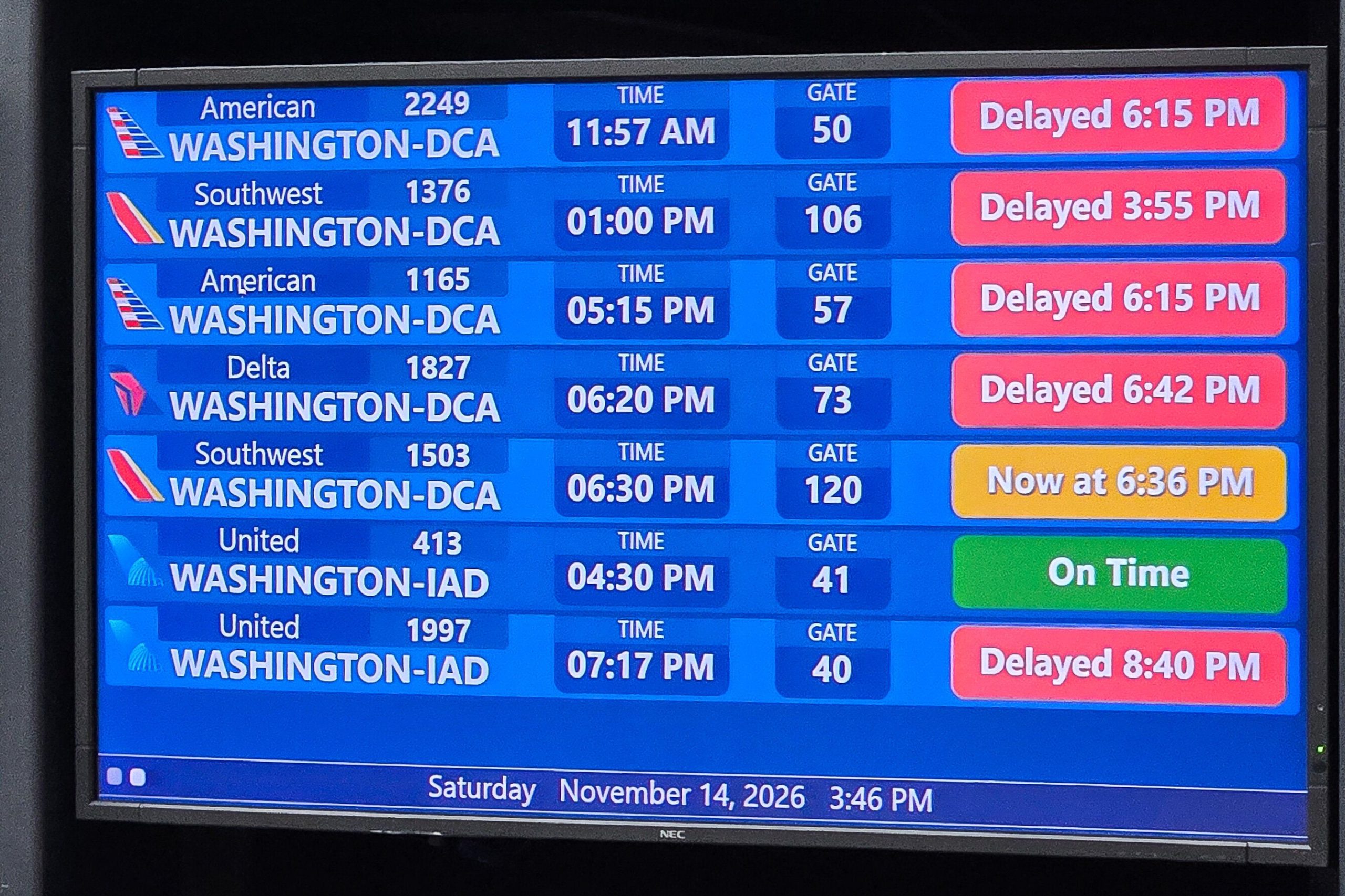
US air travel continues to experience disruptions for a third consecutive day. Over 5,200 flights were impacted on Sunday. However, Transportation Secretary Sean Duffy expects normal operations by Monday. Airlines are working to get back on schedule following a broad ground halt.
According to FlightAware, more than 1,600 flights were canceled nationwide on Sunday, and almost 3,600 faced delays. On Saturday, the airlines canceled over 6,400 flights and delayed more than 8,000.
Investigation into the Cause
During ABC’s “This Week,” Duffy reported no evidence of a cyberattack or malicious intent behind the disruptions. The root cause remains unclear. He assured that flights will normalize fully by Monday, with the FAA prioritizing passenger safety.
On Sunday, cancellations affected 27% of JetBlue flights and 13% of American Airlines flights. Southwest, United Airlines, and Delta reported 3% to 5% of their flights canceled.
Ground Stop Details
The FAA enforced a nationwide ground stop on Friday, halting almost all flights for nearly five hours. This was the longest travel halt since the September 11, 2001 attacks.
At Orlando International Airport, flights from various airlines, including American Airlines and Delta, showed numerous delays. The FAA confirmed communication issues arose after a router installation by contractor L3Harris.
The router installation at an FAA facility led to data overload, affecting communications across air traffic centers.
This installation triggered problems at other centers, affecting routers nationally. The FAA has since disabled the routers’ functionality responsible for the issue and others in the system. The exact cause of the malfunction remains unknown.
Funding and Modernization
The recent issue is the latest example of strain on the US air traffic control system. Duffy highlighted the aging technology and shortage of controllers as challenges. The affected routers, purchased in 2001, became obsolete by 2006. Duffy called for $50 billion to upgrade systems, an increase from a previous $30 billion request. Congress had approved $12.5 billion last year.
Political Reactions
President Donald Trump weighed in, urging additional funding for FAA systems. He emphasized the need for comprehensive upgrades, criticising a piecemeal approach.
The upcoming Democratic control of Congress, following the recent elections, adds a political layer to the funding discussion.
Skepticism and Financial Allocations
Representatives Rick Larsen and André Carson expressed skepticism over Duffy’s funding plea. They noted that $11 billion from past allocations remains unspent. Duffy clarified that the previous funds are designated for specific expenditures and do not cover new airspace management software.
The debate over financial needs for air traffic control improvements is ongoing as authorities seek lasting solutions to prevent further disruptions.
Leave a Reply