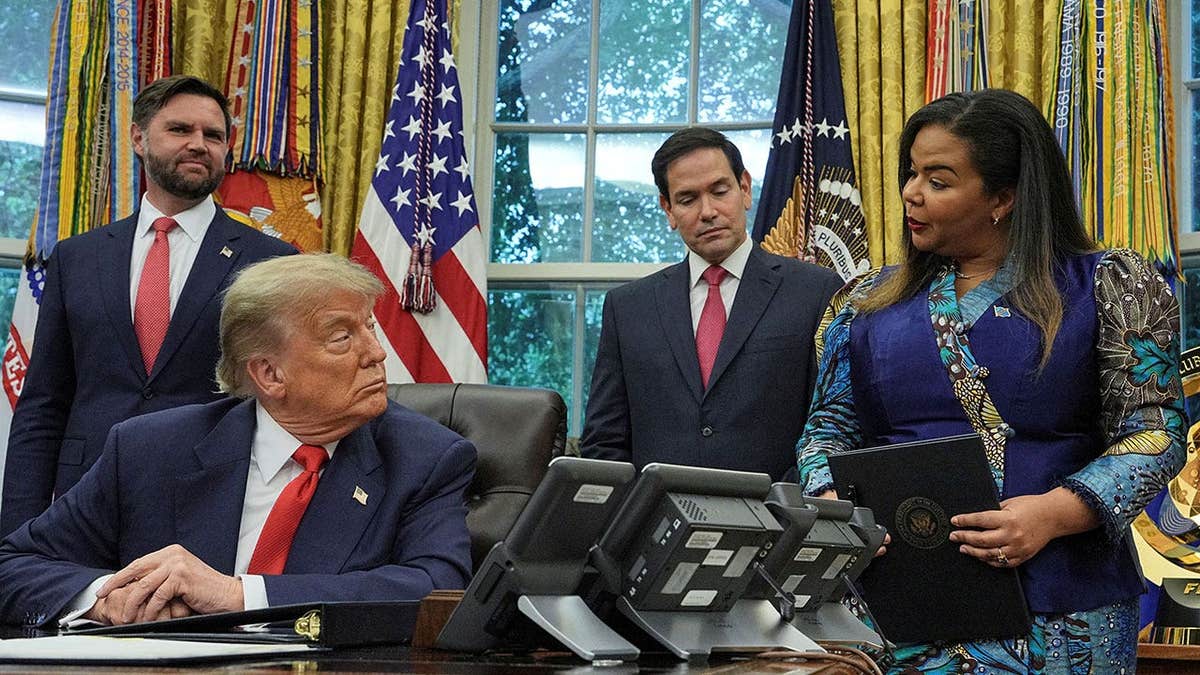
The Democratic Republic of Congo (DRC) does not view increased US involvement in its mineral sector as competition with China. Instead, it sees it as a chance for multiple partnerships. Foreign Minister Thérèse Kayikwamba Wagner expressed this position at the United Nations, emphasizing the importance of diverse collaborations to leverage Congo’s extensive natural resources.
Wagner stated the need for different partnerships to cater to various needs and bring diverse expertise. Her comments coincide with US efforts to expand access to Congo’s mineral wealth, including copper, cobalt, lithium, and gold, aiming to lessen reliance on supply chains dominated by China.
On December 4, 2025, Washington and Kinshasa signed a strategic partnership to enhance economic cooperation, investment, and develop secure mineral supply chains. This agreement is part of a wider effort to integrate regional economies while seeking to resolve long-standing conflicts between Congo and Rwanda.
A separate arrangement involving DRC’s state mining company Gécamines and commodities trader Mercuria might give US buyers priority access to some of Congo’s mineral supplies. Additionally, the US International Development Finance Corporation is considering a strategic stake in this partnership.
Wagner noted the strengthening economic interests between the US and DRC. She welcomed greater US interest in transforming Congo’s mineral wealth into practical benefits for its people while also profiting American collaborators.
In a note of caution at a U.N. meeting, Wagner highlighted the need for the global shift to clean energy to avoid repeating historical extractive models. She urged international partners to support local processing and industrialization rather than merely securing raw materials.
This mineral initiative is closely linked to the US-mediated peace process between the DRC and Rwanda. While the peace agreement initially signed on June 27, 2025, has not ended the violence, Washington’s commitment to imposing consequences for violations is seen as significant.
Sanctions against the Rwanda Defense Force and senior Rwandan officials were praised by Wagner, illustrating ongoing attempts to address a conflict that has persisted for 30 years. These sanctions relate to their alleged support for the M23 rebel group, which has denied involvement.
In her U.N. speech, Wagner discussed the increased sexual violence in areas controlled by M23 and Rwandan forces. She stressed the necessity of state authority restoration for delivering justice and medical services to affected populations.
The Rubaya mining area, mentioned by Wagner, remains under M23 control, with significant amounts of coltan smuggled into Rwanda, underscoring the complex nature of mineral resource management in conflict zones.
The U.S. Treasury Department has increased sanctions to target networks aiding mineral smuggling into Rwanda, aiming to support peace efforts and transparency in mineral supply chains.
Leave a Reply