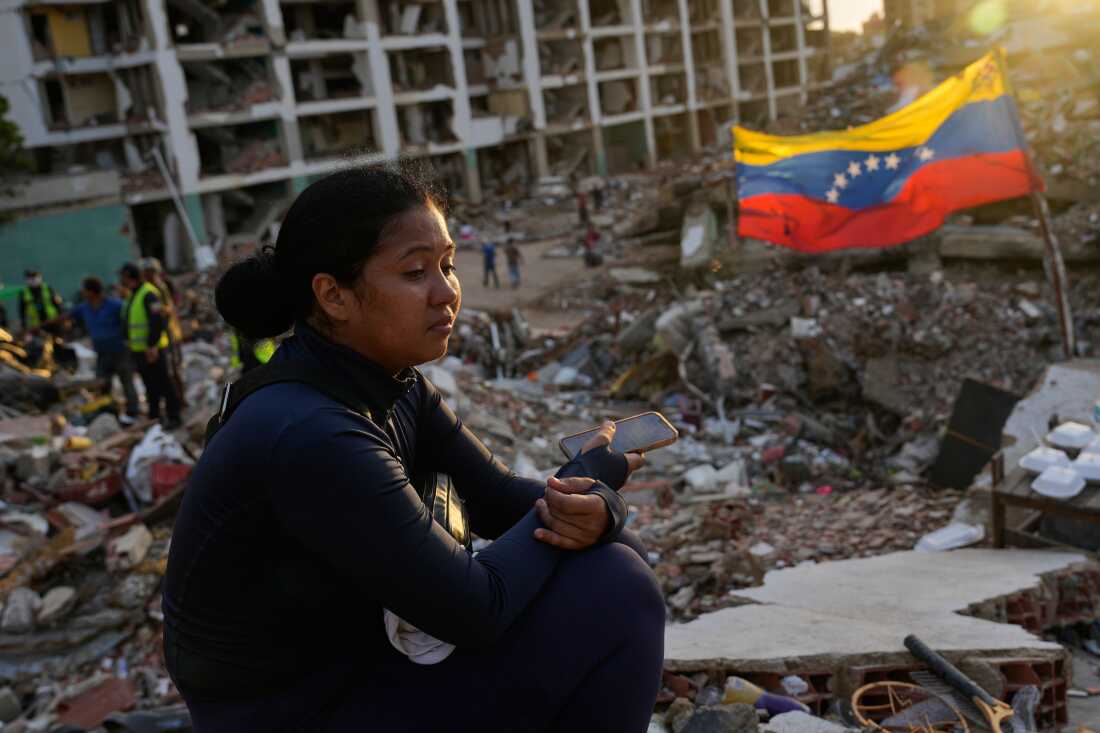
Amidst the ruins of a collapsed building in La Guaira, Venezuela, Estefany Landaez waits for news of her children. The aftermath of twin earthquakes has taken priority, delaying Venezuela’s democratic return. On July 12, 2026, the cries for democracy resonated as protesters in Caracas demanded free elections. Their voices were met with vigilance from police, but largely ignored by authorities.
Last month’s earthquakes claimed 4,829 lives and injured 16,740 people according to the government. The urgency of recovery has eclipsed discussions about democracy. Following the detention of Nicolás Maduro by U.S. forces, Acting President Delcy Rodríguez assumed leadership. She collaborates with the Trump administration on Venezuela’s oil industry, sidelining electoral concerns.
Critics argue Rodríguez exploits the state emergency to delay electoral timetables. Opposition leader María Corina Machado faced obstacles returning to Venezuela from the U.S., including a temporary airspace closure. Rodríguez accuses detractors of taking advantage of quake chaos. Frustration grows among activists, with fears that conditions will never align for elections.
Some analysts caution against rushing into elections. Vladimir Villegas, a radio host and former diplomat, emphasizes restructuring partisan institutions first—Maduro’s electoral council and supreme court validated disputed election results, further complicating the path to democracy.
Polls reveal Rodríguez’s unpopularity, exacerbated by her administration’s sluggish earthquake response. Observing Maduro, now imprisoned in New York on drug-trafficking charges, may influence Rodríguez’s political strategy.
Preliminary talks about transition between opposition leaders and Rodríguez’s envoys stalled post-earthquake. Yet, Machado remains undeterred, advocating for free elections in discussions with the European Union. She asserts Venezuela’s proven electoral organization.
Division exists within the opposition. Machado’s faction boycotted legislative elections, critiquing those who participated. Political parties are slowly reviving from Maduro’s regime suppression. Vente Venezuela, Machado’s party, is recovering from looting and persecution. Deputy leader Henry Alviarez faces ongoing charges and restrictive measures despite release from imprisonment.
While regrouping, Vente Venezuela activists focus on earthquake relief. They distribute medical supplies to health workers and communities. Volunteer Rosa Cucunuba pledges political activism will resume once recovery efforts ease. She emphasizes the dual mission: aiding people now and striving for the nation’s freedom.
Leave a Reply