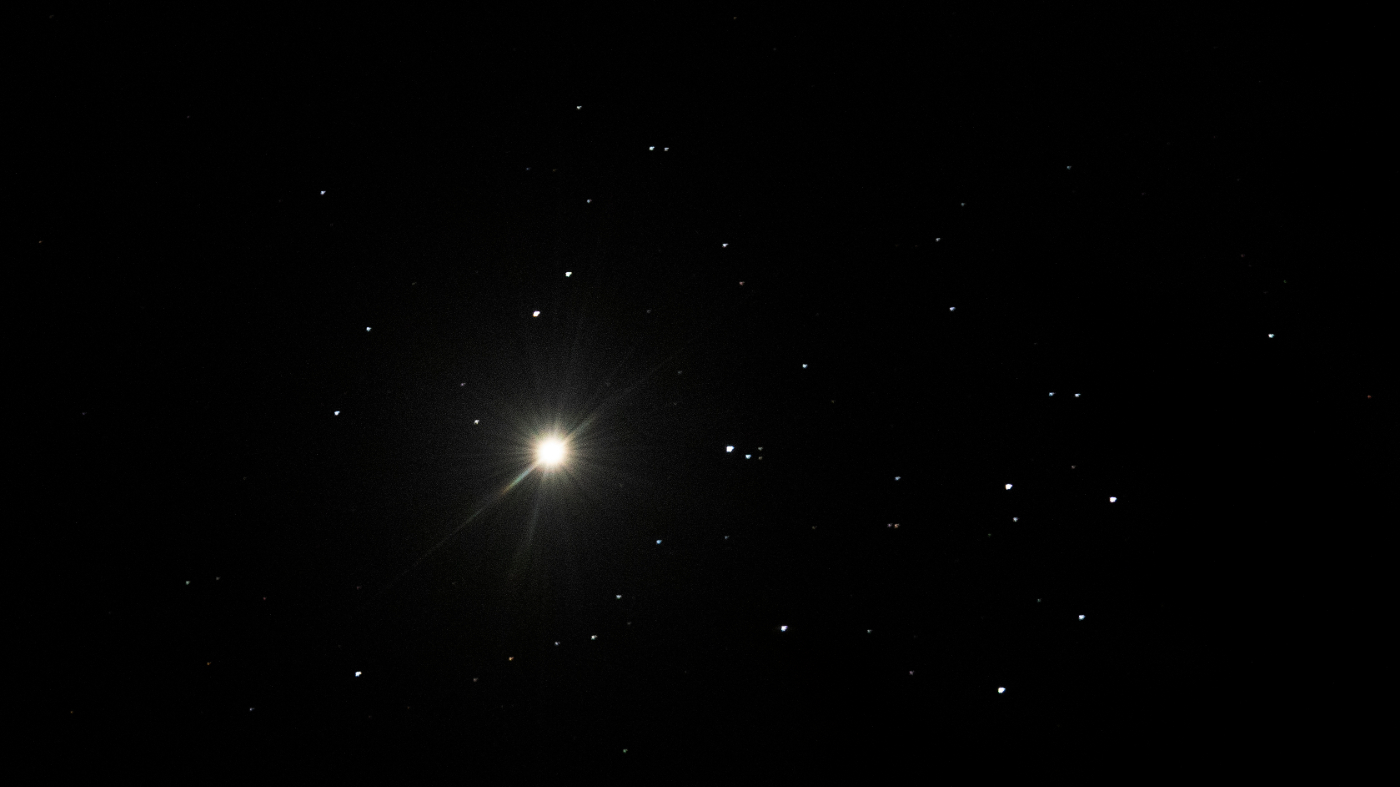
The bright planet Venus appeared alongside the Pleiades star cluster on April 3, 2020, as viewed from Olympia, Washington. This rare conjunction, known as the “seven sisters,” happens approximately every eight years.
In the world of television, Apple TV’s “Star City” features a storyline about a Soviet-crewed Venus flyby set in the early 1970s. While it’s fiction, the concept isn’t far from reality. During that time, NASA had considered a similar mission.
NASA’s Venus Flyby Concept
NASA’s plan was part of the Apollo Applications Program. This program explored possibilities using Apollo/Saturn technology, involving missions from extended lunar stays to crewed space stations. One bold idea was a Venus flyby, studied before the Apollo 11 moon landing.
Bellcomm, a Bell Labs subsidiary, conducted the study for NASA. Kirk Sorenson, a nuclear and aerospace engineer, detailed this in the Selenian Boondocks blog. The mission would launch an Apollo capsule atop a Saturn V rocket. Instead of a lunar module, there would be an Environmental Support Module equipped for the prolonged journey.
The Saturn V’s third stage, the S-IVB, would propel the capsule on a Venus flyby path. Leftover fuel would be vented into space. A tank would be converted into living quarters using Environmental Support Module contents. This concept was called the “wet workshop.” Additionally, the S-IVB would carry solar panels for power.
According to space historian Paul Drye, astronauts would spend 123 days traveling to Venus. The spacecraft would approach within 6,200 kilometers of Venus, then return in 273 days, totaling 396 days in space.
Scientific Goals and Probes
As the spacecraft neared Venus, it would conduct radar scanning and perform spectroscopic and photographic studies. The plan included launching an orbiter and deploying 14 atmospheric probes onto Venus.
- Six atmospheric probes at different locations to measure atmospheric density.
- Four meteorological balloons to study atmospheric conditions and wind patterns.
- Two crash-landing probes for surface photography during descent.
- Two soft-landers to capture surface images, analyze soil, and measure weather.
The Apollo command module would require an enhanced heat shield for Earth reentry.
The Project That Never Launched
Despite the plans, budget cuts impacted NASA. Even before Apollo 11, Congress reduced funding, leading to the cancellation of three Apollo missions. Skylab was the only project from Apollo Applications that materialized, hosting space missions in 1973 and 1974.
Uncrewed missions to Venus have taken place, with agencies such as NASA, the Soviet Union, and others participating. Notably, NASA’s Veritas is in development, studying Venus’ extreme conditions.
The Future of Venus Missions
Currently, focus remains on the Moon and Mars. Yet, potential exists for a crewed Venus flyby. SpaceX’s Starship might someday be outfitted for such a mission, although no human landing is imminent on Venus.
Mark R. Whittington, a writer on space policy, explores the complexities of space exploration in his works. He discusses America’s return to the Moon in his recent books.
Mark Whittington’s blog, Curmudgeons Corner, further engages with space exploration topics.
Leave a Reply