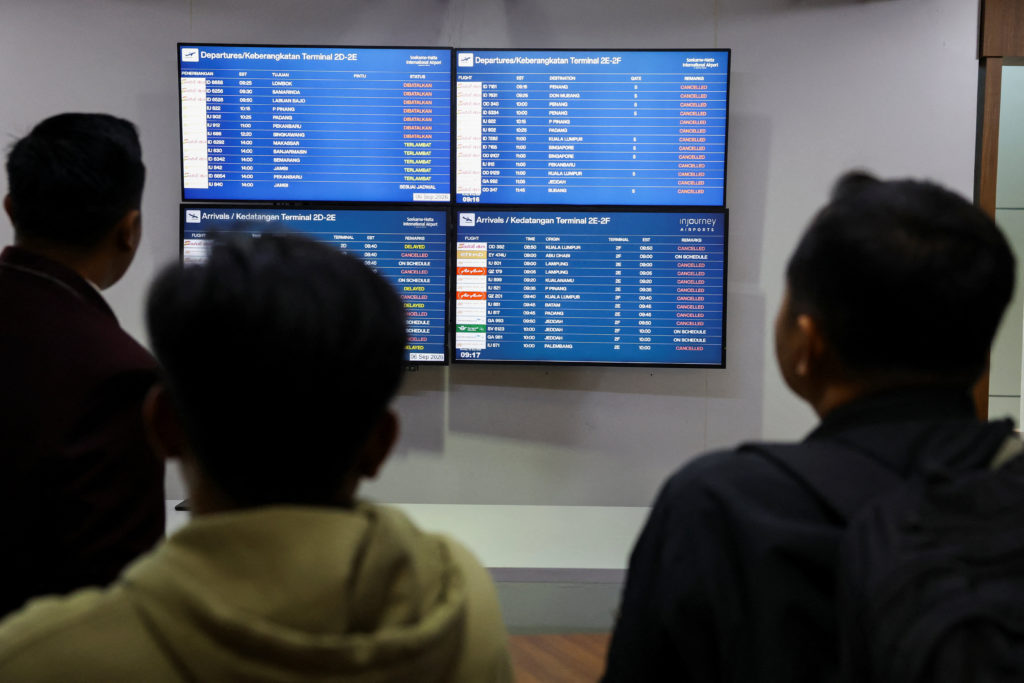
In Indonesia, a volcanic eruption early Sunday led to widespread travel disruptions, including the closure of Soekarno-Hatta International Airport in Jakarta. The eruption affected other domestic airports as volcanic ash spread over western parts of the country.
Anak Krakatau, situated in the Sunda Strait between Java and Sumatra islands, exhibited signs of activity before erupting. The eruptions were brief, lasting 30 seconds at 3:53 a.m. and 16 seconds a few hours later. Surveillance footage captured lava flares from the active volcano.
No casualties were reported and no evacuation orders issued. The nearest residential area is over 16 kilometers away. Authorities advised residents and visitors to maintain a distance of at least 3 kilometers from the crater.
Volcanic ash covered areas including Jakarta and Lampung province, according to the Center for Volcanology and Geological Hazard Mitigation. Airspace closures affected multiple airports, including Radin Inten II Airport in Lampung, due to safety concerns over volcanic ash.
Flight Cancellations and Passenger Impact
By Sunday evening, eight airports had closed, leading to the cancellation of 1,558 flights, affecting approximately 170,000 passengers. The closures included 963 flights at Jakarta’s Soekarno-Hatta airport. Airports were expected to remain closed until midnight.
Passengers, like Diego Urdiales, expressed frustration at the lack of communication from airlines. Michele Gouw, an Indonesian traveler, noted the inconvenience but acknowledged the natural event as beyond control.
Ongoing Volcanic Activity
Lukman F. Laisa of the Ministry of Transportation emphasized safety as the highest priority. Authorities monitored the eruption’s impact on air travel in coordination with various agencies. The eruption also affected Bali’s airport and Medan.
Indonesia’s volcanology agency and the Darwin Volcanic Ash Advisory Centre identified two ash clouds through satellite imagery. These clouds reached heights of 20,000 and 50,000 feet, affecting several provinces and parts of the Indian Ocean.
Lana Saria, head of Indonesia’s Geological Agency, reported intensified activity at Anak Krakatau since July. She stated that the repeated eruptions signify a supply of magma and volcanic gases, though predicting a larger eruption remains uncertain.
Impact on Education
Ashfall affected local communities, prompting the government to authorize schools in affected areas to switch to online learning. This measure aims to reduce students’ exposure to ash and allows flexibility in classroom activities based on current conditions.
Anak Krakatau, meaning “child of Krakatau,” is a smaller volcano that emerged after the historic 1883 Krakatau eruption. The 2018 eruption of Anak Krakatau led to a deadly tsunami, causing significant loss of life and landmass alteration.
Researchers attributed the 2018 event to an underwater landslide, which resulted in a massive displacement of water, significantly reducing the island’s size.
The report is credited to Edna Tarigan, Dita Alangkara, and Fadlan Syam.
Leave a Reply