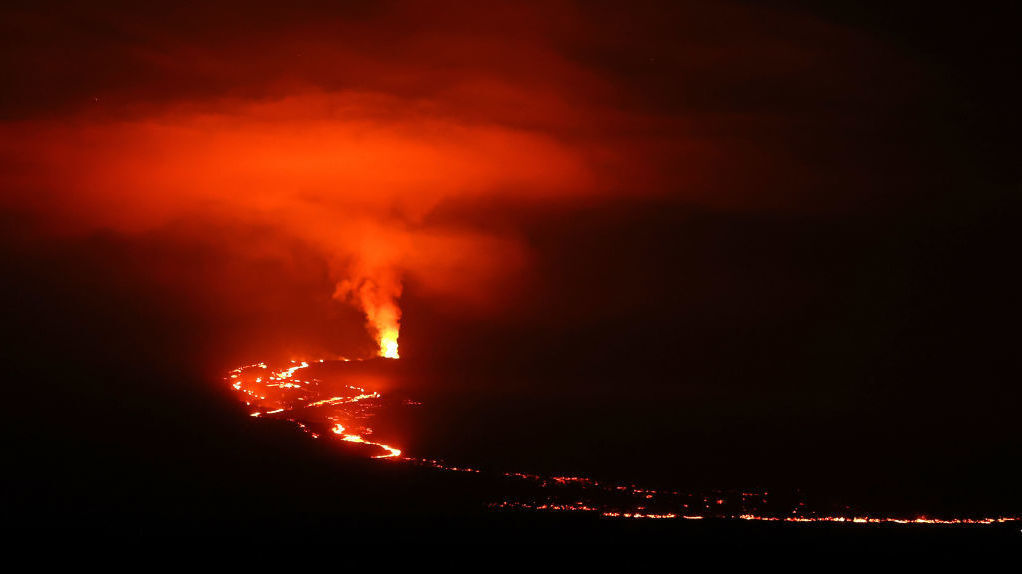
Following Thanksgiving, Hawaii’s Mauna Loa volcano erupted, marking its first activity in nearly 40 years. Mauna Loa is not only a prominent feature on the island but is also the largest active volcano worldwide. Alongside Mauna Loa, Hawaii is witnessing eruptions from Kilauea, as well as Indonesia’s Mount Semeru. These events provide a unique opportunity to understand the differences between these volcanic eruptions and their implications for Earth’s geology.
Mauna Loa’s Scale and Activity
Mauna Loa dwarfs many other volcanoes, covering over half of Hawaii’s big island. Its massive size plays a crucial role in its eruption patterns and impacts. With a wide summit and extensive lava flows, Mauna Loa’s eruptions can significantly shape the landscape, offering insights into volcanic behavior.
Comparing Global Eruptions
Volcanologist Alison Graettinger explains the distinctions between Pacific volcanoes, like Mauna Loa and Indonesia’s Mount Semeru. Differences in eruption styles, lava compositions, and geological settings provide a clearer picture of volcanic diversity across the globe. These contrasts not only highlight regional geological processes but also aid in predicting volcanic activities elsewhere.
The Role of Volcanologists
Scientists like Graettinger and her peers aim to understand these volcanic activities to better inform the public and prepare for future eruptions. Continuous monitoring, such as the U.S. Geological Survey’s live streams, enables real-time data collection and analysis, crucial for both scientific and safety purposes.
This episode was crafted with care and precision, ensuring accuracy through the efforts of Gisele Grayson, with Rebecca Ramirez as the producer and Josh Newell handling the audio engineering.
Leave a Reply