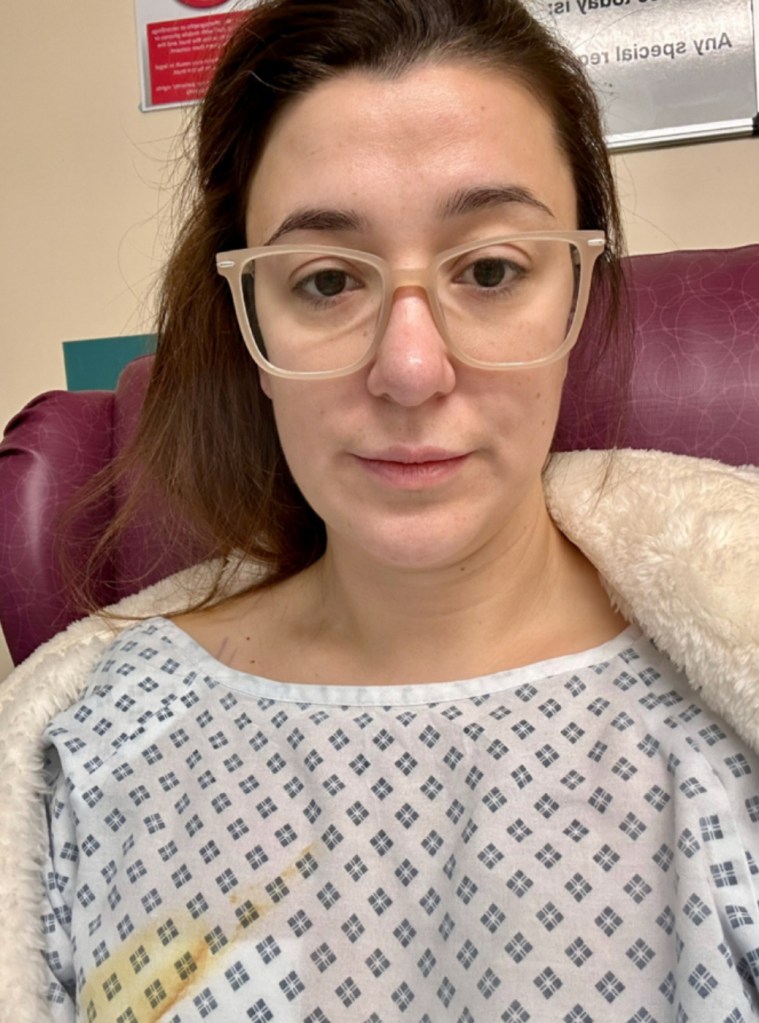
Maxine White, a 34-year-old from the North of England, credited her period-tracking app with aiding her in discovering breast cancer. She had been using Natural Cycles, an app designed to assist with pregnancy planning or prevention. It prompted her to check her breasts by determining her cycle phase through daily temperature readings and symptoms logging.
A notification from the app suggested a self-examination at a time when her pain threshold would be lower. Maxine knew something was amiss, despite the doctor’s initial hesitation. Her persistence led to an ultrasound that revealed the issue. Subsequent tests confirmed breast cancer.
Following a lumpectomy, it was discovered early enough that chemotherapy was unnecessary, only requiring radiation treatment. Maxine described her relief, dancing as she processed the news.
Natural Cycles, beyond its primary function of tracking menstrual cycles and fertility, enabled other users like Grace Lemire to manage chronic health issues. Grace, from Florida, experienced severe pain that led doctors to suspect a burst appendix. By using cycle-tracking data through Natural Cycles and an Oura ring, she presented detailed symptoms to her doctor, leading to a diagnosis of endometriosis. Her careful documentation provided the evidence needed for a diagnosis.
Endometriosis is a chronic condition where tissue similar to the uterine lining grows outside the uterus. This causes significant pain and can lead to infertility. Grace’s data highlighted patterns that assisted doctors in identifying her condition.
Similarly, Emmi Stead from the UK uses her cycle-tracking feature on an Oura ring to manage adenomyosis, a condition where uterine lining tissue grows into the muscular wall, causing heavy bleeding and pain. Despite initial skepticism, she found the data invaluable in understanding her symptoms and managing anxiety tied to her cycle.
Health professionals, like Dr. Stephanie Kuku, acknowledge how apps like Natural Cycles and Oura assist users in connecting health habits with physical symptoms. They warn, though, that technology should complement, not replace, medical advice.
Professor Diana Laird from UCSF highlights the potential of wearables in monitoring body temperature and their effects on cycles. She advises using data from wearables to generate productive discussions with healthcare providers.
For users like Emmi, cycle tracking empowers them to manage their health better. She emphasizes how access to such data offers mental strength, helping her face symptoms with better preparation.
Leave a Reply