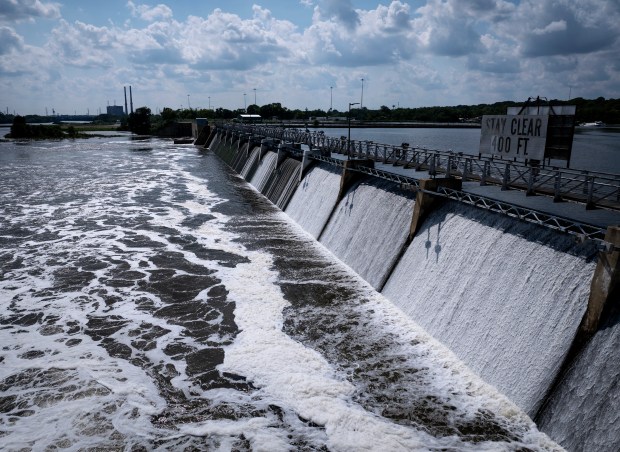
The U.S. Army Corps of Engineers has resumed construction on the Brandon Road Lock and Dam near Joliet, Illinois. This work is part of a $1.15 billion endeavor aimed at preventing invasive carp from entering the Great Lakes. The project had been paused following a stop-work order issued without explanation on July 24.
Three weeks after halting the project, the Illinois Department of Natural Resources reported finding several hundred silver carp just 80 miles from Lake Michigan in the Illinois River. This is further upstream than the invasive fish have been seen since 2010, which raises concerns about potential spawning activities closer to the lake.
The construction at Brandon Road Lock and Dam, situated along the Des Plaines River, is a significant action in the decades-long effort to protect the Great Lakes’ ecosystems. The initiative involves collaboration among Illinois, Michigan, and the federal government. The invasive carp threaten native species and the billion-dollar fishing and boating industries within the Great Lakes.
Reliable electrical barriers near Romeoville currently serve as the last line of defense against the fish in the Illinois River. Advocates, like Joel Brammeier, CEO of the Alliance for the Great Lakes, emphasize the critical nature of maintaining progress on the project without delays.
The project’s funding and advancement became contentious, prompting discussions between former President Donald Trump and Michigan Governor Gretchen Whitmer, which led to the lifting of the stop-work order. Bipartisan support from Congress and regional environmental organizations is evident, demanding uninterrupted construction.
Michigan and Illinois have contributed $64 million and $50 million respectively to the venture. Recent Congressional efforts increased federal operational and maintenance cost shares to 90%. Phase one of construction began last year, involving site preparatory work and technology installations to deter carp.
These deterrents include a bubble barrier and an acoustic deterrent targeting silver carp. Subsequent phases will introduce electric barriers and additional acoustic deterrents, culminating in a flushing lock system to redirect larval fish downstream.
The invasive carp species—silver, bighead, grass, and black carp—were introduced in the 1960s for aquaculture purposes but spread following floods in the 1980s and 1990s. These fish have become a formidable threat to native fish and mussels, disrupting ecosystems due to their feeding habits.
Monitoring teams continue to assess carp populations in the Illinois River, using techniques such as electrofishing. Recent surveys in Lake Calumet showed no presence of bighead or silver carp. Further analysis of the fish captured in August will focus on understanding their origins.
Efforts to control carp populations include targeted commercial fishing in specified areas known for adult carp presence. However, these populations are not deemed established in certain locations. Monitoring over the past 16 years has continually indicated substantial invasive carp populations downstream in the Illinois River, impacting local economies and ecosystems significantly.
Leave a Reply