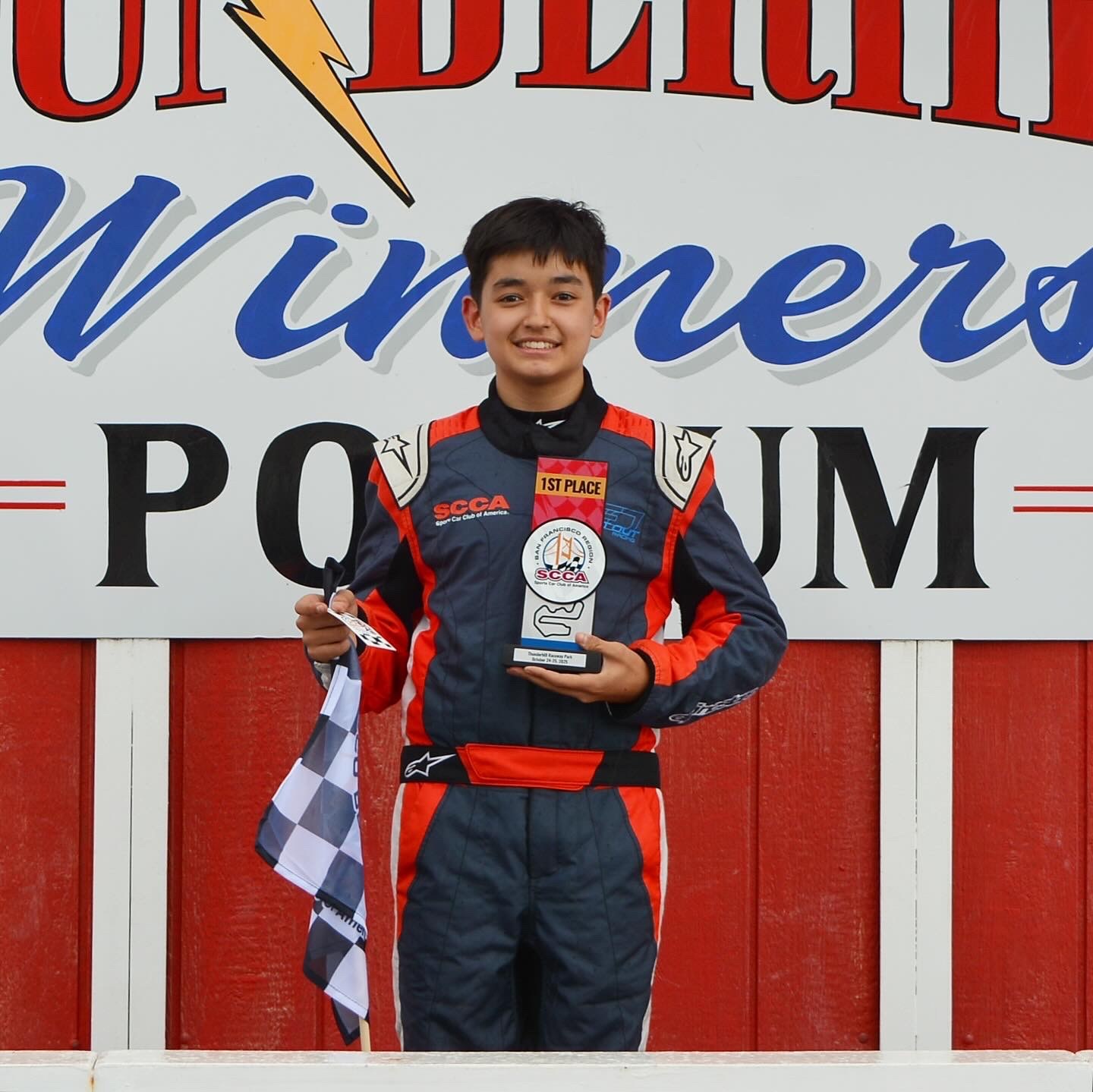
Becoming a top-tier racing driver involves more than mastering racing techniques. It also requires significant financial investment. Asad Nikadambaev, only 15 years old, is learning that a professional racing career demands building his personal brand. He develops a notable social media presence aiming to attract sponsors to fund his ascent in the racing world. The expenses at higher levels are daunting. His father, Odil Nikadambaev, revealed that the 2027 season could cost up to $350,000, excluding travel, accommodation, and crash repairs. This is steep compared to the $25-$50 go-kart rental Asad enjoyed at age 10.
Most families can’t afford that. Neither can we. At that point, we need to look for partners. We need to look for brands and companies to collaborate with so that we can make it through USF Juniors,
Odil explained. USF Juniors serves as a starting point for drivers aiming to go pro.
Asad’s situation highlights the intersection of sports and business. Aspiring athletes often need marketing skills to secure funding. However, young athletes like Asad face risks when seeking online exposure. Studies show high levels of online abuse and predatory behavior targeting them. Asad started his social media presence in January. He now boasts over 60,000 YouTube subscribers, with one viral video surpassing 10 million views. He hopes such visibility will draw the sponsors necessary to cover costs like cars, maintenance, team support, engineers, testing, tires, and travel.
From Aspiring Driver to Pro Racer
Asad’s significant success came this year during the Hoosier Racing Tire SCCA Super Tour at Buttonwillow Raceway Park in California. Competing in the Spec Racer Ford Gen3, a fast closed-wheel car reaching 150 mph, he amazed onlookers by surpassing several national champions to claim first place.
The Sports Car Club of America (SCCA) organizes the Spec Racer Ford series, offering aspiring drivers an opportunity to climb the ranks. Asad now aims to compete in USF Juniors, racing the powerful Tatuus JR-23. This open-wheel car serves as an entry point into Formula One or IndyCar, aligning with Asad’s ultimate goals.
This honestly means so much. Me, my dad, my entire family, we’ve been sacrificing so much to get to this point already, and we’re already planning to sacrifice so much more just to get to the top of motor sport,
Asad expressed.
Asad’s strategy represents a shift in sports marketing. Previously, sponsorships focused on brand placement. Now, sponsors seek engaging communities, stories, and authentic fan connections. According to Tom Potter, CEO of Rush Group, the sponsorship necessary to compete at the USF2000 level and beyond is challenging even for the most talented drivers.
In today’s environment, building a personal brand is becoming an increasingly important part of a young driver’s career development, and Asad’s approach reflects that reality,
Potter stated. Although teams prioritize skill, drivers with greater fan engagement and marketing prowess gain an advantage.
The online realm carries risks, including the potential for harassment. This is particularly concerning for minors. Professor Andrea Geurin at New York University’s SPS Tisch Institute for Global Sport has researched online abuse targeting athletes, including Olympic competitors. Geurin notes that while new generations of athletes naturally embrace social media, more must be done by teams, leagues, and governing bodies to educate young athletes.
I conducted a research study on U.S. sport national governing bodies to understand if they were educating their younger athletes about these issues and found that very few were doing so,
Geurin shared.
For now, Asad’s father manages his social media and uses tools to filter out unwanted activity, allowing Asad to concentrate on both racing and content creation.
Leave a Reply