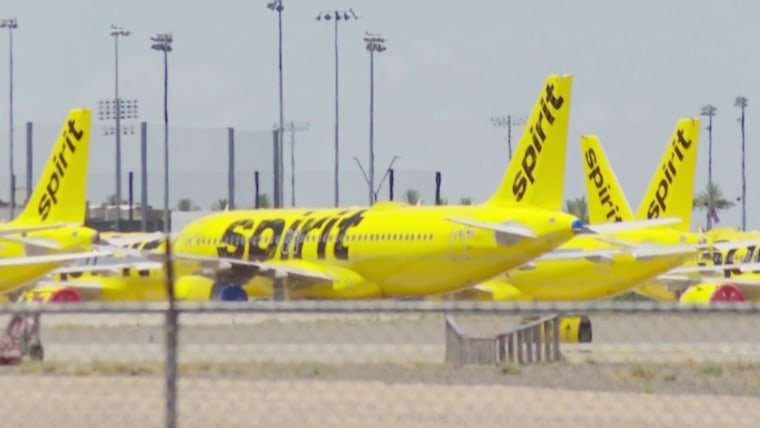
Spirit Airlines, once known for its budget-friendly approach, has ceased operations. A viral crowdfunding campaign is now trying to bring it back. Hunter Peterson, a 32-year-old voice actor and content creator, proposed on social media that if a fifth of Americans contributed $45, equivalent to the price of a cheap Spirit flight, they could purchase the airline.
Peterson’s proposal was inspired by the Green Bay Packers, the only publicly owned team in the NFL, with over five million shares owned by more than 530,000 people. His suggestion has gained traction, gathering $337 million in pledges from more than 370,000 people, though actual cash is not being collected yet.
Spirit Airlines closed on May 2 after unsuccessful merger attempts and failure to secure federal support. Peterson is now consulting with lawyers to understand regulatory constraints. Despite the enthusiasm, experts caution that the complexity of the airline industry poses significant challenges.
“An airline is a very complicated financial enterprise. There’s a lot of players involved,” noted Charles Elson, a retired finance professor from the University of Delaware.
Elson explained the intricacies involving lenders, aircrafts, government leases, and union contracts, making it unlikely for crowdfunding alone to revitalize the airline.
John Coffee Jr., a law professor at Columbia University, emphasized the costly and lengthy process of registering an airline with the SEC. He cited SEC regulations that limit fundraising power through crowdfunding, making it impractical for buying an airline.
Furthermore, Spirit’s bankruptcy filing in 2025 showed a debt of approximately $8.1 billion. Failed merger attempts with Frontier and JetBlue and rising oil prices amid war with Iran exacerbated the situation. As CEO Dave Davis explained, “We just kind of ran out of runway.”
Most airlines rely on ancillary revenue streams, such as branded credit card partnerships, rather than ticket sales alone, to maintain profitability. Delta, American, United, and Southwest reported $200 billion in revenue in 2024; however, they lost money on passenger flights.
Spirit 2.0 would need diversified revenue streams to succeed. Despite this, the campaign’s popularity shows many people seek change in the airline industry. Abigail Hartman from Indiana expressed her support, stating, “I pledged. Why not? I just want to be part of something from the start.”
Peterson stated that a specialized firm mentioned his idea could work, and he’s received interest from angel investors to finance legal fees. He emphasized the urgency due to an upcoming asset auction.
Peterson’s journey traces back to last year when he spent 24 hours traveling with Spirit for a YouTube video. Now, with support from Spirit’s flight attendant union, he aims to acquire the airline and run it collectively. He clarified, “There’s no guarantee that any of this is going to work,” adding, “We’re giving it our very best shot.”
Peterson has announced securing a legal fund to place a bid for the airline. If successful, collective members would participate in deciding the airline’s routes, leadership, and strategy. While still uncertain, Peterson and his supporters remain hopeful for Spirit 2.0’s potential revival.
Leave a Reply