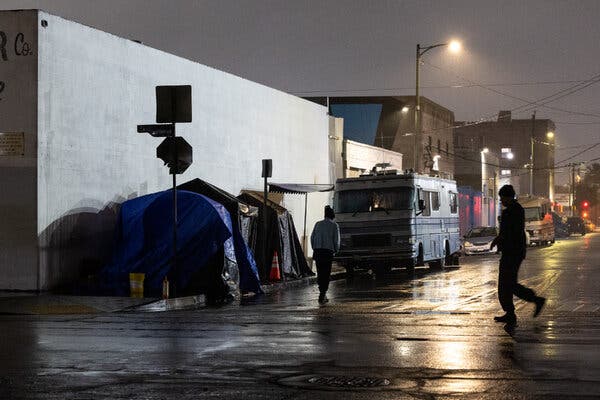
In California, the visibility of R.V.s is often associated with the state’s homelessness issue. Both neighbors and politicians are eager to address this problem, yet those who reside in these vehicles feel under pressure.
On any average night, approximately 34,000 homeless individuals in California find shelter in vehicles. Tori Larett, a lawyer advocating for the homeless in Sacramento, argues that real numbers might be twice that. Many live in recreational vehicles, converted buses, or travel trailers parked on streets.
In January, a new regulation began in Los Angeles and Alameda Counties. It permits authorities to expeditiously dismantle large vehicles valued at up to $4,000, up from $500, if their owners cannot move them without towing assistance.
“The whole state is waging a war on R.V.s right now,” said Ms. Larett, who also oversees research at the National Vehicle Residency Coalition.
For three clear days in March, Sam Lutzker and I explored Los Angeles, learning about lives in R.V.s. Mr. Lutzker, 33, is nearing the end of three years of field research for his sociology Ph.D. at U.C.L.A. “I care about these individuals deeply,” he stated.
The focal point of his work is Los Angeles City Council District 11. Here, Councilwoman Traci Park leads efforts for towing sweeps. When R.V.s are removed, she shares her achievements on social media, portraying it as a street-cleansing triumph. Local businesses and residents often rally against these vehicles, sometimes employing private security to urge R.V. residents to relocate, even if they are legally parked.
Ms. Park describes R.V. residents as living in extensive encampments of deteriorating “nuisance vehicles” where crime and unhealthy conditions prevail. “There’s widespread illegal dumping, including of human waste,” she remarked, highlighting the situation as both a public health and safety crisis.
Leave a Reply