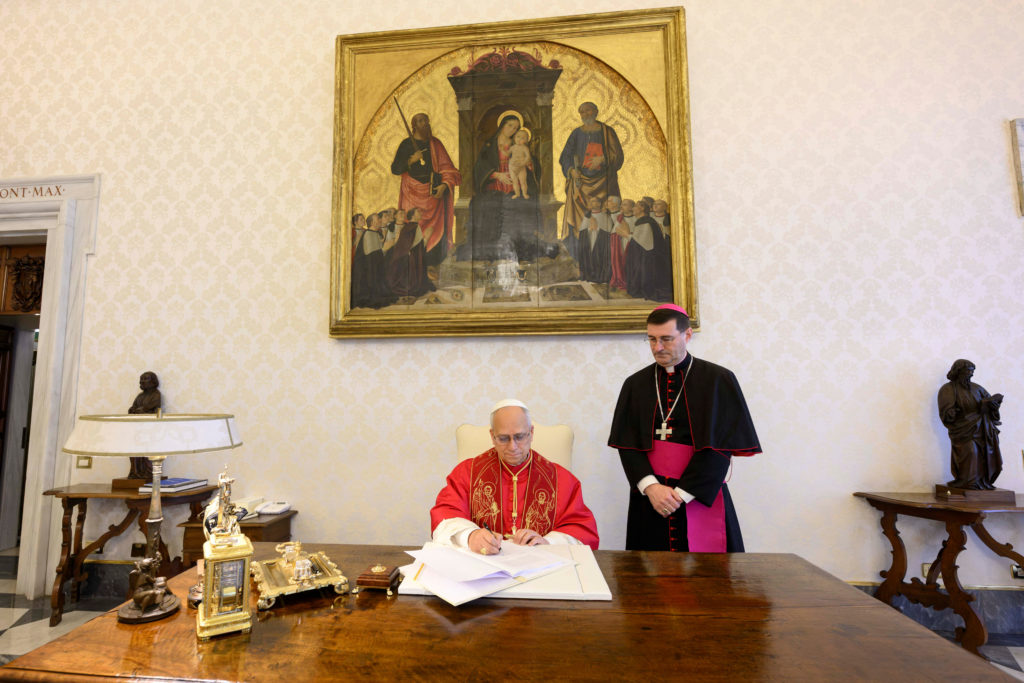
VATICAN CITY (AP) — Pope Leo XIV has urged for stringent regulation of artificial intelligence, emphasizing the need for developers to prioritize the common good over profit. His encyclical, titled Magnifica Humanitas (Magnificent Humanity), addresses the wide-ranging effects of AI on society, from employment to warfare, and marks his first encyclical message.
As the first U.S.-born pope, Leo has identified AI as the primary challenge facing humanity. He criticized the prevailing ‘culture of power’ associated with AI development, particularly its use in creating sophisticated methods of remote warfare. He stated that assigning irreversible, lethal decisions to AI systems is ‘not permissible,’ a stance that places him in conflict with the Trump administration’s push to deregulate AI.
Artificial Intelligence now demands to be disarmed, freed from logics that turn it into an instrument of domination, exclusion and death,the pope declared during a Vatican presentation.
The encyclical is expected to influence the ongoing debate over AI among tech experts, academia, and policymakers. It comes amid increasing worries about AI’s potential to replace human labor and knowledge.
Microsoft AI executive Taylor Black noted how AI provokes reflection on human existence, emphasizing the importance of ethical considerations in AI development.
AI Companies and Anthropic’s Role
Pope Leo XIV endorsed Magnifica Humanitas on May 15, 2026, at the Vatican. The event featured input from Anthropic co-founder Christopher Olah, whose company is currently in a legal dispute with the Trump administration regarding AI technology access. Despite this, Pope Leo criticized the concentration of control and data within a few private tech firms and called for robust legal frameworks and oversight.
It is not enough to invoke ethics in the abstract; robust legal frameworks, independent oversight, informed users, and a political system that does not abdicate its responsibility are required,he wrote.
Leo urged AI developers and regulators to reflect on the ethical and spiritual implications of their work, advocating for a shift away from self-interest toward collective well-being.
Anthropic’s Christopher Olah supported the pope’s criticisms, emphasizing the importance of external checks to ensure AI benefits humanity. He highlighted the urgent need for various sectors to engage in discussions about the risks posed by AI.
Pope Leo XIV’s Impact and AI Concerns
Leo, the first American pope leading over 1.4 billion Catholics, has sought to connect with U.S. Catholics by applying core Catholic social principles to the digital age. His methodical text traces the Church’s long-standing teachings on justice, solidarity, work dignity, and resource distribution.
I am convinced that this will prove to be a defining document for our era, a profound and prophetic document,commented Paolo Carozza, a Notre Dame law professor.
In addressing warfare, Leo condemned AI’s role in normalizing conflict and called for transparency from AI developers to ensure commanders remain accountable for AI-guided military actions.
The pope’s stance marks a continuation of the Church’s tradition of adapting social justice teachings to contemporary issues; his encyclical draws inspiration from Rerum Novarum, an influential document from Pope Leo XIII on workers’ rights during the Industrial Revolution.
AI’s Existential Threats and Reform Efforts
In light of the current AI revolution, Pope Leo expressed concerns about the potential for AI to threaten human dignity and employment. He condemned practices that prioritize profit over human well-being.
Leo made a historic apology on behalf of the Church for its past role in endorsing slavery and emphasized the need for ethical frameworks guiding AI development.
The Vatican has long engaged in dialogue with Silicon Valley, scrutinizing the human cost of technology. The decision to feature Anthropic at the Vatican event sparked criticism but was viewed by some, like Brian Boyd of the Future of Life Institute, as recognition rather than endorsement.
Leave a Reply