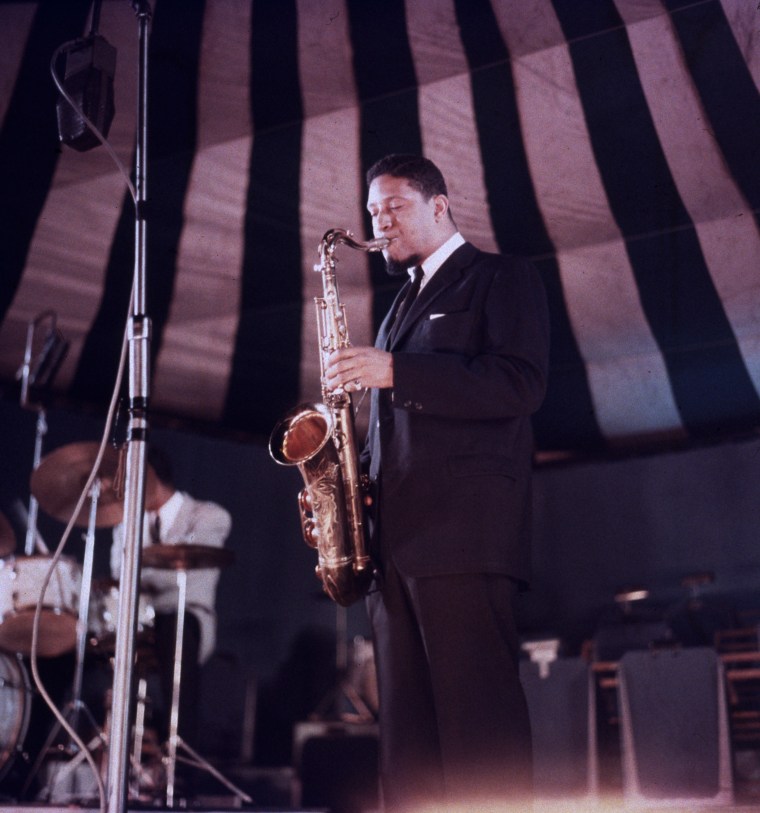
Sonny Rollins, the legendary tenor saxophonist, passed away at 95. Known for his bold sound and continuous innovation, Rollins influenced jazz for over five decades. According to spokesperson Terri Hinte, he died at his home in Woodstock, New York. While the cause of death wasn’t specified, he had been dealing with various health issues that kept him housebound.
Rollins’ journey began as a teen prodigy before evolving into a master of improvisation. Along with John Coltrane and Charlie Parker, he was among the most influential saxophonists of the bebop era. His improvisational genius brought rock fame through his sax solo on The Rolling Stones’ 1981 album ‘Tattoo You,’ where his music accompanied Mick Jagger’s dance moves.
Rollins frequently sought new artistic directions, embracing diverse styles and taking breaks to refine his craft. He described himself as ‘a work in progress,’ refusing to settle into a single method. Despite his accolades, Rollins never looked back – viewing his older recordings as flawed and challenging to hear.
Enduring Achievements
The saxophonist released several acclaimed albums in the 1990s and 2000s, contributing to his status as a living jazz legend. Maintaining a demanding practice schedule, he toured extensively into his 80s, stopping only when pulmonary fibrosis forced him into retirement. His final concert was in 2012, and he ceased playing music in 2014.
Rollins cherished performing but valued playing even more. He recounted to the New York Times how open-air concerts connected him to something beyond the crowd, highlighting his spirituality.
His 2001 album ‘This is What I Do’ earned him a Grammy for best jazz instrumental, followed by another in 2006 for ‘Why Was I Born?’ This piece, part of the album ‘Without a Song: The 9/11 Concert,’ was recorded in Boston days after the September 11 attacks, symbolizing resilience and courage.
Rollins’ closest relatives include his nephew Clifton Anderson and nieces Vallyn Anderson and Gabrielle DeGroat.
Meeting the Greats
Rollins’ breakthrough occurred in his late teens when joining Thelonious Monk’s band, leading to collaborations with Miles Davis and Bud Powell. Despite early brilliance, addiction threatened his career. After overcoming addiction, he experienced a spiritual awakening that reshaped his outlook and creativity.
Joining the Max Roach-Clifford Brown quintet, Rollins recorded ‘Saxophone Colossus’ in 1956 – a masterpiece showcasing his rich, hard bop style. His subsequent work included notable albums like ‘Way Out West’ and ‘Freedom Suite.’
At the height of fame, Rollins retreated into solitude for two years, practicing on the Williamsburg Bridge. Embracing jazz’s evolution towards free jazz upon re-entering the scene in 1961, Rollins toured Europe, merging traditional and avant-garde styles.
Rollins’ journey into Zen Buddhism during a Japan visit led to another hiatus, extending until the early 1970s.
A Living Legend
Regarded as a jazz icon upon returning in 1972, Rollins achieved mainstream acceptance. Awards such as the Guggenheim fellowship and induction into the Downbeat Hall of Fame followed, shifting performances to large venues and television appearances.
Theodore Walter Rollins was born in Harlem on September 7, 1930. Raised amidst a musical family, Rollins gravitated to the saxophone at age 11, driven by self-teaching and determination.
While Rollins leaves behind unreleased recordings, he expressed indifference to their future: ‘After I leave this planet, I won’t have any say,’ indicating relief from the pressures of artistic scrutiny.
Leave a Reply