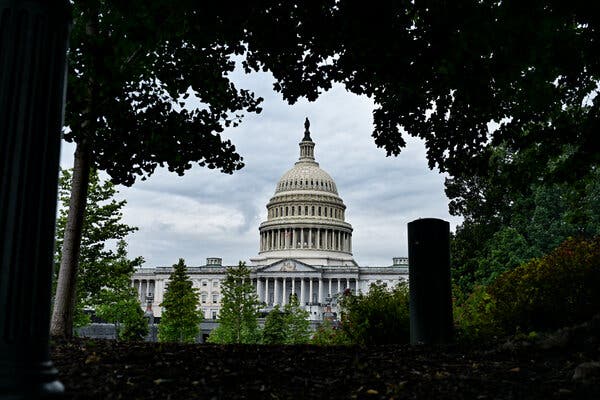
The House of Representatives plans to vote on a measure on Wednesday that directs President Trump to either withdraw U.S. forces from Iran or seek congressional approval to continue the war. Originally set to pass in late May, the resolution faced delays as Republican leaders postponed the vote to avoid potential embarrassment for the party and the president.
Adopting this resolution would be a significant reproach to President Trump and his approach to the war. Trump has consistently dismissed congressional efforts to limit his authority. Despite this, the GOP has mostly deferred to him, stepping back from asserting its prerogatives. Two weeks ago, Republicans postponed the vote, aware they could not secure enough votes to defeat the measure. It remains uncertain if they have managed to gather support since then, as the conflict continues and little progress is made toward resolution.
The Democrats have invoked the War Powers Resolution, which limits the time Congress must consider such measures, preventing further delays in the vote. Last month, three Republican House members sided with Democrats in backing a similar resolution, signaling growing disapproval of the military action, now in its fourth month.
The vote coincides with emerging rifts between Republicans in Congress and President Trump over various matters, as their priorities diverge before the midterm elections. Recently, Senate Republicans compelled President Trump to drop his request for $1 billion in security funding for a ballroom project and a Justice Department plan to establish a federal fund for victims alleging government harm.
Passing the resolution and Senate approval still leaves the question of congressional authority to compel a president to retract troops unresolved. President Trump and his aides argue that congressional efforts to restrict his war powers are unconstitutional. However, a Senate vote last month on a related measure showed some GOP members breaking ranks with the president, reflecting an increasing readiness to urge an end to a conflict that most Americans do not believe justifies the expense.
Robert Jimison reports on defense and foreign policy for The Times. Megan Mineiro covers Congress and is part of the 2025–26 Times Fellowship class for early-career journalists.
Leave a Reply