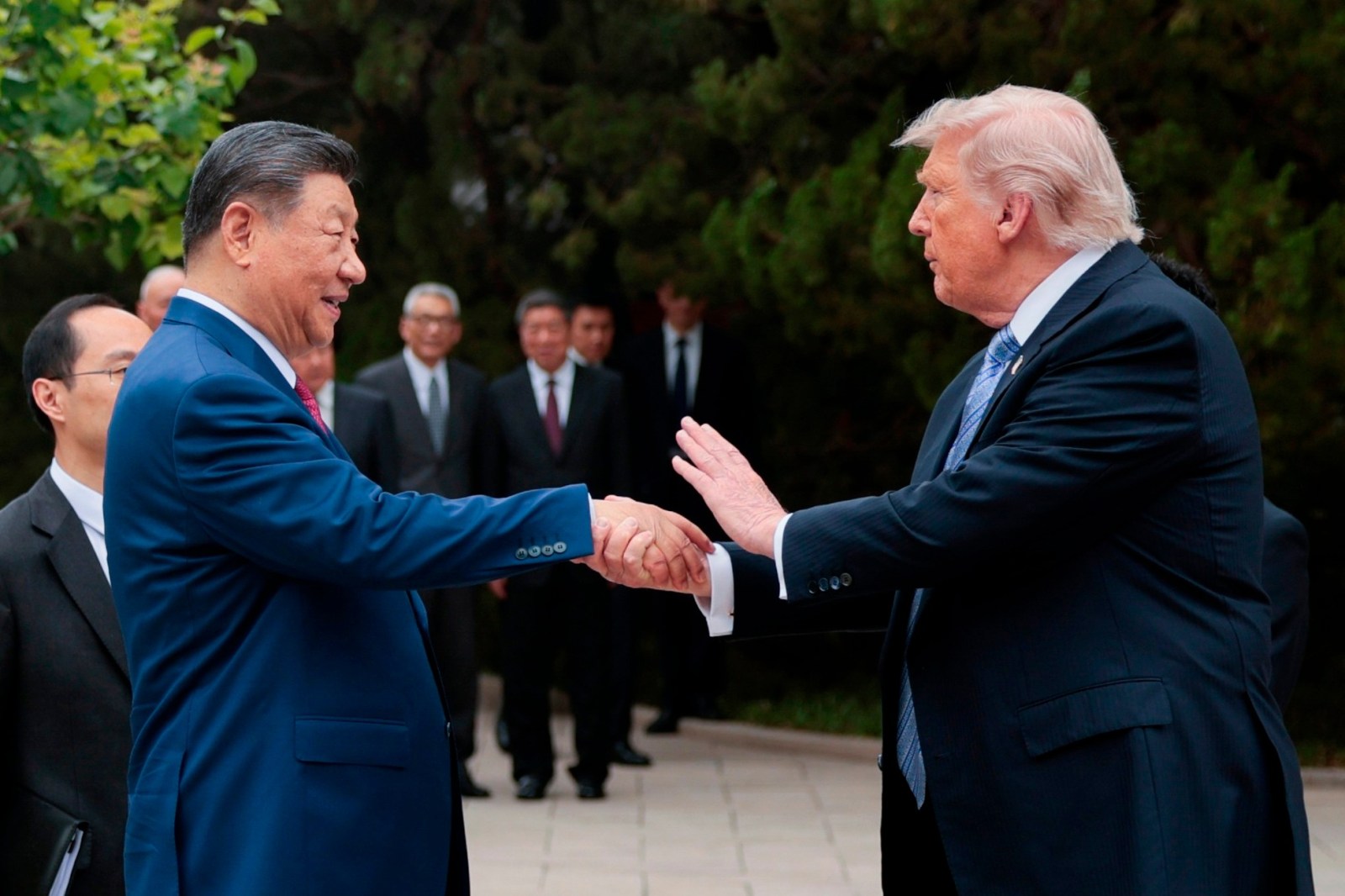
The Office of the U.S. Trade Representative is inviting public feedback on which non-sensitive goods should receive tariff reductions. This comes as the country progresses with its ‘Board of Trade’ with China, a key outcome from President Donald Trump’s state visit to Beijing, held from May 13 to 16. During this visit, Trump met with Chinese President Xi Jinping for discussions.
Public Participation Encouraged
The U.S. Trade Representative Jamieson Greer has encouraged comments from interested parties. The aim is to identify effective methods to facilitate trade with China while using tariffs to safeguard American economic and national security. The focus is on achieving balanced and reciprocal trade.
Greer mentioned the administration’s plan to collaborate with stakeholders across various sectors. This includes industries like manufacturing, fishing, ranching, as well as small businesses, to pinpoint non-sensitive goods capable of delivering positive outcomes. Stakeholders have until July 10 to submit their comments.
Newsweek reached out to the USTR and the Chinese embassy via email for remarks.
Impact on Trade Relations
Xin Qiang of Fudan University’s Center for American Studies spoke to Global Times, a Chinese state media outlet, about the initiative. He sees this call for feedback as a step toward easing trade tensions following the Trump-Xi summit. He noted that since the trade dispute largely resulted from U.S. tariff actions, a real cut in duties could reduce long-standing tensions and foster more constructive bilateral trade.
The Trump-Xi Summit
The Trump-Xi discussions largely focused on trade, a sector seen as promising for progress, amid strategic differences in areas like artificial intelligence and Taiwan.
The White House detailed the ‘Board of Trade’ as a platform for U.S. and China officials to manage trading of non-sensitive goods. The ‘Board of Investment’ serves as a forum for investment-related discussions.
While purchases of $17 billion in American agricultural products and 200 Boeing aircraft were initially expected to be significant outcomes, the White House emphasized that these trade and investment mechanisms are the ‘cornerstone’ of U.S.-China agreements, as noted by Zongyuan Zoe Liu from the Council on Foreign Relations.
Trade Tensions Background
President Trump’s trade war, which escalated during his first term, resulted in high tariffs on various countries, particularly targeting China. The tariffs on Chinese goods went up to 145 percent, addressing what Trump called unfair trade practices and inactivity on fentanyl precursor production.
The easing of trade tensions started during an October meeting between Trump and Xi in Busan, South Korea. The U.S. reduced fentanyl-related tariffs on Chinese goods from 20 percent to 10 percent. Meanwhile, China committed to resume U.S. soybean imports and lifted restrictions on rare earth exports for one year.
Leave a Reply