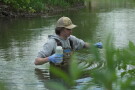
Iowa’s Maquoketa River, known for its beauty and recreational opportunities, is also a site of concern due to water pollution. Hannah Ray J Childs, an enthusiast of whitewater kayaking, enjoys the thrill of acrobatics on the river. Yet, she faces health risks from water contaminants, opting for nose and ear plugs for protection.
Despite prevalent water pollution, Childs cherishes the community she found through kayaking, including meeting her husband during a kayaking session. Many question her passion for this activity, citing the polluted state of Iowa’s waterways.
Midwest Water Pollution
Iowa exemplifies the broader challenges of water pollution in the Midwest. The state’s heavy agriculture, including corn, soybean, and hog farming, leads to fertilizer and manure runoff. These substances drain into rivers and contribute significantly to pollution, including an aquatic dead zone in the Gulf of Mexico.
Summer water restrictions were imposed due to nitrate pollution in tap water. Such issues affect public health and recreational water use. Lakes and streams often fail to meet standards for swimming, drinking, and aquatic life, largely due to agricultural runoff and sewage issues.
Efforts to Combat Pollution
Iowa’s approach relies on voluntary actions to reduce it, yet results fall short of achieving goals. Environmental groups have sued over regulatory changes on pollution standards. Efforts to improve water infrastructure have escalated, with substantial financial investment in projects by Governor Kim Reynolds.
Practical measures like cover crops and reduced tillage are on the rise. However, challenges persist due to the state’s reliance on heavy agriculture and voluntary compliance rather than mandates.
Community Engagement and Challenges
Iowa’s identity is influenced by its waterways, including the Missouri and Mississippi rivers. These spaces offer beauty and recreational opportunities, yet also face pollution that affects enjoyment and health.
Childs, deeply connected to the Maquoketa River, advocates for community investment and awareness in local environmental care. Her efforts, including testing river chemicals and promoting recreational parks, aim to engage people in conservation.
Struggles with Water Pollution
Former state poet laureate Mary Swander and others face difficulties due to pollution, impacting social interactions and outdoor enjoyment. Bacteria, often from agricultural runoff, significantly restrict access to clean streams.
Lake Darling, a once thriving recreational venue, exemplifies ongoing water quality struggles. Algal blooms and bacteria advisories continue to plague this human-made lake despite conservation efforts.
The lake’s history of renovation highlights the challenges in maintaining water quality amidst new agricultural operations contributing to nutrient runoff.
Efforts by volunteers and environmental professionals, like Claire Hruby, emphasize the ongoing necessity for water testing and management strategies.
Future Directions
Iowa remains symbolic of the Midwest’s struggle with water pollution. Debates continue over regulatory approaches to agriculture and pollution management. Initiatives focus on voluntary strategies and collaboration to address issues.
Some states, like Minnesota, enforce mandatory vegetative buffers to reduce runoff, contrasting Iowa’s voluntary approaches. Collaboration between state authorities and farmers is seen as key, striving to balance agricultural needs with environmental health.
The Environmental Protection Agency aids states in implementing strategies, emphasizing agriculture’s role in solutions.
Challenges remain significant amidst rising supply and fertilizer costs. Farmers experience pressure to adopt sustainable practices despite financial and resource constraints.
Aaron Lehman of the Iowa Farmers Union notes the challenges farmers face in achieving sustainable practices and the time required for significant impact.
Local successes in maintaining water bodies through conservation efforts offer hope. Iowa Great Lakes exemplifies successful local initiatives in preserving water health crucial for tourism and quality of life.
David Thoreson, an adventurer inspired by Iowa’s lakes, underscores the importance of local understanding and conservation efforts impacting community economy and values.
The Walton Family Foundation supports coverage of water and environmental policy to address ongoing concerns.
Leave a Reply