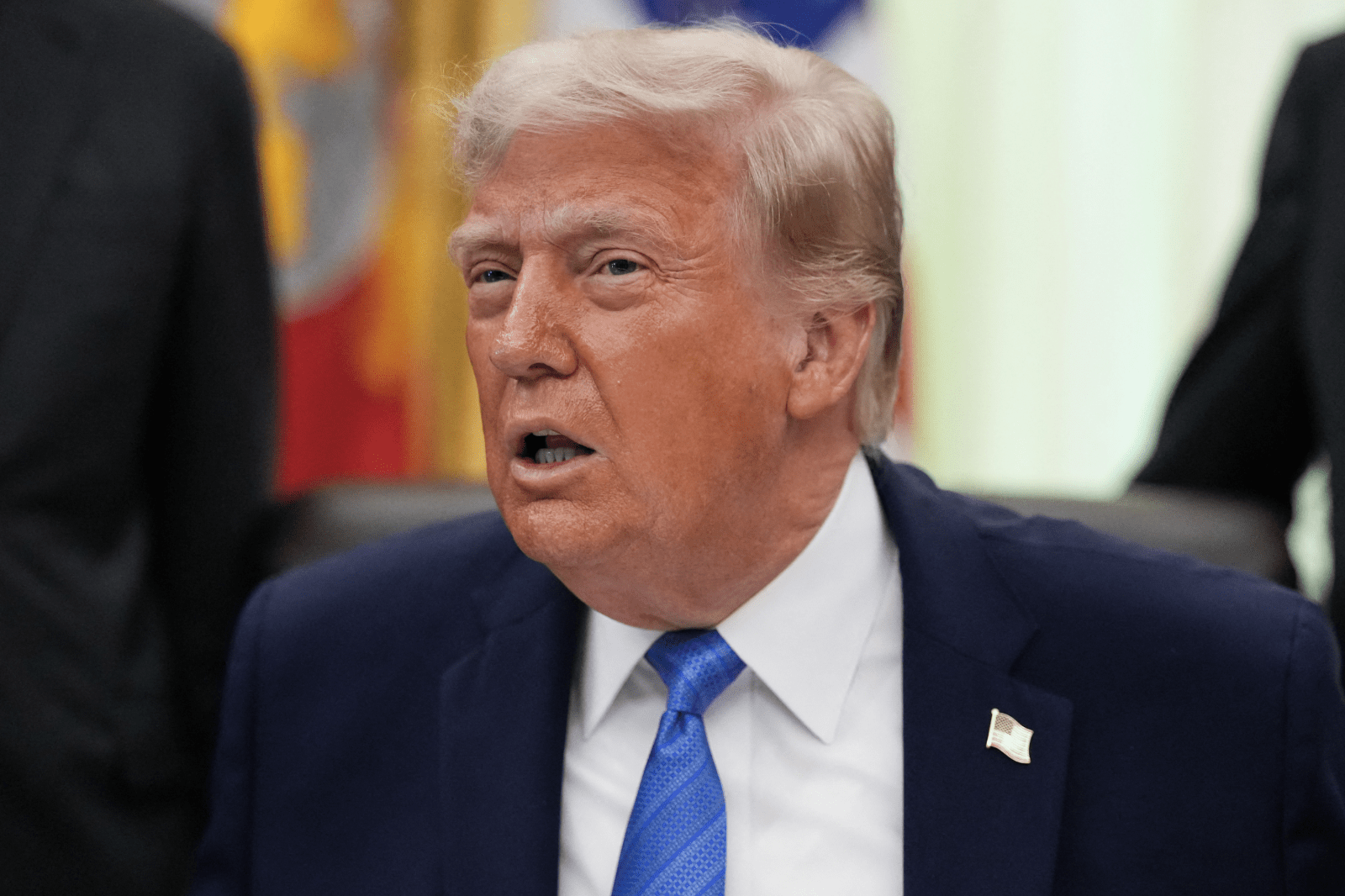
President Donald Trump has expressed uncertainty about renewing the United States-Mexico-Canada Agreement (USMCA). This comes as the U.S., Canada, and Mexico prepare to host the 2026 FIFA World Cup together. The situation highlights a delicate balance between economic competition and political collaboration in the region.
Trump’s announcement on June 10 suggests a hesitance to extend the trade deal. This remark emerges amid noticeable trilateral cooperation, stressing potential changes in North American trade relations. Businesses, exporters, and supply chains in these countries face increased ambiguity as USMCA review discussions approach.
Why North American Trade Matters
In 2026, a pivotal review phase will determine whether the USMCA will be extended or if it will edge towards expiration by 2036. Trump’s declaration revives existing tensions concerning deficits, tariffs, and industrial policies. Such tensions unsettle one of the globe’s most intertwined economic areas.
Understanding Trump’s Remarks
Trump’s comments occurred just before the 2026 FIFA World Cup’s commencement. This event is co-hosted by the countries currently experiencing heightened trade-related friction. Trump suggested he is uninterested in renewing the USMCA, a pact replacing NAFTA during his initial presidential tenure.
The agreement demands a six-year review process. In 2026, the U.S., Canada, and Mexico will decide whether to prolong the agreement beyond the 2036 sunset clause. Without an extension, the deal doesn’t terminate instantly. Instead, it prompts annual reviews, potentially leading to extended renegotiation and unpredictability.
“I made the deal and the primary reason I made the deal is that NAFTA was the worst trade deal I’ve ever seen. Yeah. And I made it better. But I had the right to terminate,” Trump stated on Wednesday.
Under the USMCA, $1.6 trillion in annual trade moves without tariffs across North America. This supports closely knit supply chains, which span industries like automotive, energy, and agriculture.
As per the agreement, by July 1, each country must indicate interest in extending the deal for 16 more years. If consensus is not reached, a cycle of yearly reviews will commence, lasting up to a decade before potential expiration, Reuters reports.
Canada’s Early Renewal Request
In anticipation of prolonged uncertainty, Canada has advocated for an early renewal. Canadian officials emphasize long-term stability in cross-border trade, despite recent disagreements with the Trump administration over tariffs applied in his second term.
The scenario illustrates a clash between cooperation and conflict. While North America projects unity to the world, especially through large-scale events like the 2026 World Cup, internally, its economic framework is under question. The situation is not unique; Trump has previously adopted a similar negotiating stance with NATO allies.
Infrastructure Advances Amid Political Pressure
The construction of the Gordie Howe International Bridge between Detroit and Windsor is nearing completion. This infrastructure project is expected to alleviate congestion in a crucial trade corridor. Despite political obstacles, it aims to harness economic interactions between the U.S. and Canada for decades.
Earlier in the year, Trump hinted at potential renegotiations regarding U.S. ownership of the bridge. Canadian Prime Minister Mark Carney acknowledged progress delays but emphasized the project’s long-term benefits for both nations.
“There is no big drama. If it takes a little longer it will take a little bit longer, but this will benefit Canadians, Americans, business, tourists, residents for decades and decades to come,” Carney said.
Looking Ahead
The future of USMCA remains in question. Whether it will undergo renegotiation, face prolonged insecurity, or witness a major reshaping of regional trade is uncertain. What is evident is that upcoming discussions will influence the economic direction of North America.
Negotiators are scheduled to convene in Washington on June 16 and 17 to deliberate crucial sectors like agriculture. Another session is set in Mexico City later in the month.
Leave a Reply