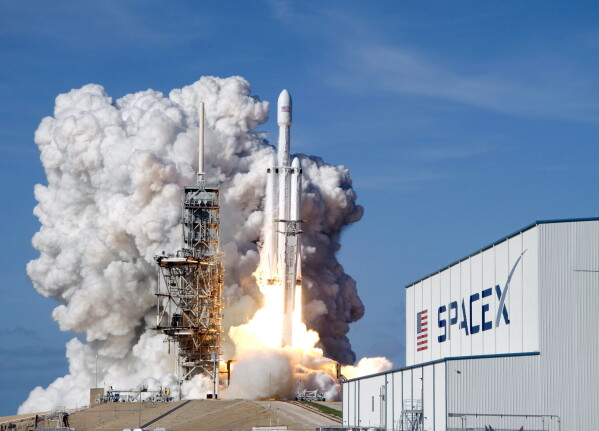
Elon Musk has become the world’s first trillionaire. This status follows the surge in SpaceX’s shares after it launched a massive IPO. On Friday, SpaceX’s stock rose by 24%, indicating investors’ confidence in its future prospects despite current financial losses.
SpaceX shares opened at $150 and climbed to approximately $168, bringing the company’s market value to $2.2 trillion. Forbes estimates Musk’s net worth at $1.2 trillion, enhanced by his roles at SpaceX and Tesla.
Reasons for Going Public
SpaceX, founded in 2002, is going public to fund ambitious projects. Musk envisions reaching outer space with satellites and data centers, with future goals of a human colony on Mars. During Nasdaq’s trading launch, Musk emphasized his vision for making life on other planets possible: “Not just a few astronauts, I mean you,” he stated.
Musk is known for both innovation and making ambitious claims. Despite billions in losses, SpaceX’s IPO interested many institutional and retail investors. SpaceX shares initially sold at $135 and generated $75 billion, surpassing the 2019 Saudi Aramco’s IPO. Under the symbol “SPCX,” SpaceX aims to lead in space colonies and large orbital data centers, competing in AI development with companies like Anthropic and OpenAI.
Challenges and Valuation
SpaceX aims to raise billions more, having recorded an $8.7 billion loss from early 2025 to early 2026. Some analysts argue the company’s technology is unproven and IPO valuation inflated. Morningstar posits SpaceX’s true value at $780 billion, cautioning high-level risk due to large capital needs and unprofitable ventures, like its AI arm, xAI.
Musk provided limited IPO details during a livestreamed event. He instead discussed potential “moon hotels” and solar-powered data networks. Investors remain curious about SpaceX in index funds despite the IPO raising governance concerns over mandatory arbitration and Musk’s control.
Elon Musk’s Wealth Journey
Musk previously created Zip2 and PayPal, earning $200 million which helped fund SpaceX and Tesla. SpaceX achieved rocket reusability, while Tesla popularized electric vehicles. Musk’s wealth largely comes from stock and potential future shares.
Despite criticisms over Tesla’s executive package, Tesla’s performance since its IPO in 2010 yielded a massive 20,000% return for investors. SpaceX’s IPO is expected to influence “megacap” companies, with Anthropic and OpenAI planning to follow. Nasdaq adjusted its rules for SpaceX’s inclusion, prompting mixed reactions from various organizations over shareholder provisions and Musk’s authority in the company.
Leave a Reply