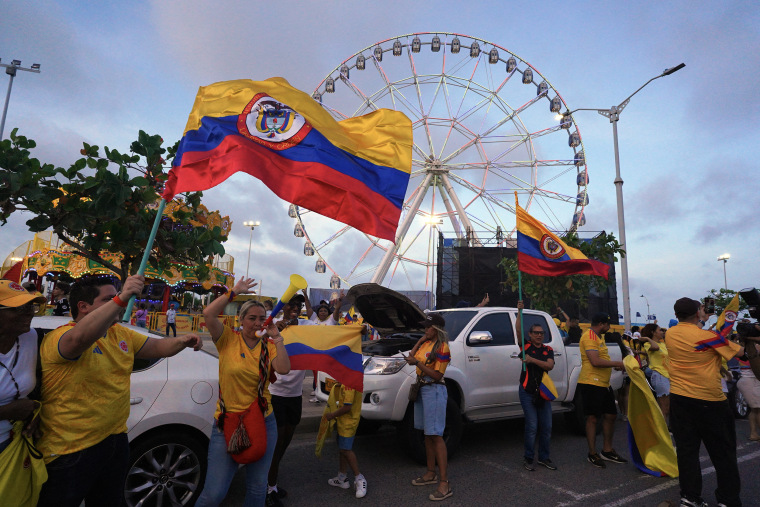
Abelardo de la Espriella, a political outsider, holds a narrow lead in Colombia’s presidential election with most votes counted. De la Espriella, a businessman and lawyer endorsed by U.S. President Donald Trump, stands at 49.7% compared to progressive lawmaker Iván Cepeda’s 48.7%. Despite nearly complete results, election officials have yet to declare a formal winner. If victorious, de la Espriella’s win could signify a rejection of outgoing President Gustavo Petro’s policies.
Standing behind bulletproof glass in Barranquilla, de la Espriella addressed supporters, expressing gratitude and promises of inclusive governance. Iván Cepeda, supported by Petro, intends to contest results from over 30,000 voting stations. Historically in Colombia, no recount has reversed a presidential election outcome. Cepeda’s supporters emphasize their unwillingness to see social progress regress or the democratic process infringed upon. Petro is also planning to contest the outcome.
The election will decide the next leader for Colombia as of August 7, impacting the nation’s approach to internal conflict and crime. Abelardo de la Espriella, nicknamed “The Tiger,” advocates a tough stance against crime, focusing on drug trafficking and abandoning parallel peace talks with armed groups. His intentions to construct megaprisons mirror Salvadoran President Nayib Bukele’s policies. His approach has attracted criticism for potential human rights violations.
Hailing from Bogotá, retired economist Víctor Duque considered these elections crucial, underscoring their significance in resolving longstanding issues of armed conflict and drug trafficking. International figures, including U.S. Secretary of State Marco Rubio, have congratulated de la Espriella, highlighting the expected cooperation between Colombia and other nations in terms of security and economic ties.
Iván Cepeda’s campaign, originally leading in early polls, struggled as allegations of election misconduct arose. Supporters like Yolanda Hernández, who switched support from Petro to de la Espriella, voiced dissatisfaction with Petro’s unfulfilled promises. Analysts like Will Freeman from the Council on Foreign Relations believe the election reflects both regional and ideological polarization in Colombia.
Meanwhile, the ten-year anniversary of the peace treaty with the Revolutionary Armed Forces of Colombia (FARC) highlights ongoing violence issues. Clashes among illegal armed groups have resulted in increased homicide rates and extortion cases. De la Espriella’s commitment to combating crime involves firm actions against these groups, indicating significant policy shifts if he assumes the presidency.
Leave a Reply