President Donald Trump announced that Iran has agreed to comprehensive and ongoing nuclear inspections. This statement came even as Iran denied making such concessions in discussions aimed at ending the conflict between the two nations.
The variance in statements arose when Vice President JD Vance echoed the optimistic outlook of mediators after the first high-level talks in Switzerland. Vance noted that the United States and Iran have established a strong foundation for a final agreement. He added that Iran agreed to allow the International Atomic Energy Agency (IAEA) to inspect nuclear sites bombed by the U.S. last year. He also suggested Iranian financial assets, once unfrozen, would be used to purchase American-grown food.
Trump supported these statements, warning that without these agreements, negotiations would not continue. He mentioned keeping the Hormuz Strait open, refraining from further naval blockades, based on Iran’s concessions. However, Iran’s Foreign Ministry spokesperson Esmail Baghaei refuted claims of scheduled IAEA visits to bombed sites, noting limited access since the 2025 Israel conflict.
“The IAEA has been in and out of Iran since Israel’s 12-day war in 2025, but has not been granted access to the bombed enrichment sites targeted by the U.S. at the time.”
Amid these diplomatic developments, violence resurfaced in southern Lebanon as Israeli forces killed two people, following a short two-day ceasefire. Renewed conflict threatens broader negotiations as Iran ties Lebanon’s truce to any comprehensive deal with the U.S.
Iranian President Masoud Pezeshkian visited Pakistan for talks with officials mediating these negotiations. This visit marked his first since the conflict with the U.S. began in February with attacks on Iran by the U.S. and Israel. Initial talks resulted in an agreement to establish a de-confliction cell to address Lebanon-Israel hostilities and ensure the Strait of Hormuz remains accessible for oil transit.
Pezeshkian emphasized the importance of commitment, stating progress hinges on adherence to obligations. He noted that statements outside agreed texts hinder negotiations.
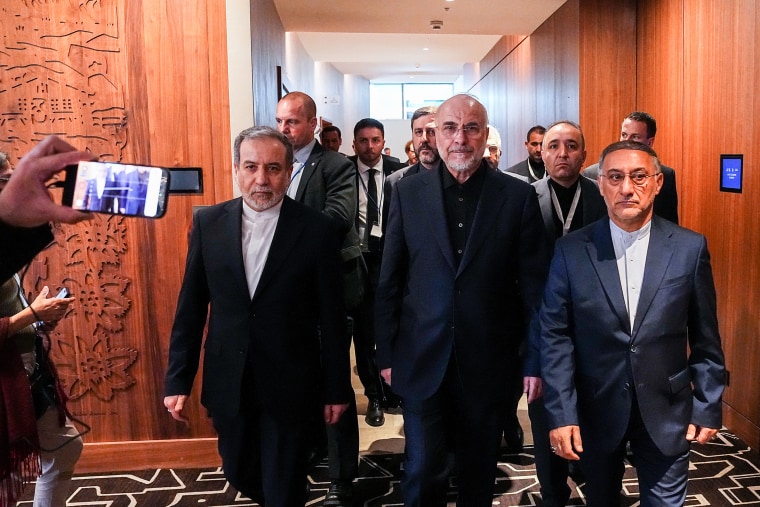
The talks fostered technical discussion groups on sanctions relief, nuclear matters, reconstruction, and monitoring. Iran’s deputy foreign minister Kazem Gharibabadi indicated that the involved countries created a contact mechanism for ship passages through the Strait of Hormuz and addressed the conflict in Lebanon.
The de-confliction cell aims to cease fighting between Hezbollah and Israel, with Israel maintaining its position in Lebanon despite ongoing attacks. Violence erupted again, with Israeli forces firing on individuals near a ceremonial procession, escalating tensions.
Following Swiss negotiations, Vance stated that unfrozen Iranian assets would benefit American agriculture, with U.S. and Qatari oversight, sparking critique from Iran. Iran insists on self-determination regarding asset use.
“Iran is the only country who decides what to do with those assets,” stated Iran’s ambassador in Geneva, emphasizing autonomous control over financial decisions.
Furthermore, Israeli Prime Minister Benjamin Netanyahu voiced concerns over the fragile Lebanon ceasefire, affirming Israel’s right to self-defense and rejecting withdrawal without guaranteed security. Trump responded, asserting plans to evaluate the situation, underscoring his problem-solving approach to regional conflicts.
In light of these interactions, Lebanon and Israel scheduled another direct meeting in Washington to discuss Israeli withdrawal strategies.
Leave a Reply