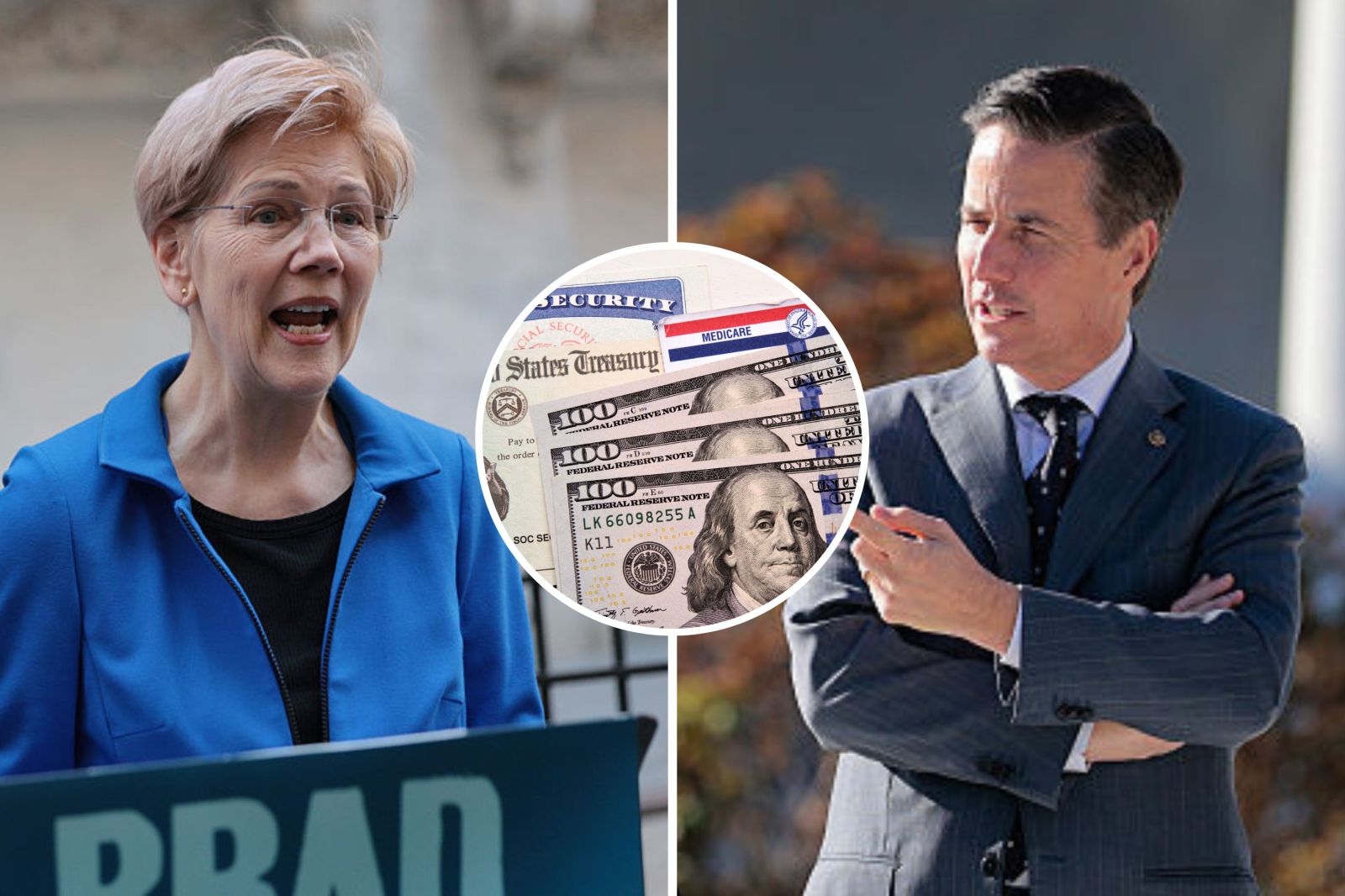
Senators Push for Action on Social Security
Elizabeth Warren, a Democrat from Massachusetts, and Bernie Moreno, a Republican from Ohio, have united to urge Congress for immediate measures to stabilize Social Security. Their joint op-ed, published in The New York Times, proposes a bipartisan plan aimed at preserving Social Security for future generations.
Removing the Cap on Payroll Taxes
Warren and Moreno’s proposal centers on removing the income cap subject to Social Security payroll taxes. They argue for lifting the tax cap as a common-sense solution to protect benefits while restoring fairness. The piece criticizes the inequality in taxing middle-class workers more heavily relative to wealthier individuals.
“Instead of cutting benefits for the retirees who count on Social Security, we need to take bipartisan action to protect those benefits, reward work and restore fairness,” Warren and Moreno wrote.
Significance of Social Security
Social Security is vital for millions of Americans, providing a reliable source of retirement income. However, its financial outlook is bleak, with predictions of significant trust fund depletion by 2032, possibly resulting in more than 20 percent cuts in benefits.
Details of the Proposed Changes
Social Security taxes currently apply only to wages up to $184,500. Warren and Moreno suggest lifting this cap, which could substantially increase revenue without cutting benefits. The senators highlighted the disparity where most Americans pay taxes on all earnings, while higher earners only pay on a portion.
“Most Americans pay Social Security taxes on 100 percent of their earnings, while the highest earners are paying on only part of theirs,” they wrote.
Debate and Implications
The proposal is expected to spark debate due to divided opinions on addressing long-term shortfalls. Some view raising the payroll tax cap as a straightforward method to increase revenue. Critics warn it could lead to significant tax hikes for high-income workers and businesses, potentially not fully resolving funding gaps.
A financial expert, Alex Beene, noted the proposal’s potential to inject trillions into the program, delaying benefit cuts. However, this would also mean higher taxes for high-income earners.
Impact on Retirees
For retirees, the proposal’s implications are significant. Without action, benefits may be reduced post-2032. Proposals like this suggest higher earners might contribute more, preserving benefits. Legislative changes would take years, posing challenges but representing a step forward in securing senior citizen welfare.
“If we are going to save Social Security, more money needs to be in the system, period. Endless discussions, commissions, and heated debates have just served to kick the can down the road. This is a real step forward,” Drew Powers stated.
Next Steps
Warren and Moreno are progressing on legislation for their proposal, though specifics remain undisclosed. Congressional approval is necessary for changes, historically challenging due to the program’s political sensitivity. The approaching depletion date adds pressure on lawmakers to find a viable solution.
Newsweek editors involved in this story include Jason Lemon and Gray R. Thomas.
Leave a Reply