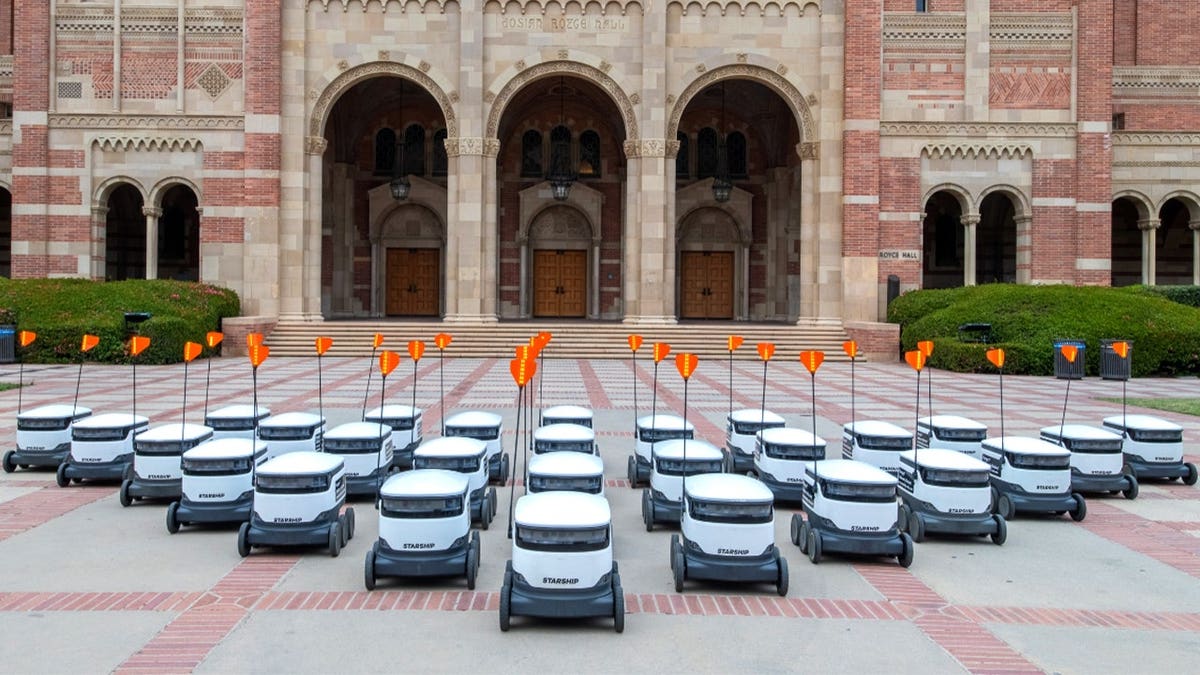
Robots once delivering snacks and meals across college campuses are now embarking on a new mission. Starship Technologies plans to shift their operations from U.S. universities to grocery chains and hot food delivery in cities across the United States and Europe. This change will involve more than 1,200 robots used in educational environments transitioning to urban settings.
From Campus Mascots to City Deliverers
Starship robots, familiar for their polite patience at crosswalks, became beloved on campuses, serving as both convenience and mascot. The transition from controlled college campuses to bustling city sidewalks poses new challenges. Will city dwellers welcome these autonomous devices as they did in academic settings?
Reasons Behind Campus Pullback
The decision to move operations comes as Starship focuses on expanding its grocery delivery. The company predicts a tenfold growth in this sector over the next two years, fueled by demand from major retailers. In Finland, Starship’s robots facilitate one in five grocery deliveries, a blueprint the company aims to replicate globally. Campus robots are therefore redeployed to further this expansion.
Testing Grounds in Colleges
Starship’s presence in U.S. universities began at George Mason University in 2019 as the first to offer autonomous deliveries on campus. College students, needing food at odd hours, embraced the convenience of robot delivery. The pandemic further highlighted the appeal of contactless service, reinforcing robots’ usefulness.
Transitioning Services
Starship assures that the campus withdrawal won’t be immediate. Services will continue through the 2026–2027 school season with plans to minimize disruption. This deliberate move supports stronger market opportunities outside academia. Starship claims its robots achieve grocery delivery costs $3-$4 lower than traditional couriers, attracting retailer interest.
Challenges in Urban Environments
Urban sidewalks present difficulties that campuses do not, such as interactions with diverse pedestrians. Design considerations are crucial to prevent robots from obstructing walkways. Reports of robots getting stuck or causing accessibility issues have emerged, notably in Chicago, raising questions on urban readiness.
Grocery Delivery Dynamics
Transitioning to grocery delivery involves heavier loads and regular routes. Successful adaptation could meet urban demand for cost-effective local delivery and reduced traffic congestion. The global food delivery market, valued at $650 billion, seeks systems with enhanced autonomy, a goal Starship actively pursues.
Starship’s Estonian Roots
Founded in Tallinn, Estonia, by Ahti Heinla and Janus Friis, Starship retains core engineering and AI development teams there. This shift signifies a strategic expansion of operations, impacting where and how these robots will function.
The Public Perspective
Starship’s advancement into city spaces indicates a shift in the delivery robot business. While college campuses helped gain public affection, urban grocery delivery promises financial success. However, public sidewalks require companies to establish trust and design harmonious solutions for all pedestrians.
Robots should not hinder mobility for individuals with canes, strollers, or wheelchairs, avoiding turning public areas into obstacle courses. Companies must ensure robots function seamlessly without adding challenges to daily life.
Considerations for Residents
As robots begin appearing near groceries and restaurants, observe their behavior. Ensure they give way to pedestrians and manage crowded sidewalks. Understand local regulations for delivery devices and report issues to city officials or companies with evidence.
Privacy remains crucial as these robots navigate using sensors and cameras. Consumers deserve clarity on data collection and access protocols, particularly concerning law enforcement.
Leave a Reply