On July 11, 2026, Senator Lindsey Graham passed away at the age of 71. The medical examiner’s initial report indicated an aortic dissection as the cause of death. This is a tear in the aorta’s wall, a major artery that leads blood out of the heart. The final death certificate is pending, but the finding has been termed ‘sudden’ by many reports. Aortic disease often remains undetected until it becomes life-threatening.
Understanding Aortic Problems
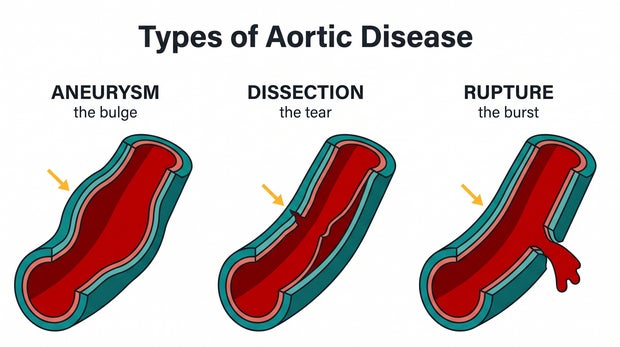
The aorta is the body’s largest artery, extending from the heart through the chest and abdomen. Three primary issues can occur with the aorta: aneurysms, dissections, and ruptures. These conditions are related but distinct.
An aneurysm is a bulge formed by a weak spot in the aortic wall that stretches and balloons over time. Often symptomless, aneurysms are usually discovered accidentally during scans for other health issues. As an aneurysm enlarges, the risk of failure increases.
A dissection occurs when blood breaks through the inner lining of the aorta, splitting the wall layers and creating a false channel. This condition manifests suddenly, often with tearing chest or back pain, and represents a critical emergency. Dissections are sometimes mistaken for heart attacks since they do not always require an aneurysm to occur first.
A rupture is a complete break in the aortic wall, causing blood to spill into areas it should not, such as the chest or around the heart. This often proves fatal within minutes, resulting from either an aneurysm or a dissection.
Aortic Disease in Perspective
Dissections commonly affect older adults, exacerbated by high blood pressure and arteriosclerosis. Younger individuals with aneurysms often face inherited conditions affecting connective tissue.
Senator Graham’s passing resulted from aortic tearing, typical of longstanding arteriosclerosis. In contrast, Grant Wahl, a soccer journalist, experienced a rupture at 49 due to a different underlying issue.
Personal Stories: Grant Wahl and Lindsey Graham
Wahl’s aneurysm was located just above his heart when it burst, causing fatal consequences. The autopsy revealed his arteries were not hardened, contrasting with Graham’s condition.
I couldn’t have known. He had no symptoms, and nothing in his life would have pointed a doctor to his aorta.
Author Dr. Céline Gounder, also Wahl’s spouse, sought answers through an autopsy. The New York City medical examiner discovered a potential genetic link, identifying a variant in a gene related to connective tissue, which might have prompted the aneurysm.
Turning Tragedy into Prevention
Despite uncertainties in genetics and disease linkage, the identification of a genetic variant allowed family members to undergo testing. Some relatives were found to carry the same genetic change, enabling early monitoring and intervention.
Actor John Ritter’s death from aortic dissection led to the creation of the John Ritter Foundation for Aortic Health, aiming to prevent such tragedies through awareness and research.
Screening and Prevention Recommendations
- When to seek screening: If a first-degree relative experienced a thoracic aortic aneurysm or dissection, or if there is a sudden unexplained death in the family, especially before age 60.
- Persons with features suggesting a connective tissue disorder should consider screening.
- Men aged 65-75 who have smoked should get an abdominal ultrasound to check for aneurysms.
Genetic Testing: Recommended for those with aneurysms or dissections and symptoms of connective tissue disorders, or a family history of aortic disease. Identifying specific genetic variants can help monitor and protect other family members from risk.
Monitoring aneurysms involves controlling blood pressure, regular imaging, and surgical intervention when necessary. Prevention and early detection remain crucial for individuals with a family history of aortic disease.
This article was originally published in Dr. Céline Gounder’s “Underlying Conditions” newsletter on Substack.
Leave a Reply