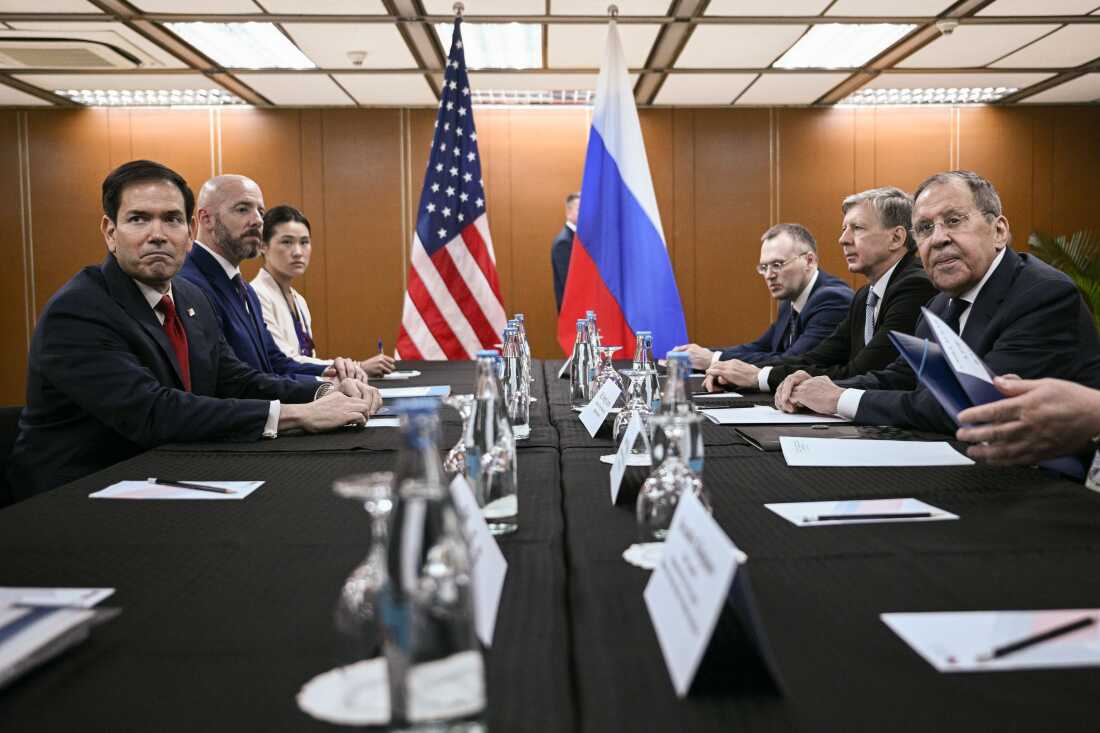
U.S. Secretary of State Marco Rubio met with Russia’s Foreign Minister Sergey Lavrov on the sidelines of the ASEAN Foreign Ministers Meeting in Metro Manila on July 23, 2026. Rubio expressed the Trump administration’s intention to help end the conflict in Ukraine. However, he acknowledged the challenges present, emphasizing that a diplomatic solution requires sustained effort and innovative ideas.
Rubio highlighted the previous U.S.-mediated talks, describing them as having been unsuccessful in reaching a comprehensive agreement. He maintained that President Donald Trump remains committed to mediation if circumstances become conducive. Rubio stated, “That’s been the challenge — an end that both sides can accept.”
Alongside his meeting with Lavrov, Rubio engaged with other key leaders, including China’s foreign minister, during the ASEAN gathering. While discussing U.S. foreign priorities, Rubio noted America’s ongoing focus on Asia amidst other global conflicts, such as the rising hostilities with Iran and ongoing tensions involving Cuba.
ASEAN Talks: Focus on International Conflicts
The ASEAN meeting involved three days of discussions centered on regional and international conflicts. These included the Middle East escalation and South China Sea tensions. Rubio spoke about concerns that U.S. engagements in different areas could dilute focus. Yet, he reassured of consistent U.S. involvement in Asia, attributing it to strong regional partnerships.
Russia’s Lavrov avoided comment in Manila, yet the Russian Foreign Ministry emphasized Moscow’s stance against arming Ukraine. Lavrov reiterated Russia’s preference for a political solution aligned with previous agreements reached between Presidents Putin and Trump.
Rubio acknowledged the unchanged U.S. policy on military support for Ukraine, confirming ongoing weapons transfers from NATO allies. Meanwhile, Ukrainian President Volodymyr Zelenskyy stressed negotiations as his priority in resolving the conflict.
U.S.-Iran Tensions and Policy Stances
The U.S. efforts to mediate the Russia-Ukraine crisis were overshadowed by renewed confrontations with Iran. Hostilities intensified post the breakdown of a ceasefire, leading Rubio to declare, “The price will continue to get higher every single night until they come to their senses.” He commented on Tehran’s alleged overtures for talks, suggesting they are not prepared for serious negotiations.
President Trump’s threats of retaliatory strikes on Iran, following Iranian aggression in the Strait of Hormuz, were reiterated by Rubio.
China’s Maritime Actions and Regional Implications
Concerns over China’s military activities arose following a missile test conducted from a nuclear-powered submarine. Australian Foreign Minister Penny Wong criticized the action, calling it destabilizing due to inadequate regional notification. China defended the launch, describing it as part of its annual exercises, asserting due notification was given.
Rubio discussed recent tensions in the South China Sea with China’s Foreign Minister Wang Yi, citing specific incidents involving Chinese and Filipino forces. He noted the potential global impact of any conflict, whether economic or otherwise, between the U.S. and China.
In Beijing, the Chinese coast guard admitted to using measures against Philippine ships near the Scarborough Shoal. The Philippines reported harassment while assisting their fishermen, labeling the actions as aggressive. The Trump administration has regularly criticized China’s territorial assertiveness which affects smaller nations like the Philippines.
Efforts to conclude negotiations on a non-aggression pact with China remain ongoing, with the aim of preventing conflict in crucial maritime regions.
Leave a Reply