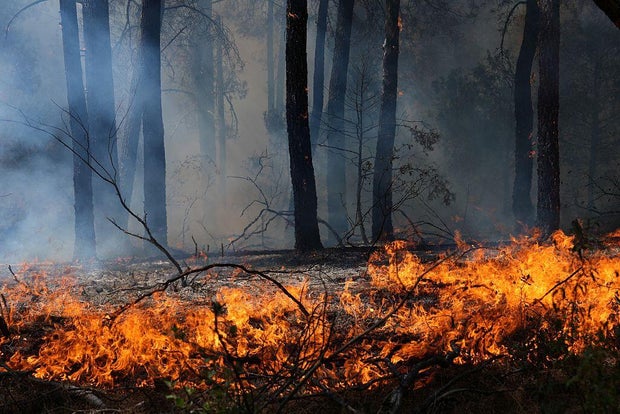
On July 25, 2026, over 200,000 people were forced to flee parts of Western Europe due to wildfires raging uncontrollably in Spain and France. Thick black ash covered rooftops in central Madrid, leading to residents keeping windows shut due to throat-irritating smoke.
Spanish Prime Minister Pedro Sanchez prioritized saving lives while acknowledging a challenging battle ahead and declared a national emergency. By this time, fires in Spain had consumed 130,000 hectares of forest, compared to the annual average of 100,000 hectares over the past decade. Sanchez believed improved weather conditions provided a brief opportunity for fire crews to contain the blazes.
A resident named Luis, working as an audiovisual technician, shared his experience of evacuating a suburban town and assisting evacuees from Pelayos de la Presa.
Luis expressed mixed emotions about leaving his hometown, feeling both sadness and frustration as he awaited permission to return. Scientists attribute the rapid spread of these fires to extreme heatwaves exacerbated by global warming, with Europe being the fastest-warming continent.
In France, nearly 242,000 acres were reported destroyed by wildfires, a historic figure described by French Interior Minister Laurent Nunez. At least 167,000 people were evacuated from France. Satellite data from the European Forest Fire Information System indicates that the total area burned across the EU this year ranks as the second-largest on record.
The fires, lasting two to three days, have tested hundreds of firefighters working tirelessly. French Prime Minister Sébastien Lecornu labeled the fires as unprecedented, with the Gironde blaze creating its own winds. He stressed that protecting human lives was the utmost priority and urged immediate compliance with evacuation orders.
French President Emmanuel Macron responded by deploying 1,000 soldiers to support firefighters and commissioning an A400M military transport aircraft to enhance efforts against the fires. This aircraft, capable of releasing 20 tons of fire retardant, had recently completed testing.
Paris Fire Brigade Chief deployed additional firefighters to combat the fires in the southwest, adding to those sent earlier. International assistance includes aircraft from European countries such as Italy, Greece, the Netherlands, and Portugal helping in Spain, while Croatia and other nations provide support to France.
A French resident, Laurent Moretti, described the evacuations as unprecedented in scale and expressed hope for the firefighters’ success in controlling the fires.
Although no fatalities were reported, numerous French firefighters suffered injuries. Emergency shelters in schools and gymnasiums accommodated displaced tourists and residents. Caroline Larrode, seeking refuge in Bordeaux with her cats, shared her experience of fleeing her home.
An alarming increase in mortality was reported in France, with health officials citing at least 5,700 more deaths than usual due to last month’s heatwave. In Italy, fires in Sicily and Calabria posed additional challenges, with local reports of arsonists igniting fires using stray animals.
Leave a Reply