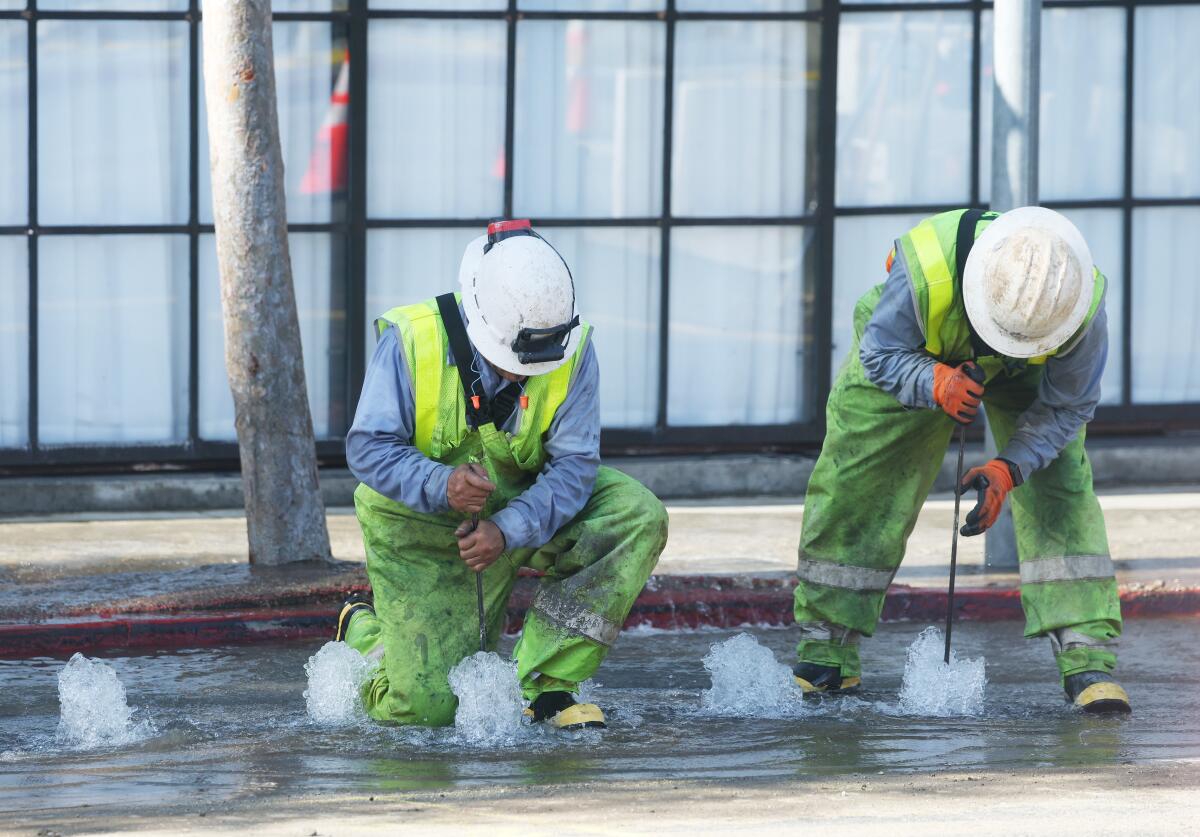
The underground network of pipes delivering over 400 million gallons of water daily to Los Angeles’ residents often goes unnoticed until a major break occurs. On July 17, a 36-inch water line rupture under Sunset Boulevard in West Hollywood created a sinkhole and released 17 million gallons of water into the streets. The pipe, which had been in service for 110 years, highlighted the issues with the aging water infrastructure.
The Los Angeles Department of Water and Power (LADWP) oversees 6,800 miles of pipes ranging from 4 to 20 inches in diameter, and 570 miles of larger trunk lines. Thirty percent of LADWP’s mainlines are 80 years old or more, which contrasts with the 3.7% of L.A. County’s human population aged 80 or older.
Impact of Aging Infrastructure
The failure of these old pipes can cause significant damage. Tadeh Ghazalian, a business owner in West Hollywood, experienced this first-hand when the water line break severely damaged his restaurant’s infrastructure. Such incidents underscore the challenges and financial burdens of maintaining aging systems.
LADWP’s Efforts and Comparisons
Despite these challenges, LADWP aims to replace about 45 miles of water lines annually, with pipes designed to last up to 150 years. This pace has tripled from two decades ago. Anselmo Collins, LADWP’s water systems chief, notes that although the replacement effort is substantial, it involves workforce expansion, traffic disruptions, and increased costs for customers.
Comparatively, older cities like Philadelphia and Boston report higher water main breakdowns than Los Angeles. LADWP’s monitoring techniques keep leaks below the national average, according to USC engineering professor Lucio Soibelman.
Historical Context and Ongoing Challenges
Los Angeles has transformed from a city of horse-drawn wagons to one of cars and congestion. The 1916 installation of pipes on Sunset Boulevard coincided with rapid city growth and changes in transportation. These pipes have witnessed the city’s evolution through droughts and earthquakes.
The costs of aging infrastructure extend beyond water systems. Aging sidewalks and other public works pose long-term financial challenges. Solutions require a balance between historical preservation, modernizing infrastructure, and managing fiscal impacts.
While the challenges are significant, understanding and addressing these complex issues is crucial for maintaining Los Angeles’ essential services without imposing excessive costs on residents.
Leave a Reply