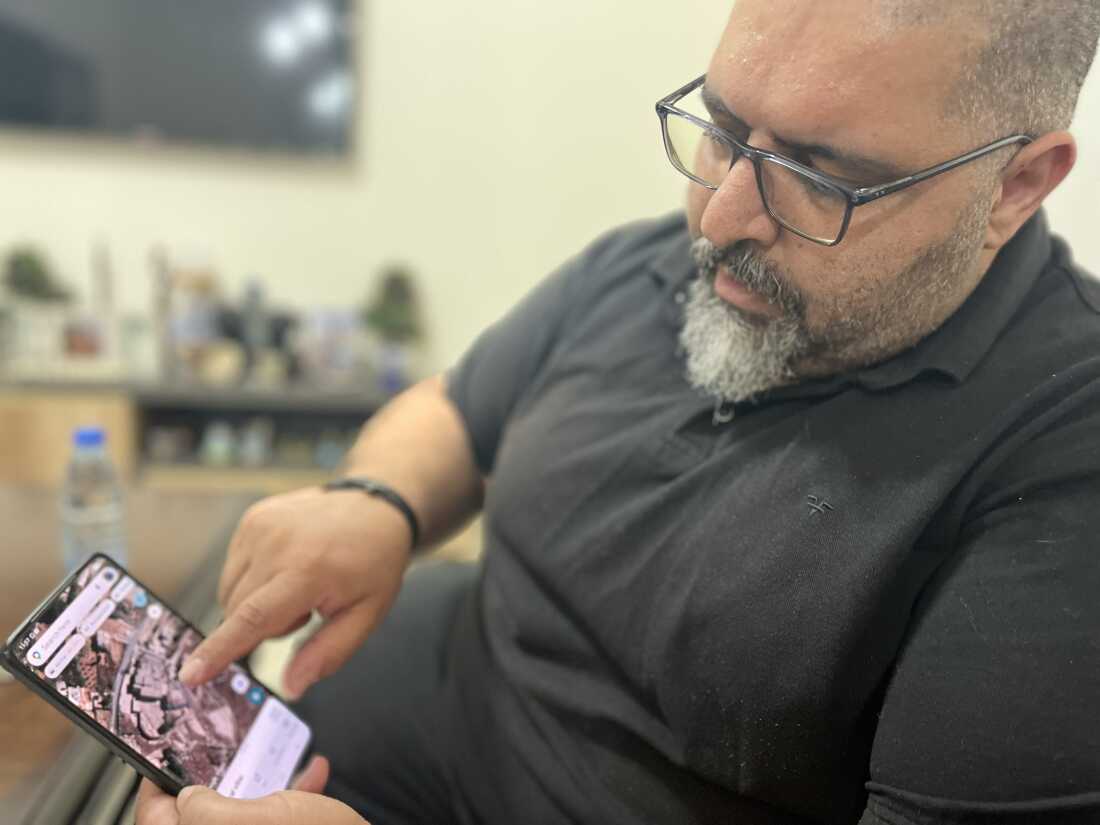
The images unfolding on Mazen Farah’s phone unveil the devastation in Yaroun, a Christian section of southern Lebanon. Although somewhat blurred, these satellite images reveal the destruction of his father’s two-story stone house. Farah points to a convent in Yaroun, claiming it was destroyed, despite Israel’s denial and lack of evidence for such actions.
During heightened tensions with Hezbollah in March, Israel launched airstrikes, displacing thousands across over 100 villages. Post-ceasefire in April, further demolitions occurred under allegations of targeting Hezbollah infrastructure. Israeli Defense Minister Israel Katz cited a desire to establish a “buffer zone,” preventing returns and raising fears of retaliation for recording evidence among residents.
Residents, unable to return, pool resources to buy satellite imagery to assess the damage. Farah explains the challenges, mentioning the general cost of $112 per image, with frequent denials by satellite companies, especially after U.S. government requests in April to restrict images.
Geryes Saloum, a municipal worker, shares the destruction of neighbors’ homes, highlighting efforts post-2024 ceasefire to restore infrastructure now obliterated once more due to renewed conflict. Hafez Ghacham, Yaroun’s mayor, reports the widespread destruction across nearly 200 homes.
The war traces its roots back to October 2023, with Israeli airstrikes targeting infrastructure in Yaroun. Damage to cultural landmarks, including religious sites, highlights the broader impact on the community. Despite denials of targeting specific sites, satellite images contradict official statements with visible destruction evidence.
Historically significant, Yaroun forms part of Galilee, rich in religious heritage and natural beauty. Its stone houses amid olive and citrus groves make it a picturesque location. The village carries a legacy of resilience, tracing back to the Israeli invasion of 1982 and its interference until Hezbollah’s resistance.
Yaroun’s diaspora, especially in the U.S., Canada, and Australia, maintains strong connections. Farah’s family, among those impacted, had built homes for retirement post-returning. The ongoing conflict prompts reconsideration of future plans.
For families like the Farahs, satellite images are both proof of loss and a beacon of hope to reconvene and rebuild. Many accuse the military of indiscriminate destruction without clear evidence of military use. Meanwhile, Hanna Farah, echoing the sentiment of many, voices the paradox of attempting to rebuild amid potential future threats.
Even as the U.S. continues significant military aid to Israel, Lebanese Americans face conflicting emotions in rebuilding dreams now reduced to satellite images. The narrative echoes past displacements and holds out a hope for eventual peace.
Leave a Reply