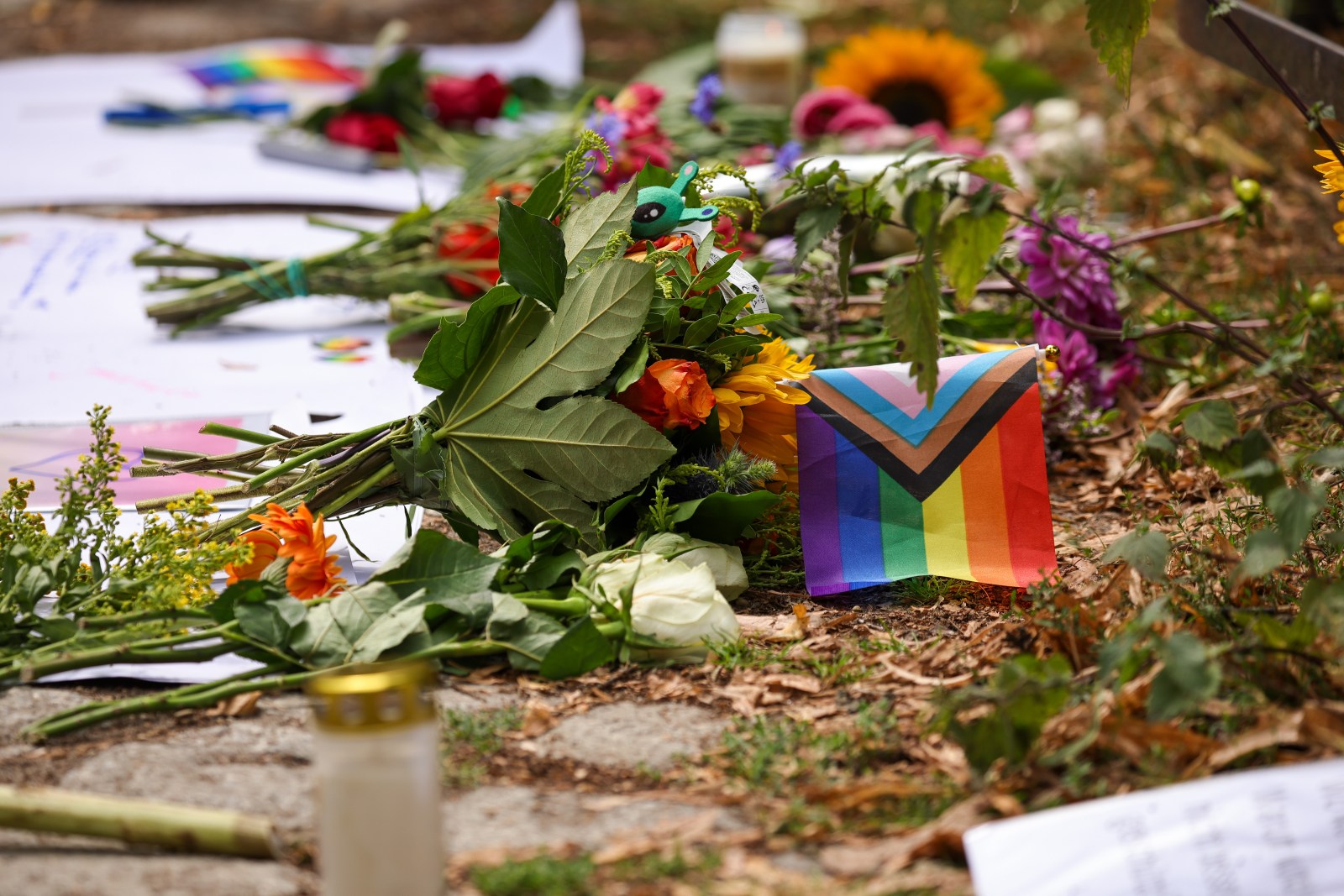
As Berlin celebrated Christopher Street Day, a devastating event unfolded near Tiergarten. A rented van plunged into the crowd, leading to terror and chaos. The driver emerged armed with a bladed weapon, resulting in one person’s death and injuring 29 others. Authorities identified the attacker as Abdul Ballout, a 21-year-old German citizen of Lebanese descent, who was later killed by police after advancing towards them with a weapon. This incident is considered an Islamist attack, according to Germany’s Interior Minister, Alexander Dobrindt.
The Impact and Broader Implications
The attack in Berlin revealed vulnerabilities in security measures and had significant political repercussions. It presented a challenging scenario for Germany, exposing tensions within the progressive coalition that supports both Pride activism and pro-Palestinian solidarity. For years, rainbow and Palestinian flags have appeared together at marches across the U.S. and Europe. This alliance faces scrutiny because the Islamist ideology, like that of Hamas, poses a threat to the freedoms cherished by Pride movements.
Navigating Complex Ideological Terrain
The attack raised questions about the compatibility of Pride activism with resistance movements linked to groups such as Hamas. It’s important to distinguish between Palestinians, Islam as a religion, and Islamist political movements. Confusing these categories leads to bigotry and denial. M. Zuhdi Jasser, co-director of the CLARITy Coalition, emphasizes the ideological divide between universal human rights and Islamism. Islamists, according to Jasser, oppose core freedoms such as free speech and gender equality.
Challenges for Western Progressives
Western progressives face a critical test. Can they support Palestinian freedoms while condemning groups like Hamas? In several Pride spaces, the language of liberation has been seen to idealize resistance, sometimes overlooking oppressive ideologies. Jasser asserts that movements like Hamas embody global Islamist ideology, inherently hostile to LGBTQ+ rights. Understanding this complexity is crucial for maintaining integrity in activism.
The Argument for Pride for Palestine
Queer Palestinian activists claim that Israel uses LGBTQ rights to divert attention from its treatment of Palestinians, a tactic described as “pinkwashing.” They argue that issues like occupation, displacement, and violence against Palestinians coexist with internal societal challenges. Pride, originating as a rebellion against state power, continues to intersect with broader struggles against state violence and oppression.
A gay individual in Gaza may experience homophobia locally and external military threats. Similarly, a Palestinian child is not accountable for Hamas’s actions. Yet, movements like Hamas are often hostile to LGBTQ+ freedoms. Clarifying these distinctions is essential in responding to allegations of Islamist attacks on Pride events.
Political Opportunism and the AfD
The far-right party Alternative for Germany (AfD) capitalizes on such contradictions. The Berlin incident reinforces their narrative that mainstream parties shy away from addressing issues related to Islam, immigration, and public safety. AfD critiques liberal Germany for perceived failures, offering a more severe stance against Islamism and migration. However, despite its rhetoric, AfD remains hostile to much of the contemporary LGBTQ+ agenda.
The party uses incidents like Berlin’s to highlight Islamist violence while avoiding acknowledgment of its own complex relationship with LGBTQ+ rights. This strategy puts pressure on mainstream parties to disentangle legitimate criticism of Islamist ideologies from anti-Muslim bigotry.
Reflections for American Politics
The events in Berlin resonate in the United States, mirroring debates in U.S. Pride politics. Unlike Europe, American Muslims contribute uniquely to the political landscape, reshaping ideas from both home and host countries. Nonetheless, aligning with LGBTQ+ rights while acknowledging factions like Hamas remains a challenging balance.
Jasser underscores the importance of defending individual freedoms over collective identities. He questions whether liberal democracies can maintain nuanced moral distinctions: supporting Palestinians sans Hamas, condemning Islamist violence without stigmatizing Muslims, and protecting LGBTQ+ rights without assuming universal allyship.
This warning from Berlin suggests if liberals avoid addressing issues like Hamas, more extreme political voices may fill the void, leveraging truth as a weapon. Acknowledging difficult realities is crucial for fostering informed and balanced civic discourse.
Leave a Reply