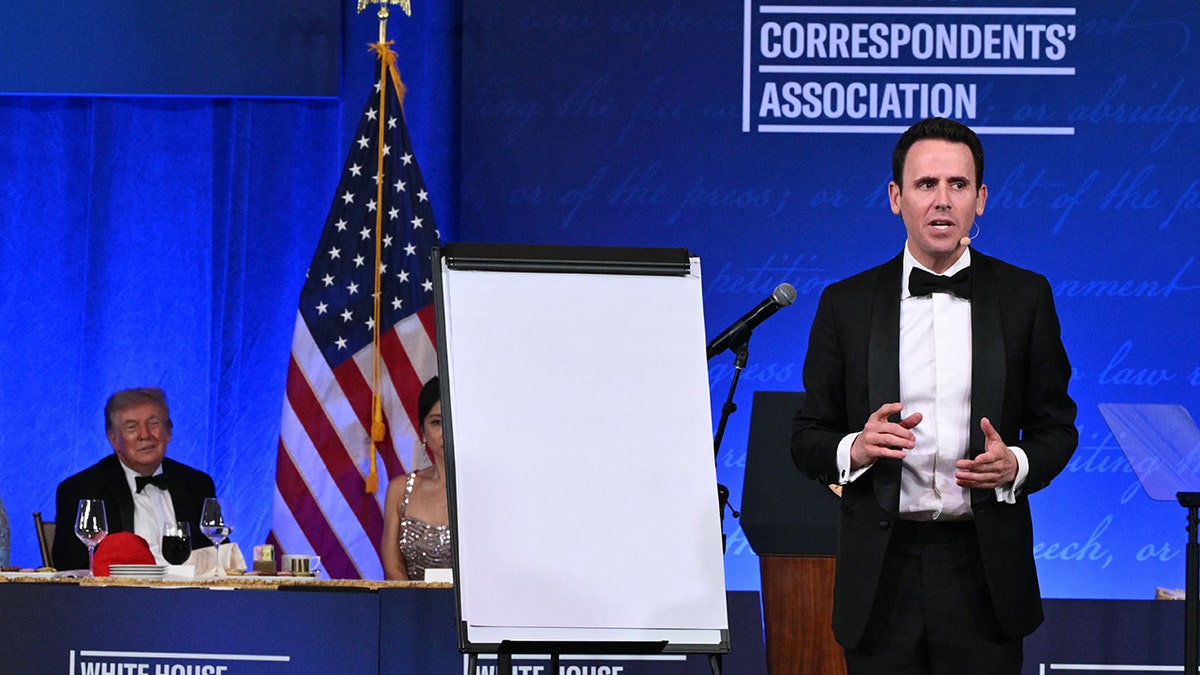
The White House Correspondents’ Association Dinner recently featured Oz Pearlman, a renowned mentalist, as part of its entertainment lineup. Mentalists like Pearlman engage audiences using psychological tactics, suggestion, observation, misdirection, and showmanship to craft an illusion of mind reading. This style of performance draws parallels to the well-known mentalist George Joseph Kresge Jr., or ‘The Amazing Kreskin,’ who was a television staple in the 1970s.
Pearlman’s performance was fitting for the audience of seasoned reporters tasked with covering high-profile figures such as former President Donald Trump and Vice President JD Vance. These journalists often interpret the inner thoughts and feelings of political figures based on indirect sources. Reports frequently contain phrases like ‘sources close to Mr. Trump’ or ‘White House aides granted anonymity say Mr. Vance believes…’ instead of providing direct quotes or actions.
Despite Trump’s openness with the press, journalists often resort to a ‘sources say’ format for exclusivity and audience engagement. The Executive Office comprises about 1,500 to 2,000 employees, half of whom are political staff, supplemented by 3,000 political appointees in the executive branch. The Pentagon’s leadership includes numerous generals and admirals, and Congress employs a large staff. Yet, only a few actually have direct communication with top administration officials.
Numerous other influences, such as friends and advisors outside the official payroll, contribute to the pool of potential ‘sources.’ The inclination to use unnamed sources often arises from personal ambitions and narrative control. This journalistic approach can shift to speculative storytelling, relying heavily on context and previous behaviors.
The business of reporting within the Beltway is highly competitive, involving 900 White House Correspondents’ Association members and more journalists seeking advancement. Temptations to move from factual reporting to speculative interpretation, akin to mentalism, remain prevalent. The appeal lies in the potential to anticipate or shape public discourse.
Speculating about the mindset of political figures diverges sharply from journalistic ideals focused on factual accuracy. Although opinions are valid, they should be distinctly separated from evidence-based reporting. The distinction between reporting and conjecture continues to blur, as seen in coverage from legacy and independent media outlets.
For those attending the dinner, Pearlman’s mind-reading act was symbolically significant. It highlighted the media’s ongoing challenge of balancing factual reporting with entertainment.
Leave a Reply