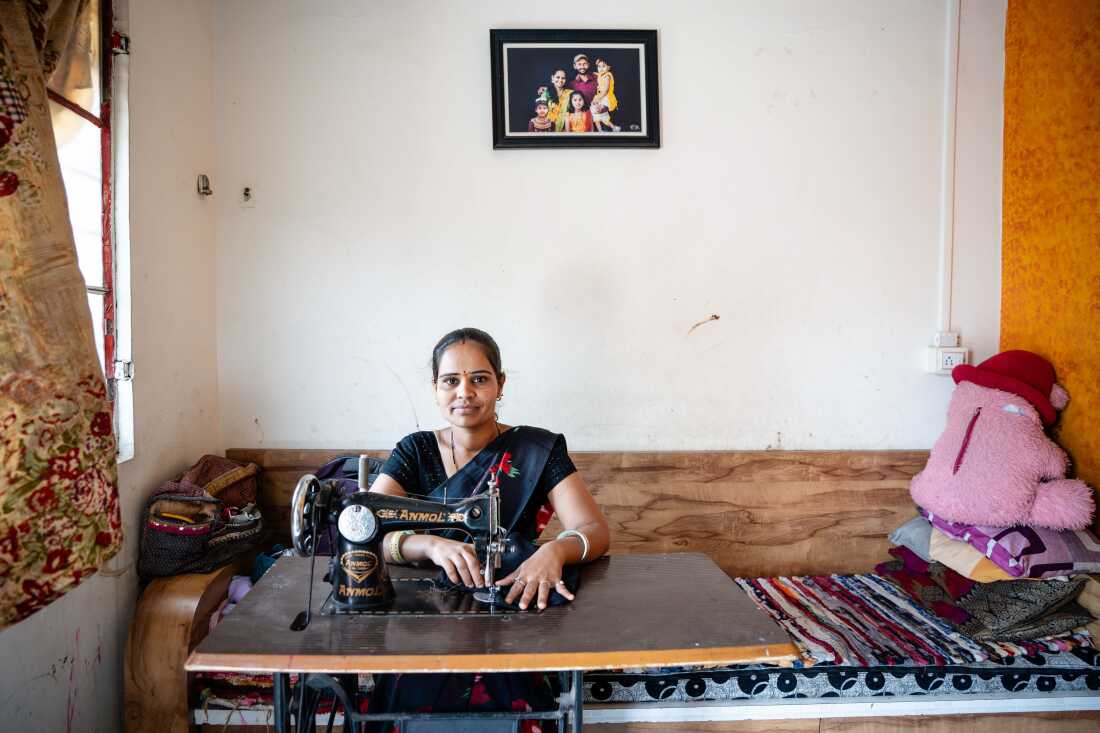
Pooja Gawali and her family have left their one-room tin shack and moved into a new apartment building, marking a significant change in their living conditions. Gawali, who helped design their unit, now enjoys privacy and space for hobbies. Her sewing machine occupies a central place in her living room. The construction project has received an award for its innovative design, spearheaded by the Sanjaynagar Redevelopment Project.
Gawali’s former home lacked privacy and basic amenities, common in Sanjaynagar, a slum in Maharashtra, India. The area, consisting of narrow mud lanes and crowded with metal shacks, was home to about 900 people. Their new residence does not merely shelter but transforms life. In 2022, Gawali moved into an apartment with 33 units, housing not only her family but also 30 others from her neighborhood. The building includes interconnected units for her family, allowing for continued familial bonds with a touch of independence. ‘I relish the privacy I have now,’ Gawali says, expressing her joy at newfound personal freedom.
Named ‘Swapnapurti,’ meaning ‘a dream fulfilled,’ each apartment features a living room, a single bedroom, a kitchen, a bathroom with running water, and a balcony. Plants and benches adorn the central courtyard, and bamboo screens along the walls provide shade and ventilation. The architects used insulating materials like bricks made of crushed sand and ash, keeping the building cool.
The project, a collaboration between local government, charitable donors, nonprofits, and residents, allows families to pay 10% of construction costs, about $1,000 for a 300-square-foot apartment. This is funded through low-interest loans from the lending platform Rang De, while the federal housing scheme PMAY and donors like the Currystone Foundation cover the rest. The initiative has received international acclaim, including a Silver at the World Habitat Awards.
Sandhya Janardhan from the Community Design Agency, a guiding force in the design, believes the project honors community ties. ‘All the apartments are built around a central courtyard,’ she explains. This area serves as a space for play, rest, and communal events. The design incorporates corridors inviting light and air inside.
The journey of this redevelopment project was uncertain at the start. Encouraging families to leave their known environments for a promise of better housing took considerable effort. The wait lasted three years, during which Snehalaya, a local nonprofit, played a pivotal role. Their sustained presence and rapport with the community helped earn trust and ease the transition.
Slums are easy ground for the spread of addiction, violence, and child labor, says Hanif Shaik, a director at Snehalaya. He noted the transformational potential when living conditions improve.
The coordination involved soliciting donors and gaining resident consent before beginning work in 2017. Immediate needs such as temporary water, electricity, and shelter were addressed by the government, while younger residents helped navigate project details.
Anjali Naydu, a community representative, describes the initial skepticism residents had. Regular meetings and clear communication gradually turned doubt into participation. ‘You can choose your building, decide where to live, and even be involved in designing your home,’ she explains, highlighting the project’s personal touch.
Savitha Yadava, a widow who returned to Sanjaynagar to claim her family’s new unit, illustrates the project’s personal impact. With better living conditions, her children thrive in school, and her home has become a place of pride and decoration.
Despite potential governmental delays due to policy changes, the project’s momentum brings hope to families awaiting their move. Janardhan is confident the housing will become more cost-effective and sustainable. For residents like Pooja Suryavanshi, this means anticipating a future of stability and room for their children to grow.
The efforts of individuals like Snehalaya’s representatives and the vision of architects reveal a broader lesson: investing in community and sustainable design can change lives.
Leave a Reply