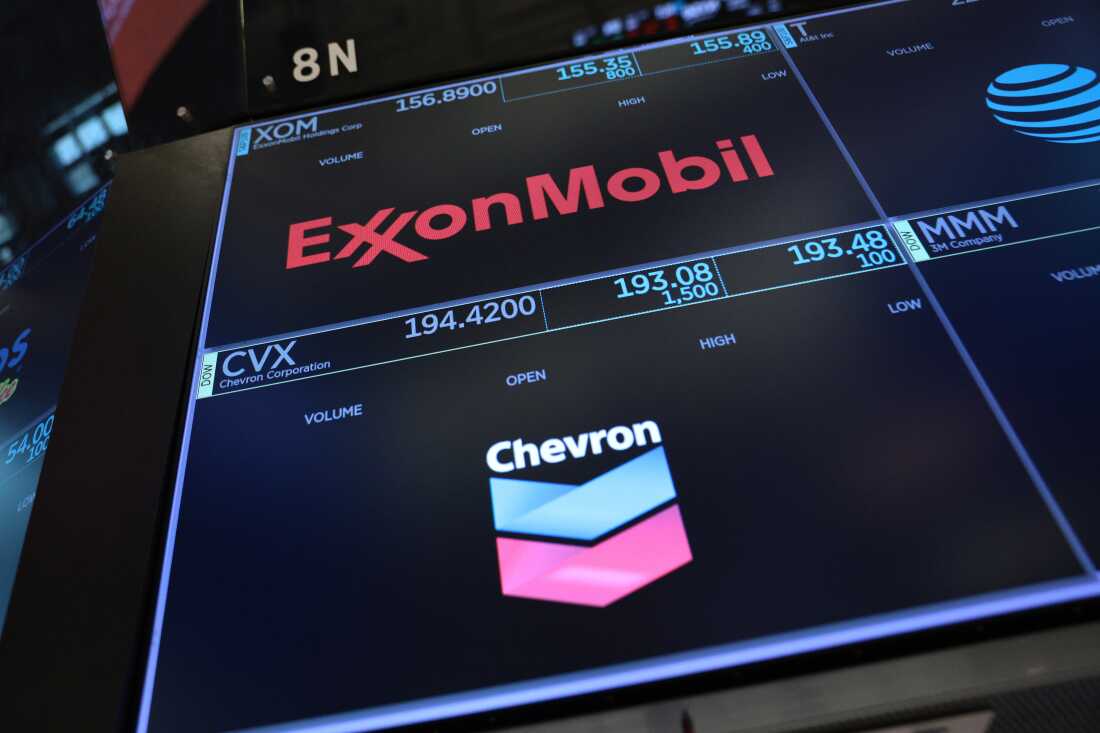
On July 24, the logos for ExxonMobil and Chevron were notable on the floor of the New York Stock Exchange during morning trading. Amidst the backdrop of global tensions, Chevron recently reported its highest quarterly earnings to date, while Shell achieved its second-highest quarterly profits. Although ExxonMobil’s earnings fell short of Wall Street expectations, they still managed to double compared to last year. Collectively, these companies averaged $404 million in daily profits over the last three months.
This profitability surge is drawing scrutiny from some European lawmakers and U.S. Democrats, who are advocating for windfall taxes on these companies. Such taxes are designed to redirect excess profits gained from external circumstances, not company innovation, towards consumers who face elevated energy prices.
Impact of Conflict on Oil Prices
Tensions in the Middle East have driven up crude prices and refining margins. The conflict involving Iran has effectively closed the Strait of Hormuz, a vital channel for crude oil exports. On a recent Thursday, only five vessels were reported to have navigated the strait according to Kpler, a trade intelligence group.
While some oil from the Persian Gulf continues to reach markets through alternative routes, the reliability of these paths is under threat. The conflict has also obstructed the flow of refined fuels such as gasoline, jet fuel, and diesel, exacerbated by Ukraine’s attacks on Russian refining infrastructure. These developments have led to increased fuel prices and, consequently, higher expenses for consumers worldwide. However, oil producers are witnessing higher margins for their crude oil and refined products.
This quarter, Exxon reported profits of $14.5 billion, Chevron $12.1 billion, and Shell $9.8 billion, despite disruptions in Middle Eastern operations. Elevated crude prices and refining margins have offset these challenges.
Debate Over Windfall Taxes
In the U.S., Senator Sheldon Whitehouse of Rhode Island has proposed a windfall tax on oil profits, a measure echoed by several European nations. The UK already implements such a tax. The concept aims to collect ‘excess’ profits due to external factors and redistribute them to alleviate the burden on consumers paying higher energy costs. The European Union previously implemented a windfall tax in response to the 2022 price hikes post-Russia’s invasion of Ukraine.
ExxonMobil CEO Darren Woods criticized windfall taxes in an earnings call, calling them a “misguided policy” that punishes companies striving to succeed amid the industry’s inherent volatility. Woods mentioned previous investment withdrawal from Europe due to prior windfall tax impositions, describing legal actions against these policies.
Strategic Financial Management
Oil executives remain uncertain about the persistence of current scarcities and booming profits. “I can’t predict when things in the Strait [of Hormuz] will settle down and we’ll start to see those flows again,” stated Chevron CEO Mike Wirth during a company earnings call.
Despite uncertainties, ExxonMobil’s Woods emphasized the critical nature of Middle Eastern oil for the global economy. “Those resources are just too critical to the overall economic health of the world for them to stay offline,” he remarked, hinting at inevitable solutions for current challenges.
Rather than investing in new, costly drilling projects, oil companies are focusing on reducing debts and bolstering financial reserves. Their strategy emphasizes long-term, disciplined growth in new oil fields, showcasing a preference for sustainable expansion over immediate drilling increases.
Leave a Reply