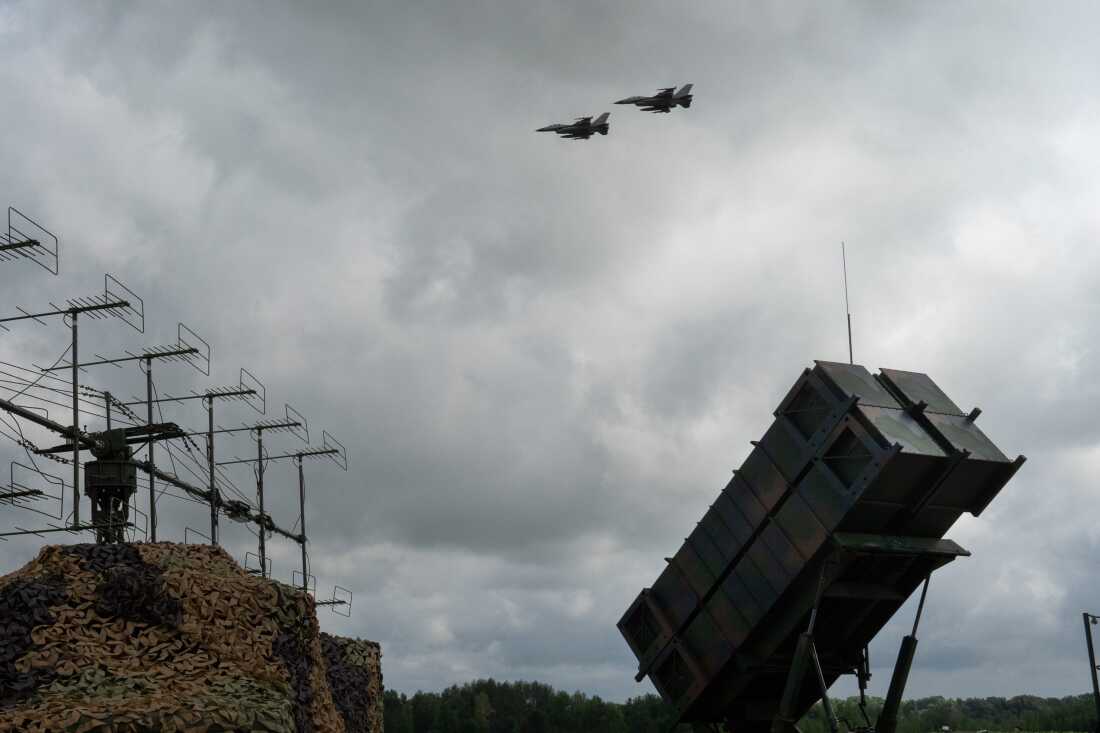
Ukrainian Air Force F-16 fighter jets were seen flying over a Patriot air and missile defense system at an undisclosed location in Ukraine on August 4, 2024, captured in a photograph by Efrem Lukatsky for AP News.
Intensified Air Assault
On a Saturday morning, Russia launched a significant air assault on Ukraine involving 27 ballistic missiles. Many of these hit the capital, Kyiv, resulting in the deaths of nine people and injuries to over 30 others. This attack was more intense than usual, though regular airstrikes by Russia occur almost every night.
Ukraine’s Defense Capabilities
In response, Ukrainian President Volodymyr Zelenskyy noted that their military managed to intercept just one of these missiles. The lack of interceptors for the Patriot systems, which are essential for defense against Russian ballistic missile threats, was a critical issue highlighted by Zelenskyy on social media. Ukraine has struggled to defend itself in recent weeks due to this shortfall.
The Need for Patriots
Ukraine faces an urgent requirement for more Patriot interceptors. However, the U.S. has concerns about its own dwindling supplies due to involvement in conflicts, particularly the war in Iran. Additionally, U.S. allies in the Gulf are anxious about obtaining more Patriots for potential future conflicts.
U.S. Stockpiles Concerns
In June, Defense Secretary Pete Hegseth dismissed reports of Patriot missile shortages as misleading. However, data suggests a significant reduction in U.S. supplies—from over 2,300 before the Iran war to around 800 now. While the exact numbers remain classified, officials confirm these figures are accurate compared to the Center for Strategic and International Studies’ estimates.
Patriot Missiles’ Global Dependence
The Patriot system, introduced in the 1980s, first proved itself during the 1991 Gulf War against Iraqi Scud missiles. Today, approximately 20 countries in Europe, Asia, and the Middle East rely on them for defense against ballistic missiles. Yet, Russian and Iranian missile use has exceeded current production capabilities, creating a gap in supply and demand.
Production Challenges
Raytheon, now known as RTX, and Lockheed Martin produce the Patriot missiles. Despite plans to increase production, current manufacturing rates of fewer than 1,000 missiles annually fall short due to escalated demand from conflicts.
Ukraine’s Calls for Assistance
Ukraine began integrating Patriot systems three years ago to mitigate damage from Russian attacks. The country considers the system crucial and has consistently requested additional units and missiles. Military analyst Rob Lee highlights the urgent need for Patriots, citing a lack of immediate solutions.
International and Political Dynamics
At a recent NATO summit, Trump offered Ukraine the prospect of producing its Patriots but later retracted, citing the complexities of technology transfer. Rep. Don Bacon, a Nebraska Republican, argues for letting Ukraine manufacture Patriots to alleviate current shortages. Yet, even with a production license, Ukraine’s production capability faces long delays due to a stretched supply chain.
Advanced Alternatives
The U.S. also possesses an advanced missile interceptor, THAAD, mainly shared with Saudi Arabia and the UAE. These missiles are equally essential, with current U.S. stockpiles having decreased from around 450 to 250 due to conflicts.
“Enabling Ukrainians to build the Patriot would have helped relieve shortages.” – Rep. Don Bacon
This article was reported by Greg Myre from Kyiv and Tom Bowman from Washington.
Leave a Reply