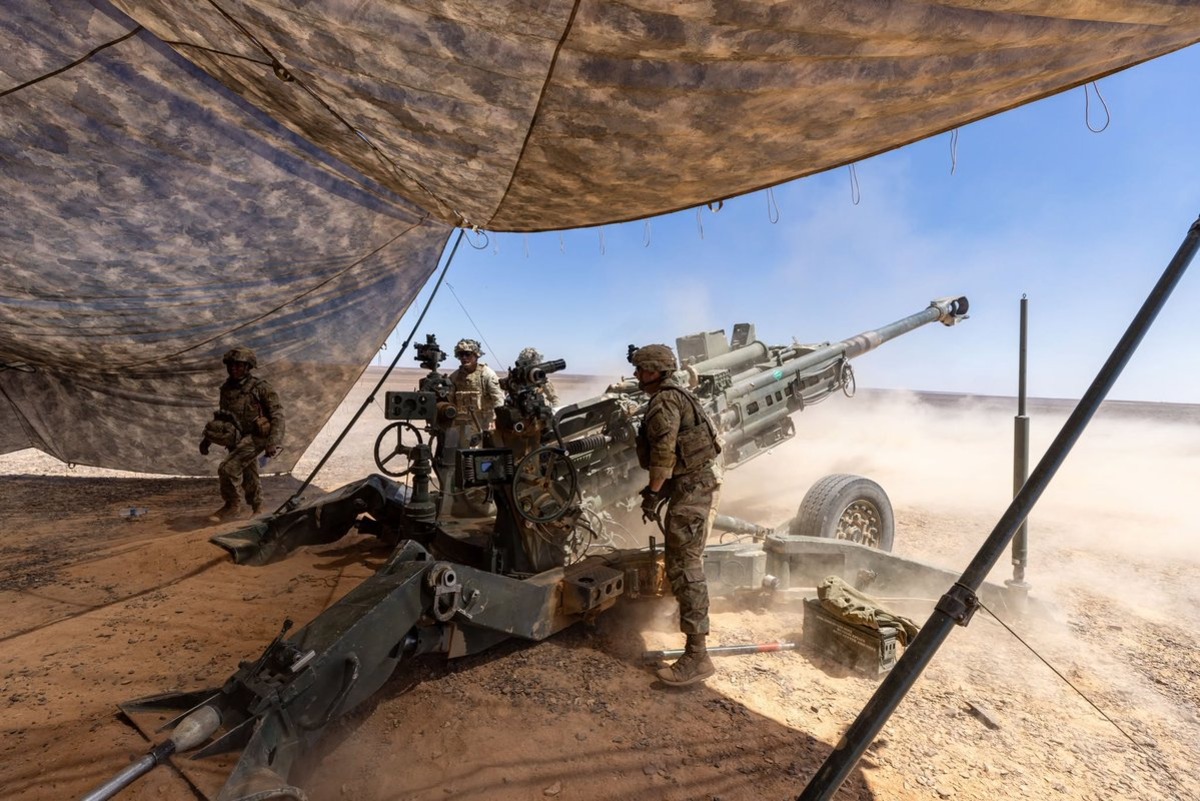
U.S. forces stationed in the Middle East have long focused on innovation, according to Captain Timothy Hawkins, spokesperson for the U.S. Central Command (CENTCOM). This command oversees all U.S. troops in the region. Admiral Brad Cooper, the top commander at CENTCOM, is known for considering ideas from all ranks, Hawkins noted.
Recent reports suggest the U.S. military is gathering ideas on how to counter Iran as tensions with Tehran continue into their sixth month. “We are seeking new creative and unconventional methods to pressure and punish Iran,” an intelligence officer reportedly working with CENTCOM mentioned in a message directed at military analysts. This information came from a CNN report, referencing a source familiar with the email sent on July 29. The sender and recipients were not identified, and Newsweek has not independently verified this information.
The message’s content quickly drew attention. Some viewed it as indicative that the White House had entered a major conflict lacking a solid plan for either a swift victory or an exit strategy. Others argued that such requests are routine in military communications.
Potential New Tactics
Determining the specific responses sought by CENTCOM is challenging. Beyond Hawkins’ remarks, CENTCOM has neither confirmed nor denied the CNN report. However, as conflict persists and costs increase, the appeal might reflect a hope for a breakthrough strategy. Jim Townsend, a former Pentagon official, suggested that the query might be about emulating Ukraine’s tactics against Russia. Ukraine has notably targeted Russia’s economic infrastructure, strengthening its negotiation position.
In the Middle East, despite aggressive actions and sanctions against Tehran, the U.S. has struggled to disrupt Iran’s control over the Strait of Hormuz and restore open shipping lanes. Officials assert that further bombings might not sway Tehran, and while talks have been mentioned, Iran claims to be negotiating only with Oman.
Unusual Request
The CNN-reported message’s context remains unclear, making it difficult to judge the appeal’s uniqueness. U.S. military personnel regularly publish articles and participate in contests to propose new strategies. In past conflicts, intelligence communities and the Defense Secretary’s office have developed and presented potential actions to the National Security Council.
A serving U.S. military official acknowledged the “blunt” tone of the CNN described message. They emphasized that intelligence officers often evaluate enemy vulnerabilities and help commanders identify available options.
Some critics see it as evidence of a lack of planning. Townsend and other officials maintain that soliciting suggestions isn’t unusual, but the written nature of this request is. This method seems odd for an ongoing conflict, as brainstorming typically occurs in classified settings. Mark Cancian, a retired Marine Corps colonel now with the Center for Strategic and International Studies (CSIS), noted the absence of precedent for such an action.
In previous conflicts like the Iraq War, new ideas sometimes emerged, but not due to formal calls for suggestions.
For further insights, contact Newsweek editors Frances Mao and Tony Phillips.
Leave a Reply