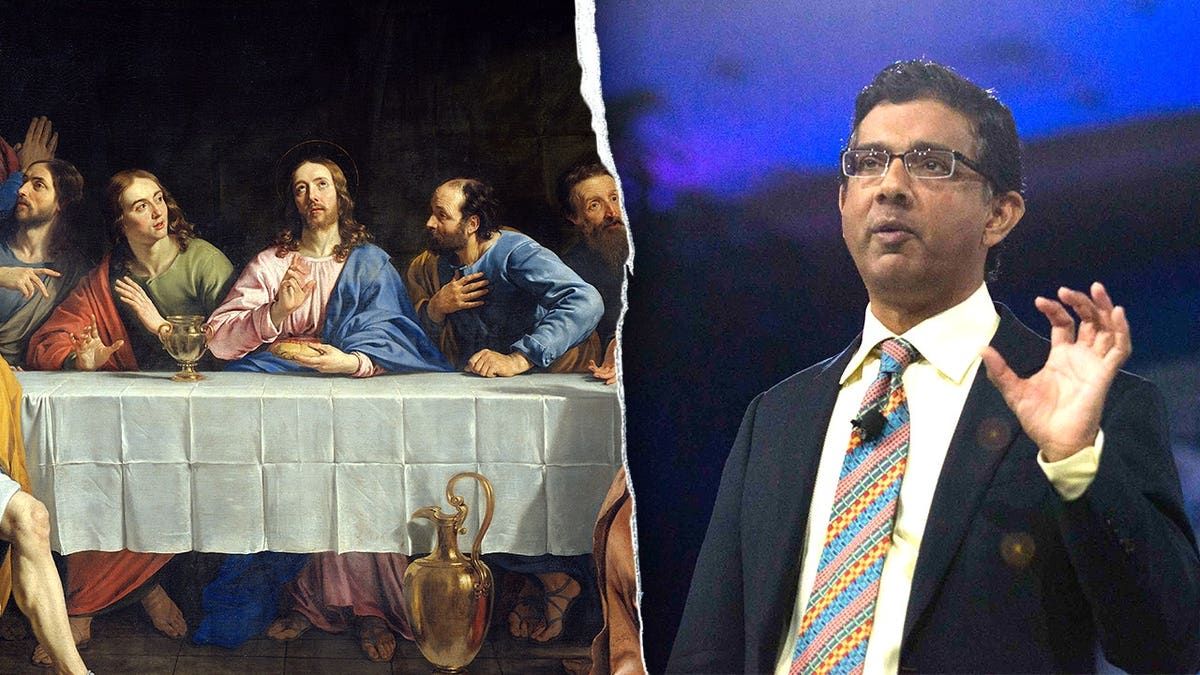
A trip to Israel led bestselling author and filmmaker Dinesh D’Souza on a three-year exploration of biblical archaeology. This field supports the historical authenticity of the Bible, according to D’Souza. In an interview, he expressed how these archaeological findings highlight the Bible’s historicity.
The Stones Cry Out, his latest book, is the result of this research. It will be available on October 13. During his study, D’Souza examined numerous archaeological discoveries linked to figures, locations, and events mentioned in the Bible. These findings shed light on the historical credibility of these biblical accounts.
D’Souza highlighted that some of the most significant archaeological findings involve minor biblical figures, validated through recent discoveries. Despite skepticism, D’Souza remains unbothered, viewing skeptics as remaining unconvinced despite mounting evidence.
“The problem for them is that archaeology is digging out of the ground artifacts that are a decisive refutation of the things that they say.” — Dinesh D’Souza
An example D’Souza emphasized involves the Roman governor Pontius Pilate, linked to the crucifixion of Jesus. Until 1961, there was little archaeological evidence of his existence.
The discovery of the Pilate Stone, inscribed with his name and title, provided proof. This confirmed details from biblical texts about Pilate’s role during Jesus’ time.
D’Souza also discussed the Old Testament story involving Israelites moving through Moabite territory. Here, the king of Moab summoned Balaam, a diviner. In 1967, the discovery of a plaster inscription in Jordan referring to “Balaam, son of Beor” added credibility to this story.
Another significant revelation involved the high priest Caiaphas, a pivotal figure in the trial of Jesus. Caiaphas had been a somewhat obscure character, known primarily from biblical texts. However, archaeologists uncovered an ossuary engraved with “Yehoseph bar Caiapha,” containing bones dated to the first century A.D., believed to be those of Caiaphas.
These findings reinforce the historical basis of biblical narratives. D’Souza emphasizes that archaeology provides substantial evidence of the people, places, and events mentioned in the Bible.
His book seeks to connect the academic exploration of biblical archaeology to public understanding. D’Souza invites Christians to visit Israel, viewing it as a spiritual homeland with rich historical significance.
He noted visiting sites such as the Pool of Siloam, where Jesus taught, offers a profound connection to biblical events. Archaeologists continue their exploration of such sites in Israel, providing deeper insights.
If travel is not possible, D’Souza invites readers to explore his book for insights into these compelling discoveries.
Leave a Reply