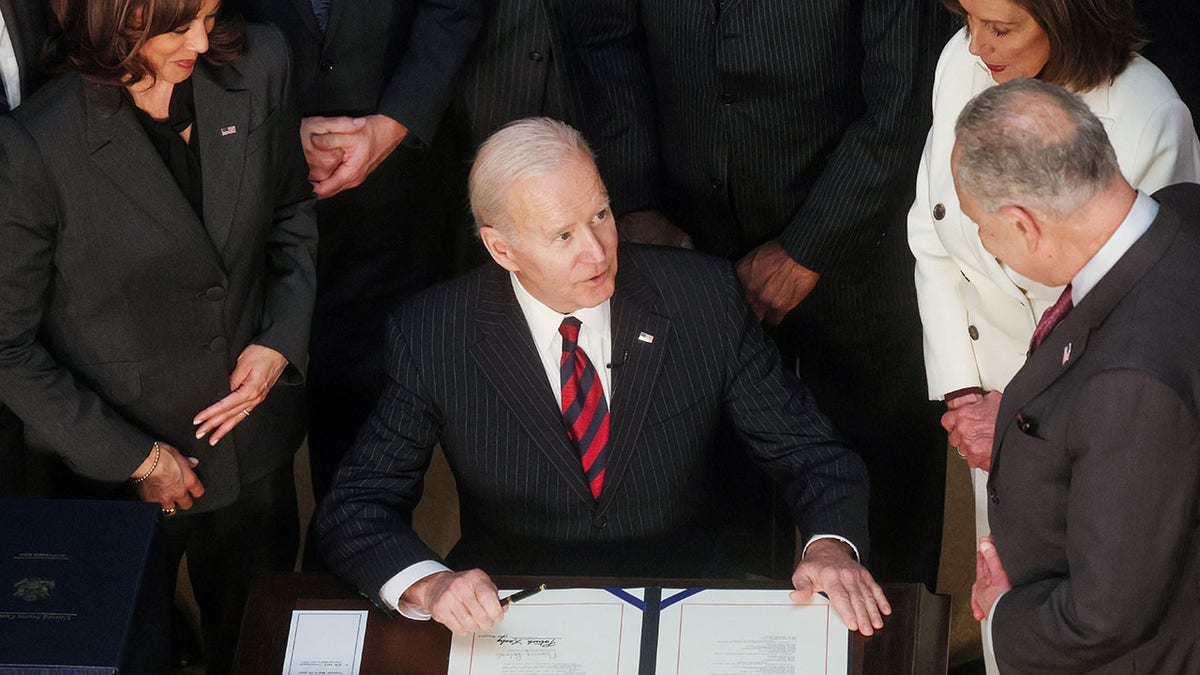
The Justice Department (DOJ) encountered significant issues following the announcement of clemency grants by former President Joe Biden at the end of his term. Internal emails suggest this led to confusion among officials regarding the scope and accuracy of some decisions, raising criticism from different quarters.
These records, obtained through the Freedom of Information Act by Protect the Public’s Trust (PPT), reveal that prosecutors were left questioning whether a career offender involved in crack-cocaine trafficking had a separate 235-month sentence commuted. A deputy pardon attorney suggested the most reasonable interpretation, noting the bypassing of normal levels of review for many January 17 commutations.
Another instance involved Hunter Biden’s pardon, which required correction as it incorrectly described him as having completed his sentence, even though he had not been sentenced. Adjusting the notice involved multiple days of work to coordinate authentication and transmission to the appropriate court.
The process didn’t match the public sales pitch.
U.S. District Judge Daniel Hovland expressed his concerns over the lack of consultation with judges, prosecutors, and victims regarding more than a dozen commutations in North Dakota. He questioned the validity of several pardons, arguing they did not align with the rationale of giving second chances.
The chaos in the clemency process, described as hurried and politically motivated, seemed evident even in prominent cases such as Hunter Biden’s pardon, according to Alexa Moutevelis, PPT’s communications director. Despite assurances from Biden’s administration that clemency was treated seriously, DOJ officials acknowledged that most of the cases granted clemency on December 12 lacked individualized review.
The Wall Street Journal reported that only 258 out of roughly 2,490 January 17 recipients had been recommended by the DOJ—a notable divergence from traditional vetting processes. Records do not clearly establish how recipients were selected or vetted.
DOJ officials noted that presidents from both parties have exercised clemency powers without mandatory department consultation. However, a former DOJ official noted this deviation from the regular process, with cases seemingly selected through undisclosed means.
The late-day pardon activities showed variations in notifications prior to clemency grants. For December 23 federal death-row commutations, DOJ completed advance communications with affected U.S. attorneys, receiving some gratitude but also pushback.
Leave a Reply