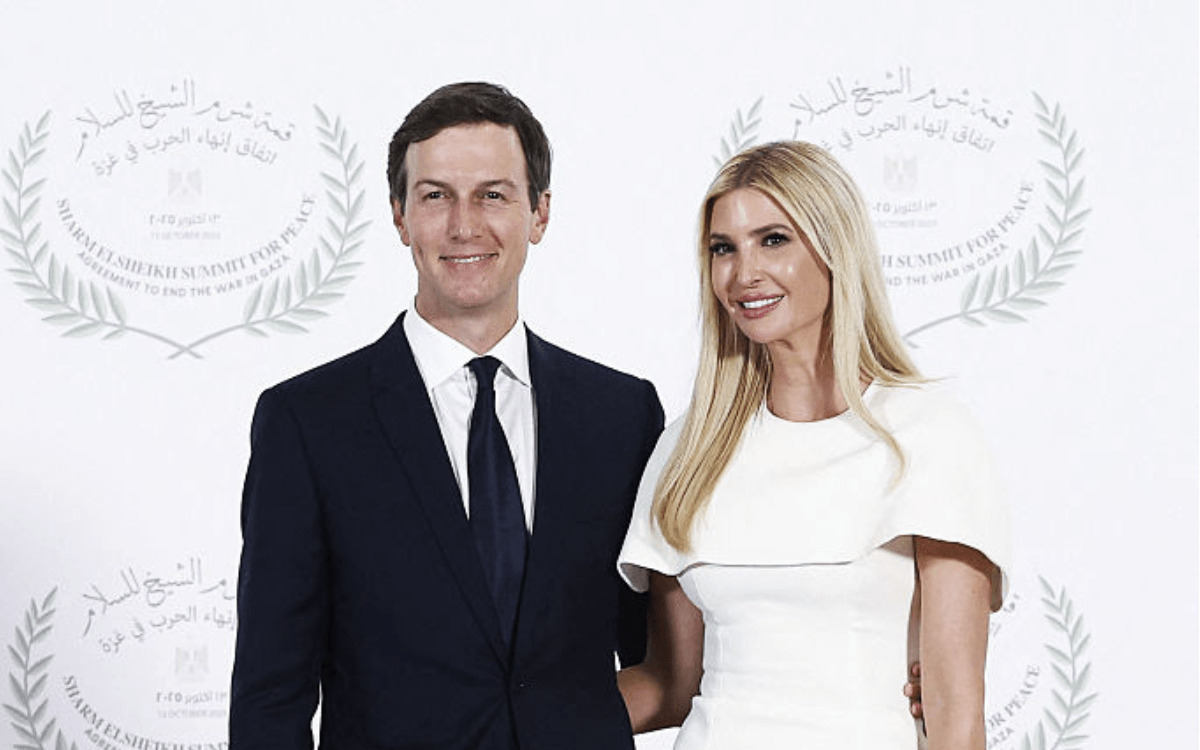
Jared Kushner, serving as an influential diplomat under President Donald Trump, was recently part of a significant interaction in the Middle East. On a Sunday, he sat across from Khalil al-Hayya, a leader of Hamas, in a room that Washington had avoided for almost three decades. This event was a critical part of his ongoing tour across the region, aiming to rejuvenate the stalled Gaza peace talks. Kushner’s schedule also included a meeting with Israeli Prime Minister Benjamin Netanyahu as part of these efforts.
Adding complexity to Kushner’s mission was the 60-day deadline of U.S.-Iran negotiations outlined in June’s memorandum of understanding, which reached its conclusion the same day. Despite ongoing discussions, Washington and Tehran were more divided than ever on key issues such as Iran’s nuclear ambitions, the reopening of the Strait of Hormuz, and Tehran’s control claims.
Kushner, known for his negotiating skills, has shown a remarkable capability to secure agreements, having achieved several high-profile deals during Trump’s terms. Yet, reliance on a few key figures comes with challenges and reinforces the need for a strong diplomatic foundation.
Kushner’s prominent role in Trump’s administration often drew criticism as nepotism, perceived as a son-in-law handed significant responsibilities. However, his achievements, like the United States-Mexico-Canada Agreement (USMCA), challenge such notions. This agreement replaced the North American Free Trade Agreement, receiving accolades even from outgoing Mexican President Enrique Peña Nieto, who awarded Kushner Mexico’s highest honor for a foreign citizen.
Following USMCA, Kushner played a crucial role in the Abraham Accords, with UAE Foreign Minister Abdullah bin Zayed acknowledging the importance of his efforts at the signing ceremony. Although Kushner stepped away from politics after Trump’s first term, he was brought back during the second term as negotiations in Gaza intensified. His efforts, alongside special envoy Steve Witkoff, led to a ceasefire and hostage agreement with Hamas.
Trump’s diplomatic approach often involves bypassing traditional systems, focusing on direct negotiations by trusted representatives like Kushner. A study from The Hague Journal of Diplomacy in 2018 supports the use of special envoys for their strategic flexibility and direct influence. However, the same study emphasizes the necessity of robust support from a capable diplomatic body for sustained success.
Challenges arise as the current administration faces a depleted diplomatic corps. Almost half of ambassadorial and diplomatic roles remain unfilled, weakening America’s diplomatic efforts globally.
Ambassadors and traditional diplomats offer strengths that special envoys lack, such as institutional knowledge and coordination across various functions. These roles ensure that agreements negotiated by figures like Kushner are implemented effectively long-term.
History shows that specialized envoys combined with comprehensive diplomatic backing can resolve intricate disputes. Notable examples include George Mitchell in Northern Ireland and Richard Holbrooke in Bosnia, both of whom benefitted from supportive diplomatic frameworks.
Kushner’s major diplomatic achievements, like the USMCA and Abraham Accords, involved parties with mutual incentives. However, complex conflicts like those in Gaza, Iran, and Ukraine demand more than quick negotiative breakthroughs; they require consistent diplomatic efforts to test, maintain, and stabilize agreements.
An AFSA survey of over 2,100 U.S. Foreign Service members highlighted substantial concern, with 86 percent noting a negative impact on their ability to advance U.S. diplomatic goals due to administrative changes since January 2025. Diplomatic morale also suffered, with 98 percent citing poor conditions.
While Kushner can facilitate agreements, enduring success requires a robust diplomatic system to sustain the progress once he moves to the next challenge.
Leave a Reply