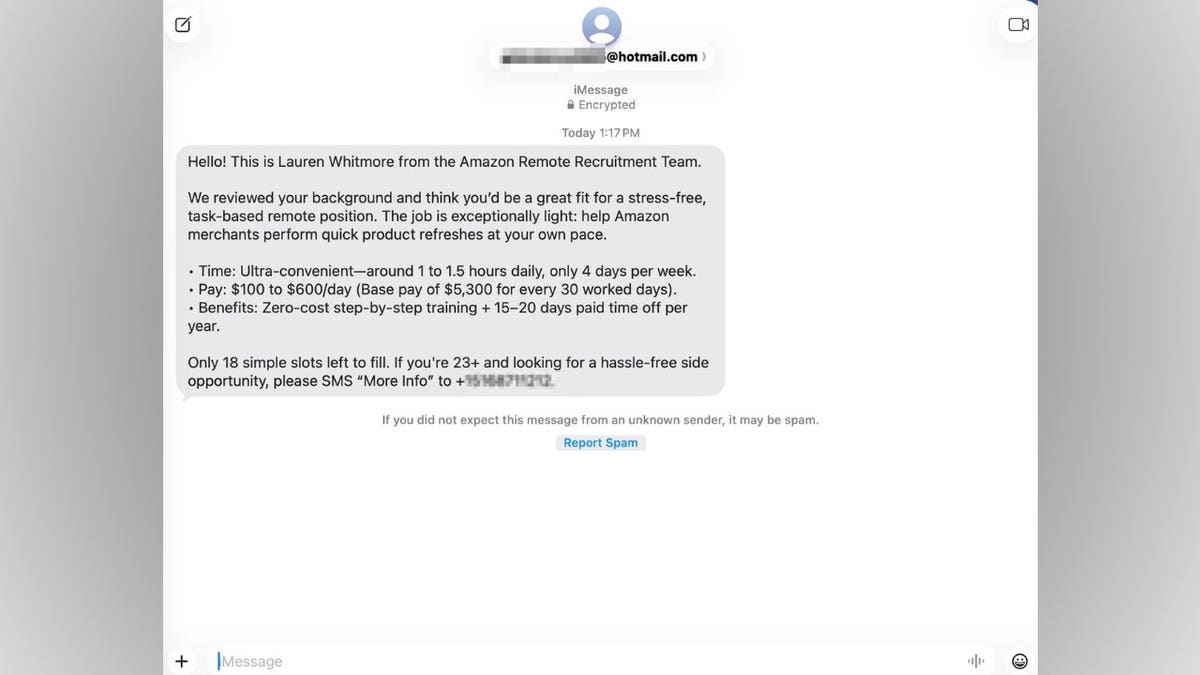
A text message offers you a remote job with Amazon, promising up to $600 a day for minimal work. It sounds tempting but beware. Such an offer is likely a scam. Here’s how these Amazon job scams work and what you can do to shield yourself from falling prey.
CyberGuy’s Live Class on Scam Protection
Join CyberGuy’s free live class on August 29 at 10 AM ET. Learn five straightforward steps to guard against scams, including setting up bank alerts and freezing credit. No technical know-how is needed to attend. Register at CyberGuyLive.com for the class and get access to the recording afterward.
Amazon Job Scam Messaging
This scam text claims you are ideal for a remote Amazon job with easy tasks. Here’s the too-good-to-be-true offer:
- 1 to 1.5 hours of work daily
- Four workdays per week
- Daily pay from $100 to $600
- $5,300 base pay for 30 worked days
- Free training and paid time off
- Only 18 positions allegedly left
You are asked to text “More Info” to another number. These details are red flags indicating a scam.
Pattern of Scams and Amazon’s Response
The Better Business Bureau (BBB) tracks similar scams. Typically, scammers change names and contacts but keep offers much the same. Amazon advises skepticism and urges reports of such impostor scams via their help pages at amazon.com/ReportAScam.
Red Flags in Scam Texts
The scam contains several indicators of fraud:
- Email from a free service like Hotmail, not an official Amazon recruiter
- No prior job application or discussion
- Overly generous compensation claims
- Ambiguous job description, no direct Amazon link
- Pressure tactics like limited positions
- Request to contact via a different number
- Arbitrary age requirement
- No recruiter verification, only encrypted messaging
Potential Consequences of Engaging with Scams
Responding to such messages may lead to requests for personal information or involvement in financial scams. You might be asked to deposit money believing it’s needed to access your “earnings.” Retrieving any money sent is often difficult.
Steps to Protect Yourself
- Verify job offers directly on Amazon’s website: Search positions on amazon.jobs/ independently.
- Avoid engaging with suspicious offers: Report and delete, don’t reply.
- Guard personal information: Avoid sharing sensitive details without verifying.
- Use antivirus protection: This software can block harmful websites and links.
- Limit publicly available details: Use data removal services to protect your information.
- Refuse payment for employment: Legitimate employers don’t charge fees to hire.
- Report scams: Use Amazon and FTC reporting tools.
- Utilize spam reporting tools on devices: Use built-in tools to report and block suspicious numbers.
Scams change tactics often, so pay attention to signs of deceit. Confirm job opportunities through official company resources before providing personal data or money. Mistakes can be costly and take time to rectify.
Leave a Reply