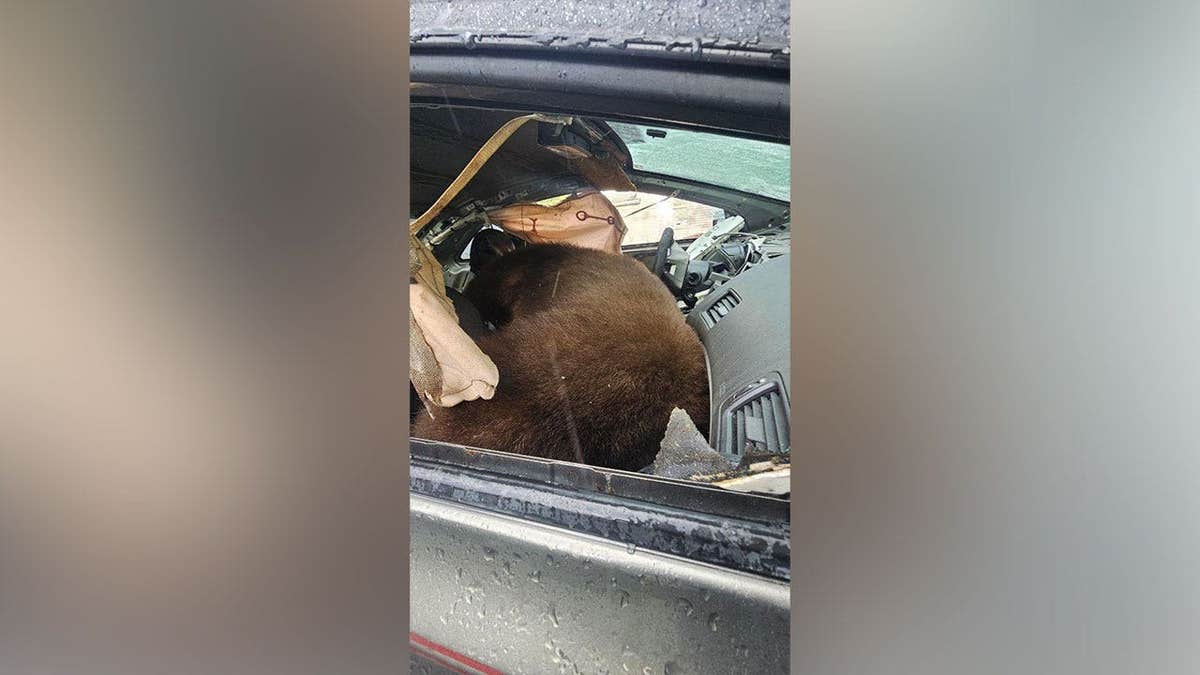
A tragic incident involving a black bear in Colorado illustrates the increasing conflicts between bears and humans this year. In Colorado Springs, a 300-pound bear was found dead after being trapped inside a vehicle for several days. During this time, the bear attempted to escape and caused significant damage to the car’s interior. The Denver Gazette reports the details of this unfortunate event.
Wildlife Officer Travis Sauder explained that bears possess the intelligence and dexterity to open unlocked car doors while foraging for food. However, they often face challenges when a door accidentally closes behind them. Sauder stated, “Typically what happens is they pull the door open, get in, get their food and then they leave. But sometimes the door closes behind them, and they have trouble figuring out how to get out.”
This encounter is part of a broader trend of heightened bear activity in Colorado. The state has received 6,129 reports of bear sightings and conflicts from January 1 to August 13, nearly double the 3,115 reports from the same period last year. Furthermore, this year’s count has already exceeded the 5,299 total reports for all of 2025.
The increase in bear encounters has been attributed to unfavorable natural food conditions. Factors such as low snowpack and late freezes have diminished traditional food sources, compelling bears to travel greater distances and take more risks in their search for nutrition. The situation is further complicated by the bears entering hyperphagia, a period when they consume large amounts of food and water to build fat reserves before winter.
Colorado Parks and Wildlife (CPW) advises residents in bear-populated areas to remove potential food sources and attractants near homes, campsites, and vehicles. Proper management of food, trash, and scented items is crucial as they can easily lure bears seeking a convenient meal. Sauder emphasized, “Treat your vehicle the way you would a campsite by removing any attractants. Whether it’s pet food, a kid’s snack or even flavored bubble gum, get it out of your vehicle.”
Additionally, CPW warns against intentionally feeding bears. Doing so may cause them to lose their innate fear of humans, heightening the chances of dangerous encounters. This year is poised to witness the highest number of reported bear-human interactions since CPW began digital tracking in 2019.
Brittany Miller, a breaking news writer, highlights the urgency of addressing bear-related incidents amidst their rising frequency.
Leave a Reply