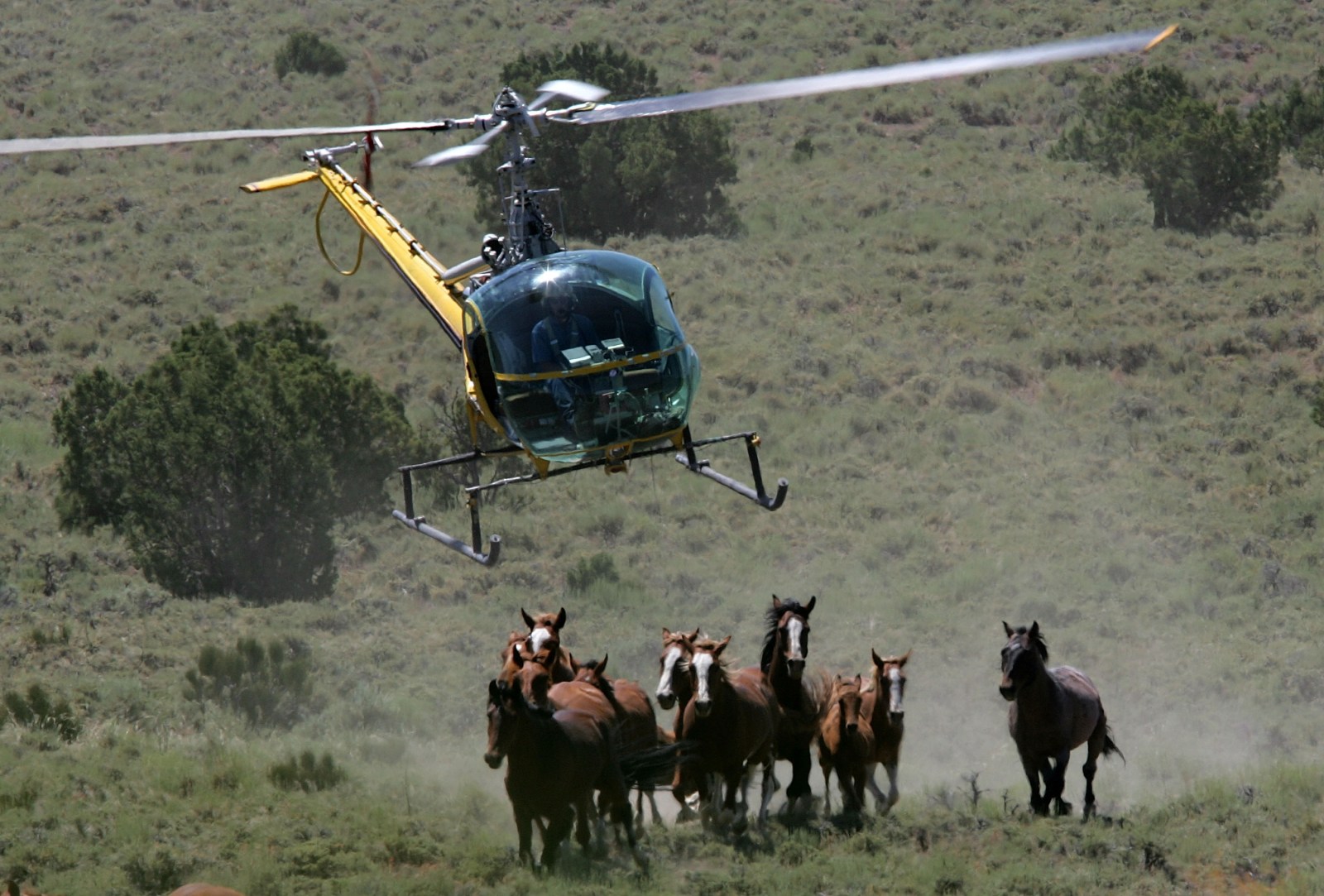
Sales of protected wild horses have sharply increased during the Trump administration, raising concerns among animal welfare groups about horses entering slaughter channels. A New York Times investigation scrutinizes the Bureau of Land Management’s (BLM) Sale Authority program, revealing how horses are sold after being deemed unadoptable. Buyers must pledge not to slaughter the animals, but critics argue this restriction can be bypassed when resold.
BLM records show that sales surged in 2025, with over 3,700 horses sold, more than double the previous year’s sales. Approximately 73,000 wild horses inhabit federal lands in the West, and around 58,000 are held by BLM, costing about $100 million annually. The government estimated that not caring for horses sold in 2025 could save roughly $56 million. The Department of the Interior says reducing populations through adoption and sales is part of its responsibility to maintain healthy herds and reduce taxpayer expenses.
Despite allegations, the department insists BLM does not sell or send wild horses to slaughter. They claimed to review any violations of law or sales agreements. Protecting wild horses is federally mandated under the Wild Free-Roaming Horses and Burros Act of 1971; Congress authorized BLM to sell excess horses with safeguards against commercial processing in 2004. Protection discourse continues after a federal court ruling halted the Adoption Incentive Program due to animals entering slaughter channels. BLM paused the program to examine alternatives.
The increase in sales prompted Patricia Miller of American Wild Horse Conservation to monitor the Sale Authority program. She noted that this correlates with efforts to move horses from long-term holding and upcoming roundups.
Her organization obtained records indicating large group sales to unvetted buyers, raising alarms. This scrutiny follows a court decision pausing a prior adoption incentive due to allegations of horses entering slaughter channels.
Critics highlight Brandon Jones, a livestock trader identified by the Times. They question his credentials and the fate of horses he purchased through the program. BLM maintains that buyers agree not to slaughter horses or sell them for such purposes, although enforcing this can be challenging.
The debate involves fertility control in managing horse populations. Animal welfare advocates claim the government focuses excessively on roundups and sales, overlooking fertility management. BLM acknowledges fertility control’s role but cites limitations such as the need for booster treatments and difficulty in accessing remote herds. The agency aims to treat 75% of mares in a herd to impact growth significantly.
The broader challenge of managing wild horse populations across public lands remains pertinent. Federal agencies argue the rapid growth of horse populations pressures natural resources. The U.S. Forest Service and BLM use gathers and fertility-control vaccines to manage herds. However, wildlife advocates criticize the reliance on sales as a failure to tackle population growth causes.
The issue underscores an ongoing management challenge, reflecting on the debate over horse sales and fertility control measures, with consequences for both horse welfare and federal land management strategies.
Leave a Reply