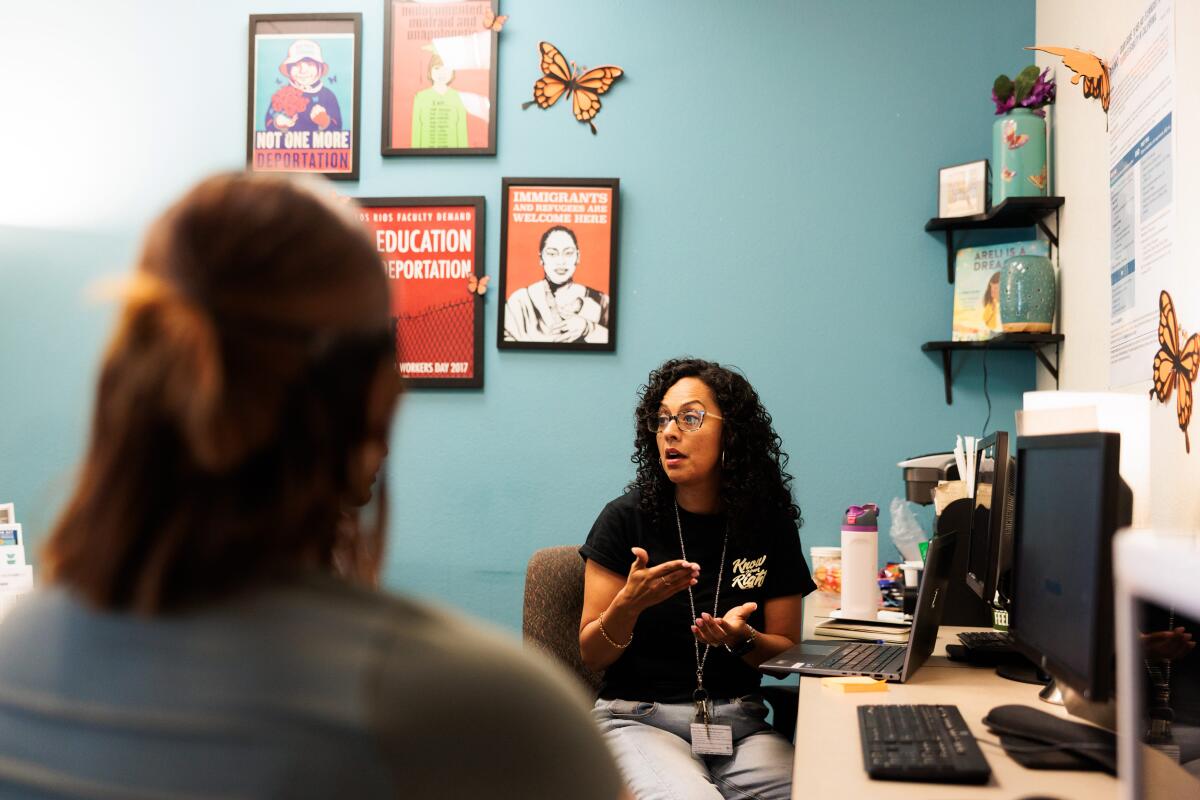
At Folsom Lake College, a flier informs students without legal status that they can still pursue education in California. It encourages them to continue, assuring they are not alone. Close by, the Undocu-Falcons Center provides support to these students under the guidance of Alicia Alejo. She assists with legal consultations, mental health resources, food pantries, and financial aid. Yet, during the Trump administration’s deportation efforts, many students remain cautious, choosing online classes and limiting campus engagement.
California stands out nationally by extending opportunities to undocumented college students. The state offers in-state tuition and financial aid through the California Dream Act. Community colleges cover enrollment fees, and schools have dedicated staff to support undocumented scholars. Despite these efforts, financial aid applications from undocumented students have decreased, influenced by Trump’s immigration policies and the suspension of new DACA applications, complicating post-graduation employment prospects.
From 2016 to 2022, financial aid applications from undocumented students dropped to 35,949 from nearly 50,000 five years prior. Also, enrollment of low-income undocumented students at the University of California and California State University has halved. This decrease is partly due to the pandemic and strict immigration enforcement. The Department of Justice has also sued California over tuition support, making families hesitant about higher education pursuits. The lawsuit continues.
It’s not that I’m lazy or unmotivated or not educated. It’s a system that’s in both countries working against me, and I’m trying to figure out where I fit in.
Christian Espinoza’s story illustrates the complexities undocumented students face. Moving from Mexico to California at a young age, he excelled in school and earned degrees at UCLA through the California Dream Act. However, a confrontation with immigration authorities in 2024 forced him to return to Mexico City, where employment challenges persist despite his academic qualifications.
Many students and graduates face internship and job restrictions without work permits. In response, California universities provide development opportunities not requiring federal authorization. Programs like Dream Summer have awarded over $6 million in fellowships for social justice work. While UC policy still limits hiring undocumented students, some advocates and legislators push for statewide job access, which could boost college attendance and open state job pathways.
California educators are also equipping students with entrepreneurial skills, as those without legal status can run businesses in the U.S. A 2020 grant program assists immigrants and others with employment impediments in starting businesses. These strategies aim to keep undocumented students in college, preserving their potential contributions.
Parshan Khosravi, California policy director at uAspire, emphasizes the loss of potential talent if support wanes: “Could they become the next doctors or trailblazers?” The efforts in California underscore a commitment to maintaining educational access and fostering future opportunities for undocumented students.
This article is a collaboration between The Hechinger Report, a nonprofit organization focused on education inequality and innovation, and Times staff writer Jaweed Kaleem.
Leave a Reply