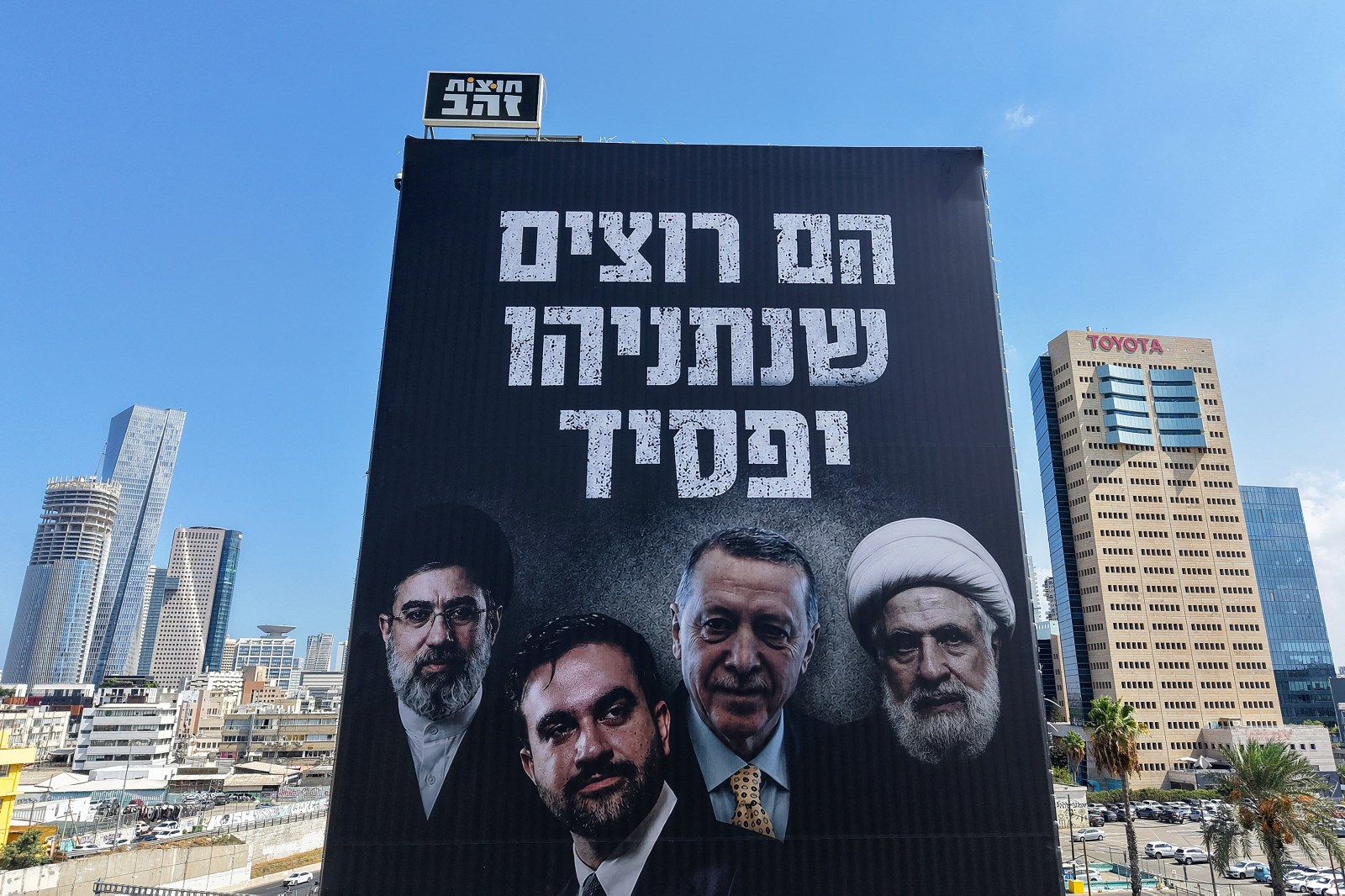
As President Donald Trump continues his economic campaign against Iran, another conflict is taking shape. This time, it’s the ongoing feud between Israel and Turkey. Last week, an Israeli strike on a Syrian airbase, allegedly visited by a Turkish defense delegation, marked a significant escalation. Israel’s accusations centered around Syria’s supposed breach of security arrangements by allowing Turkish military involvement. In response, Turkey denounced the strike as a violation of Syria’s sovereignty and accused Israeli leadership of serious crimes, sparking calls for the arrest of the Israeli prime minister.
As tensions rose, Israeli Prime Minister Benjamin Netanyahu’s office criticized Turkish President Recep Tayyip Erdogan, labeling him an “antisemitic dictator” responsible for a “pathetic attempt to intimidate” Israeli leaders and soldiers. Erdogan’s team responded by dismissing Netanyahu’s remarks as “petty political tactics” aimed at portraying Turkey as a threat.
Analysts suggest the risk of further clashes persists. Ismail Numan Telci, director at Ibn Haldun University’s Center for Gulf Studies and Global Policy, conveyed that while direct military confrontation is not inevitable, complete dismissal would be premature. The complexity of the Syrian conflict, compounded by domestic political agendas, produces an unpredictable and volatile environment.
Telci indicated that while Turkey has exercised restraint, it may respond more decisively if provoked further. Meanwhile, Assaf Orion, from the Institute for National Security Studies, argued that the downfall of Syria’s former president has indirectly increased challenges for Israeli security, with Turkey’s growing influence posing a renewed threat.
Roots of Israel-Turkey Rivalry
Initially, Turkey and Israel maintained somewhat cooperative relations. Turkey was the first Muslim nation to recognize Israel in 1949. Relations fluctuated over time due to Cold War dynamics, but began to sour notably in the late 2000s. Increased tensions were visible after confrontations involving Gaza, culminating in discord between Erdogan and then-Israeli President Shimon Peres.
Efforts to mend relations often failed, overshadowed by exchanges of accusations. The current Middle East crisis, resulting from Hamas’ attack in October 2023, has intensified these disputes. Israeli officials have criticized Erdogan, accusing him of supporting Israel’s adversaries.
Turkish officials, on the other hand, criticize Netanyahu’s administration, accusing it of attempting to avoid accountability for alleged war crimes. The Syrian conflict remains highly contentious, with rival leaders taking opposing sides. Turkey’s significant alignment with Syria’s new leadership amidst these pressures signifies a substantial policy shift.
The Role of Trump in Middle East Dynamics
President Trump has commended Erdogan’s role in reshaping U.S. relations with Syria, further enhancing cooperation by easing sanctions and removing Syria from the list of terrorism sponsors. These actions have strained Trump’s relationship with Netanyahu, who views Turkey’s presence in Syria as a strategic challenge.
U.S. Ambassador to Turkey Tom Barrack criticized recent Israeli actions in Syria, expressing concern over unnecessary escalations and emphasizing the need for coordination. Barrack’s statements highlighted potential shifts in U.S. support dynamics between Israel and Turkey.
The Broader Middle Eastern Context
The Israel-Turkey feud is part of larger strategic developments in the region. A new defense agreement between Turkey, Saudi Arabia, and Pakistan signals emerging regional alliances. While Trump lauds this collaboration, Netanyahu seeks to bolster ties through alternative partnerships involving countries like India, Greece, and Cyprus.
Former U.S. State Department adviser Rich Outzen emphasized the importance of mediation and engagement to prevent further conflict. He noted the U.S.’s desire for allies to manage regional challenges independently, but warned that lack of direct communication between strong allies might lead to opposing blocs.
Leave a Reply