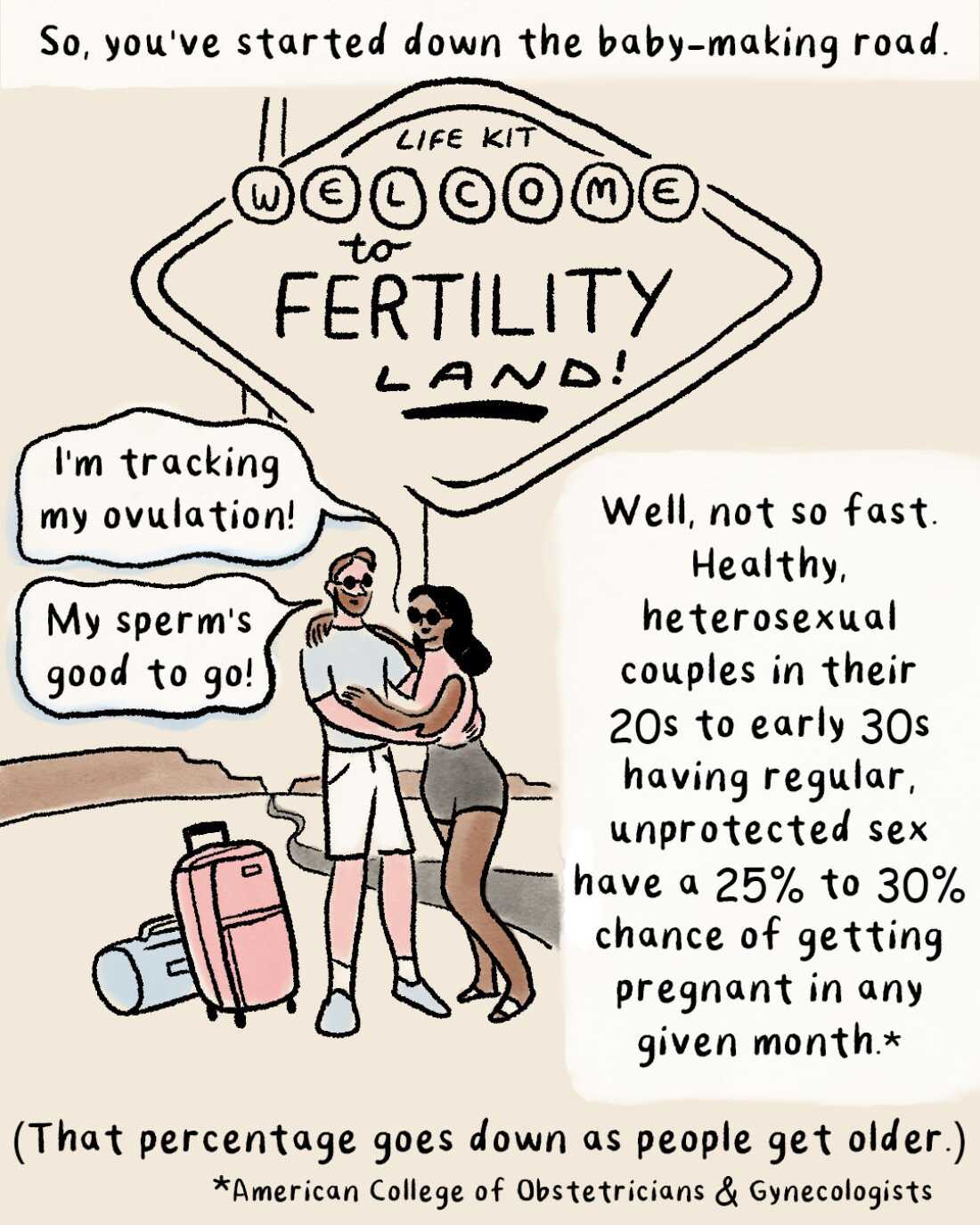
Trying to conceive can be a challenging journey for many couples. According to the American College of Obstetricians & Gynecologists, healthy heterosexual couples in their 20s to early 30s have a 25% to 30% chance of getting pregnant each month with regular, unprotected sex.
Dr. Lucky Sekhon, a reproductive endocrinologist, highlights several factors that can influence these odds: medical history, genetics, hormone balance, timing, and luck. “Trying to get pregnant is like playing a slot machine,” she explains. While you can time your attempts around ovulation, success is not guaranteed.
However, both men and women can make certain lifestyle modifications to potentially improve fertility. These changes include making healthier lifestyle choices:
- Engaging in regular exercise
- Avoiding cannabis, nicotine, and alcohol
Here are seven evidence-backed methods that might enhance fertility for those seeking to grow their family.
For more detailed information, you can listen to a 26-minute episode hosted by Life Kit reporter Andee Tagle. The episode delves deeper into this topic, providing more insights and tips.
This content was compiled by Andee Tagle and illustrated by LA Johnson, with editing from Malaka Gharib and CJ Riculan. The audio episode was produced by Sylvie Douglis.
We encourage you to share your thoughts. Leave a voicemail at 202-216-9823 or email at [email protected]. Listen to Life Kit on Apple Podcasts and Spotify, and consider signing up for our newsletter. You can also follow us on Instagram: @nprlifekit.
Leave a Reply