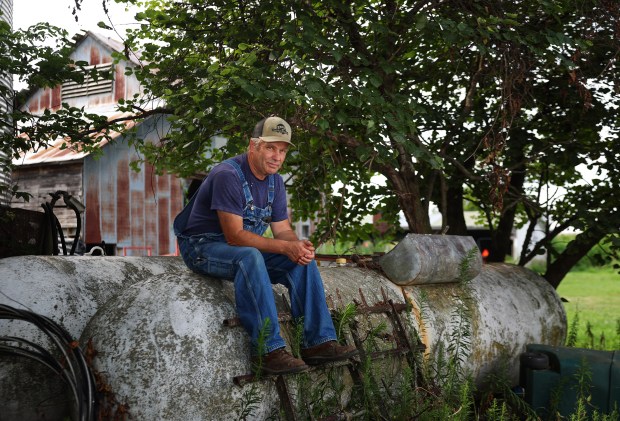
Reagan Hoskin, a natural rule follower, recalls her summer routine after graduating high school in 2018. She diligently monitored crops for her father, scanning soybean fields for irregularities. One day, she noticed a patch of yellow plants on their Pike County farm in Illinois. Her training in identifying soybean diseases led her to suspect sudden death syndrome, but the leaves differed. This discovery marked the first confirmed presence of ‘red crown rot’ in the Midwest.
Red crown rot, a fungus, can severely affect soybean yields, reducing them by up to 60% in extreme cases. Illinois, a leading soybean producer in the U.S., generates billions annually from this crop. The disease poses a significant threat as trade and tariffs pressure the profitability of soybean farming. Reagan’s father, Ron, says attention to the disease grew only when it appeared across Illinois and the broader Midwest.
Nobody has really cared about this disease because Pike County did not, you know, Pike County just didn’t matter in the grand scheme of things.
Currently, red crown rot affects more than 10 counties in Illinois, Missouri, and Indiana. Minnesota and Wisconsin confirmed their first cases in 2025. After years of battling the fungus, Ron contacted expert Matt Montgomery. As an agronomist, Montgomery ventures into infected fields, assessing the impact of plant diseases. He identified Ron’s farm as ‘patient zero.’
Red crown rot, predominantly found in the South since the 1970s, has gradually migrated north. Studies indicate its presence in the Midwest isn’t from southern fungi spread. Experts debate whether the fungus travels via air or contaminated soil, but research remains inconclusive.
Warmer climates in the Midwest may contribute to the fungus spread. Damon Smith, from the University of Wisconsin, highlights that the fungus thrives in warm, moist conditions. As the region warms, diseases like red crown rot may find more favorable environments. Shifts in weather patterns also suggest crop diseases moving northward.
Ron Hoskin anticipated issues in 2020 when harvesting dropped dramatically. Only 21 bushels were gathered when 60 were needed to break even. Attempts for effective treatment led to involvement with various agencies and researchers. Initial classification came through the University of Illinois, sparking interest primarily from a scientific perspective.
We’ve dealt with numerous plant diseases over the years. So we didn’t, you know, the effect of it did not set in in the first year by any means. It was more of a curiosity.
Greater attention arose in 2024 as the fungus spread. In Wisconsin, a 10-foot circle of infected crops emphasized the investigative challenge. Researchers, like Montgomery, are optimistic despite ongoing research hurdles, noting that new treatment options are a significant step forward.
Montgomery outlines a three-part prevention strategy: seed treatments, disease-resistant plant varieties, and stress management on plants. These strategies may aid in managing red crown rot, though complete elimination remains uncertain.
Red crown rot forces farmers to reconsider planting strategies. Ron Hoskin weighs switching entirely to corn if necessary, though this would disrupt soil health benefits derived from crop rotation. Tilling, explored as a treatment, proved ineffective.
Subsidies from the government necessitate specific conservation practices, like minimizing tilling. Transitioning could cost around $300,000, presenting a considerable challenge. Nonetheless, new seed treatment, Victrato, offers some hope for the Hoskin family.
Victrato, developed for other soybean diseases, shows potential against red crown rot. Advanced technology systems, such as AI, aid researchers in detecting infection spread from satellite imagery, identifying affected fields without constant ground visits.
While red crown rot impacts farmers’ financial health significantly, experts urge for calm and accurate identification.
I want to make sure that we respect but don’t panic — get it identified correctly.
Farmers like Calvin Koeller, who face declining yields, consider Victrato for future planting. As autumn approaches, Ron Hoskin remains vigilant, hoping the disease doesn’t worsen. With cautious optimism, he plans soybeans for next year, maintaining hope for successful management of red crown rot.
Leave a Reply