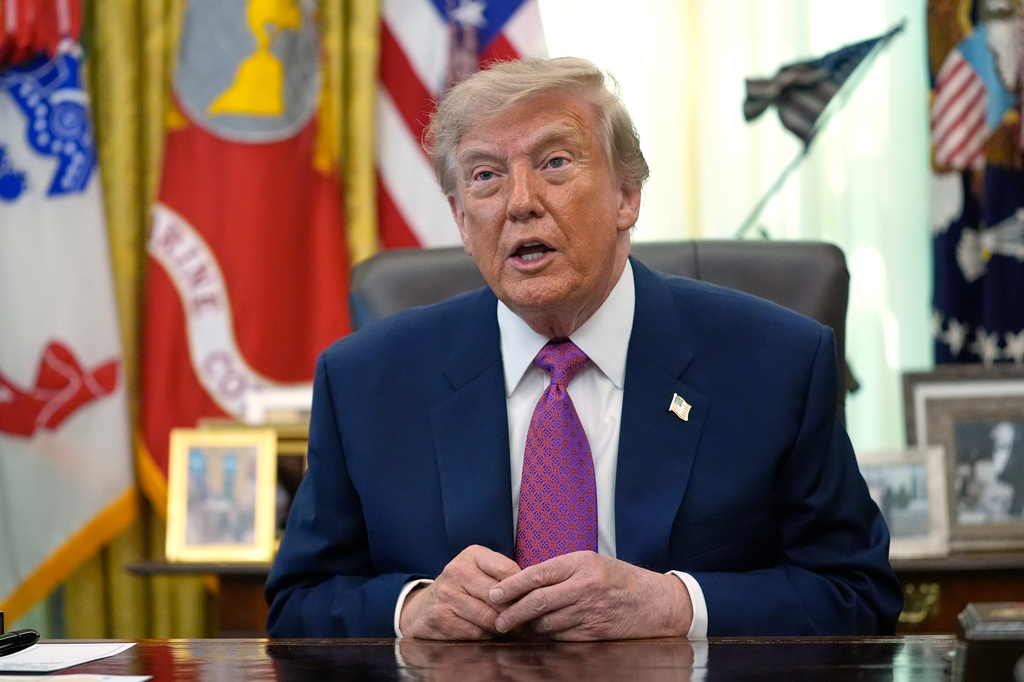
President Donald Trump spoke in the Oval Office at the White House on Thursday, August 27, 2026, in Washington. The American presidency has long been associated with power and influence, especially as the nation ascended to superpower status. This influence traces back to President Theodore Roosevelt’s ideal of ‘speaking softly and carrying a big stick.’ Over the years, presidents wielded significant authority when dealing with adversaries and allies alike.
Under President Trump, however, the image of the presidency has altered. Known for his outspoken nature on reality TV, talk shows, and social media, Trump became known for saying things many wished politicians would express. Unlike many political figures, he avoided overanalyzing his words, instead choosing a more spontaneous style. His manner attracted many supporters but also included threats when others did not heed his words.
Entering his second term with control over the House, Senate, and Supreme Court, Trump’s assertive rhetoric increased. Initially, his approach seemed effective, with entities like NATO responding to his demands. Businesses and universities made concessions to avoid confrontation with his administration, and television networks adapted their content.
Recently, Trump’s approach has met with resistance. His threats now often fail to spark the reactions they once did. Across the board, from international rivals to domestic businesses and regular citizens, people have begun dismissing him. For example, his policy to diplomatically corner Iran, known as Operation Economic Outcast, has shown limited results. Rather than rushing to negotiate under his threats, Iran opted to wait.
Trump’s trade war with Canada also backfired, straining relations without significant results. Canada mocked these efforts, preparing for any consequences from the weakened alliance.
Trump’s successful first term partially relied on checks from savvy individuals in his administration. They tempered his rhetoric, creating an image of a forthright leader unafraid of controversy. Yet, his current administration’s compliance exacerbates issues. Treasury Secretary Scott Bessent’s declarations on sanctions fell flat, and Defense Secretary Pete Hegseth’s emphasis on military harshness over logistics contributed to difficulties in managing the Iran conflict.
Historically, presidents use the power of their office to assert authority. Reagan’s demand to the Soviets to dismantle the Berlin Wall exemplifies this, as he balanced fortitude with restraint. Even during crises, leaders like George W. Bush managed their communications carefully, despite challenges such as the Iraq invasion. In contrast, President Trump has attracted criticism for his inability to contain personal disputes.
These developments raise concerns as adversaries begin disregarding his threats. The evolving nature of presidential power reflects these broader changes in global diplomacy and domestic governance.
Joslin Joseph, a recipient of the Military Reporters and Editors award for Best Commentary-Opinion, served in Iraq and is educated at Harvard and Ohio State.
Leave a Reply